Project NJORD: The Next Step in Air Defence and Wind Farm Coexistence
Last Updated: June 11, 2026
Share:
The UK Government has committed to deploying 50GW of offshore wind power by 2030. It is an ambitious target and one that could directly affect another national priority: the integrity of the UK’s air defence radar network.
Unfortunately, Non-Auto Initiation Zones (NAIZ), which were previously tipped to be the silver bullet in dealing with all wind farm impacts upon air defence radar did not provide the appropriate mitigation the most complex scenarios. In early 2023, the Ministry of Defence (MoD) therefore decided to establish Project NJORD, a programme designed to unlock the pipeline of wind development that would otherwise be blocked by air defence radar safeguarding objections.
This article provides an overview of Project NJORD, the radar suppliers putting forward solutions, and the current timescales for implementation.
What is Project NJORD?
The problem of wind turbine interference is well established, and the MoD has long been concerned by the negative impact of offshore wind farms on the UK’s air defence Primary Surveillance Radar (PSR) network. Without mitigation, the vast number of proposed and consented turbines will impede the MoD’s ability to detect enemy aircraft.
Project NJORD, aptly named after the Norse god of sea and wind, was therefore established by the Air Defence and Electronic Warfare Systems (ADEWS) Delivery Team to protect the complex picture of UK airspace that underpins the UK’s capability to spot hostile threats. An MoD spokesperson told Defence Eye in 2024 [1]: “This work is essential. It will enable the build of the windfarms to support our national renewable energy ambitions, whilst also ensuring our ability to defend the UK from hostile threats is not compromised.”
The Commercial Framework
In February 2024, the MoD awarded the Project NJORD Commercial Framework to six suppliers [2]. Rather than selecting a ‘one size fits all’ solution, a series of “call off competitions” are used within the framework to determine the appropriate solution, or combination of solutions, for each individual radar site.
The six framework suppliers that were awarded contracts are:
- BAE Systems Surface Ships Limited (UK);
- Hensoldt Sensors GmbH (Germany);
- Lockheed Martin UK Limited (UK);
- Saab UK Limited (UK);
- Terma A/S (Denmark);
- Thales UK Limited (UK).
The MoD has confirmed that the 14 potential mitigation solutions span a range of technical approaches, including upgrade, replacement, supplementary, and infill radar options [1]. They have also previously indicated that more unconventional solutions are under consideration, including modifications to wind turbine blades to reduce their radar cross-section, and even relocating radars altogether.
Timescales
According to documents published in mid-2025 [3], work on the first four sites (Neatishead, Staxton Wold, Brizlee Wood, and Buchan) is scheduled to begin in July 2026. Work on the remaining three sites (Saxa Vord, Benbecula, and Portreath) is expected to commence in October 2027. Contracts are expected to last 120 weeks (approximately two years), placing the completion of the first upgrades around late 2028.
The procurement follows a staged approach, with integration, testing, and sustainment contracts expected to continue into the 2030s [4]. This extended timeline reflects not only the technical complexity of the mitigations involved but also the need to ensure solutions are validated before wind farms begin operating at full capacity.
It is also worth noting the programme’s intersection with active wind planning. A February 2026 email published in the East Anglia Two (EA2) offshore wind farm planning inquiry revealed that ScottishPower Renewables (SPR) has signed a “Stop Gap Agreement” with the MoD, under which the developer will fund a temporary solution to allow EA2 to operate before the permanent NJORD solution is in service, with an anticipated first spin date of March 2028 [5]. This is a significant development for developers in affected regions, as it signals that the MoD is now willing to accept interim mitigation solutions to avoid delaying consented projects, but will still expect developers to carry the cost of any stopgap measures.
Conclusion
Project NJORD represents a recognition by the MoD that wind energy and national security can safely coexist, yet resolving this conflict requires significant investment, technical sophistication, and coordination across government, industry, and the development sector. The £1.5 billion price tag reflects the scale of the challenge, and the breadth of the framework (six suppliers and 14 solutions over seven sites) reflects the complexity of applying the right solution in the right scenario.
With construction work on the first four sites scheduled to begin in July 2026, the next two years will be critical in demonstrating whether the project can deliver on its promises before the UK’s wind fleet (particularly the offshore pipeline) reaches the scale at which unmitigated interference would become a significant operational concern for the MoD.
About Pager Power
Pager Power undertakes technical assessments for developers of wind, solar, and building projects worldwide, with specialist expertise in aviation and radar impact assessment. If your project may be affected by MoD air defence radar, please get in touch.
References
[1] Ripley, T. (2024) UK Pays to Mitigate Wind Farm Radar Effects, Defence Eye. Available at: https://www.defenceeye.co.uk/2024/05/16/uk-pays-to-mitigate-wind-farm-radar-effects/ (Accessed: 8 June 2026).
[2] Find a Tender Service (2024) NJORD Framework – Contract Award Notice – February 2024. Available at: https://www.find-tender.service.gov.uk/Notice/008124-2024 (Accessed: 4 June 2026).
[3] Malnick, E. (2025) MoD plots £1.5bn radar upgrade as wind farms threaten to conceal attacks, The Telegraph. Available at: https://www.yahoo.com/news/mod-plots-1-5bn-radar-070000334.html (Accessed: 4 June 2026).
[4] Commercial Consulting (2024) MOD Projects – Project NJORD. Available at: https://www.commercial-consulting.co.uk/post/mod-projects—project-njord (Accessed: 8 June 2026).
[5] Planning Inspectorate (2026) EN010078 010136 Annex D – Ministry of Defence email response 6 February 2026. Available at: https://nsip-documents.planninginspectorate.gov.uk/published-documents/EN010078-010136-Annex%20D-Ministry%20of%20Defence%20email%20response%206%20February%202026.pdf (Accessed: 8 June 2026).
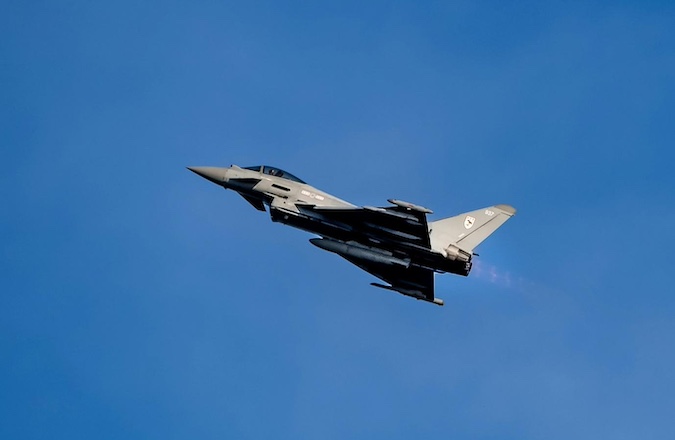
Image accreditation: SaiKrishna Saketh Yellapragada (August 2021) from Unsplash.com. Last accessed on 11 June 2026. Available at: https://unsplash.com/photos/white-and-black-jet-plane-in-mid-air-during-daytime-5_bNibmwBF8
post contents
About the Author: Michael Sutton