Articles by Wind Farms & Aviation

Automatic Detection Lighting Systems (or ADLS as it is more commonly known) is a system that allows the aviation obstruction lighting fitted to wind turbines, or any other obstruction, to [...]

Developments worldwide can receive objections from numerous sources, including Air Navigation Service Providers (ANSPs). Often such objections are related to radar interference, however issues can also be raised due to [...]
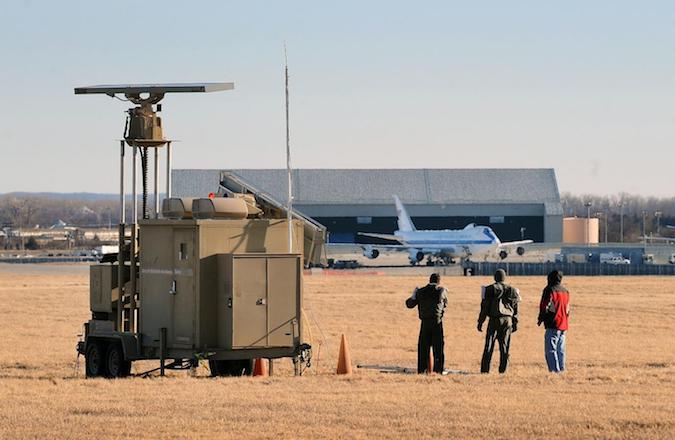
Overview The DeTect Harrier Aircraft Detection Lighting System (ADLS) enables lights to be illuminated as aircraft approach a wind farm. Lights are extinguished once the aircraft leaves the area. The [...]

Wind turbines and airports co-exist throughout the world despite the fact that wind turbines can present an obstruction risk to low flying aircraft as well as potentially affect radar systems. [...]
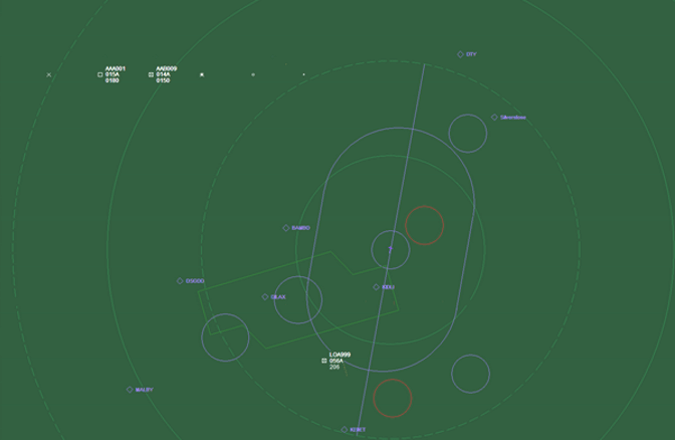
In Brief It is a zone where a radar ignores interference. When properly implemented interference is rejected whilst genuine targets (aircraft) are displayed. Non Auto Initiation Zones (NAIZs) are sometimes [...]
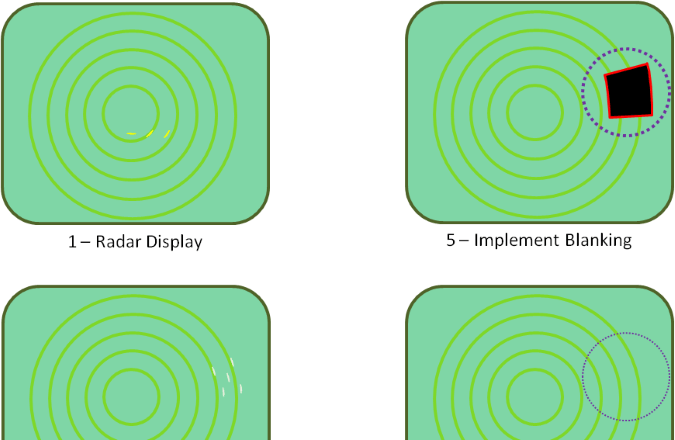
Pager Power has over a decade of experience dealing with and overcoming wind farm radar objections. Many potential mitigation techniques are available to overcome said objections however some solutions are [...]

Wind Turbines cause turbulence which can affect small aircraft that fly through it. Pager Power has undertaken a number of wind turbine wake turbulence assessments and has managed flight trials [...]
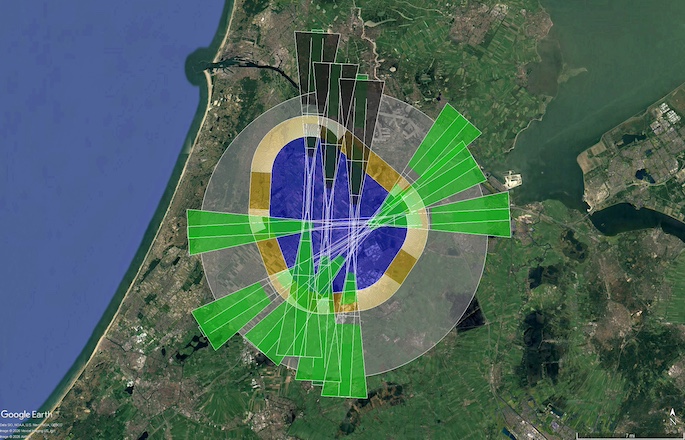
What Are Obstacle Limitation Surfaces? The UK has [1] 129 licensed civil aerodromes (and even more unlicensed aerodromes). In order to protect aircraft against potential collision risk, it is necessary to [...]
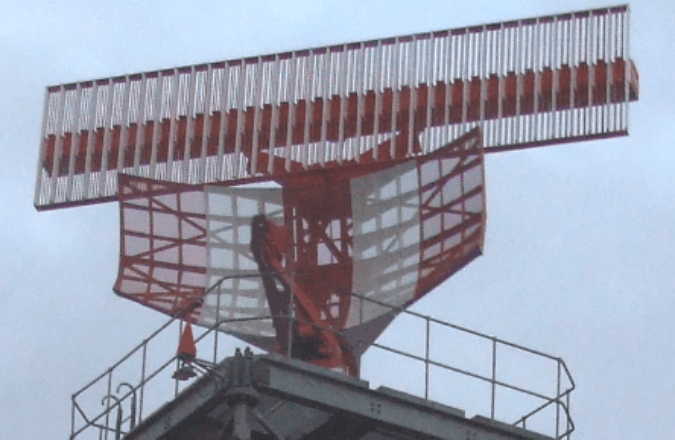
RAF Objections Renewable energy developers in the UK regularly face objections from the Royal Air Force (RAF) /Ministry Of Defence (MOD). This is particularly common for wind developments due to [...]

Modern aviation infrastructure around the world is underpinned by sophisticated electronic equipment. This ranges from well-known apparatus like radar to lesser-known equipment such as Instrument Landing Systems (ILS), navigation beacons, [...]