Rewriting the Queue: The Grid Reform Set to Speed Up UK Energy Transition
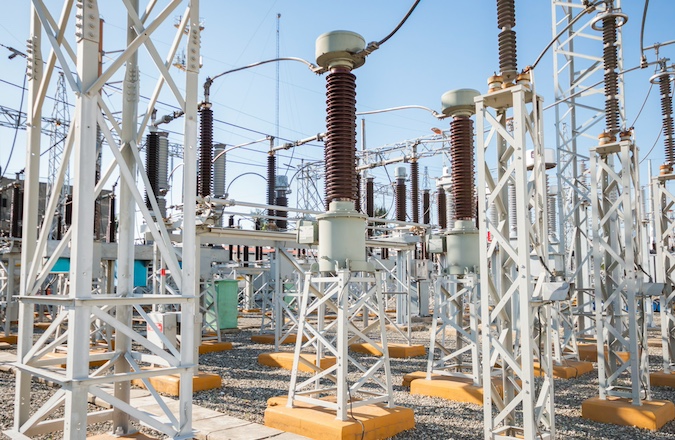
In April 2025, the UK’s National Energy System Operator (NESO) led a review of renewable energy projects in the queue for grid connection. Now, eight months later, they reveal the reshaped pipeline of 283 GW worth of generation and battery storage projects to be prioritised for grid connection.
Why the reform matters
Previously under a ‘first-come, first-served’ approach, hundreds of gigawatts of proposals – many speculative or underfunded – clogged the queue alongside projects ready to build. The backlog gradually ballooned to over 700 GW, roughly four times what the country needs to meet its 2030 clean-power goals.
The overhaul is one of the most significant shifts developers have faced in years. The new system shifts to a ‘first-ready, first-needed, first-connected’ method. Only projects that can demonstrate land rights, planning permission, and alignment with strategic energy goals will be offered a connection.
What it means for renewables and storage
The immediate change is simple: the queue has been thinned, reordered and filtered so that only projects able to show clear progress stay in line. That includes having land rights, planning approval, and a realistic pathway to delivery. For developers who meet those markers, the reform should help rather than hinder. A cleaner queue reduces delays, gives more predictable connection dates and improves the chances of attracting finance.
For others, the implications are less comfortable. Projects that were earlier in the line on paper but not yet fully prepared may find that their position slips. Some may be moved into later tranches with no firm timeline. It doesn’t necessarily mean the end of those schemes, but it does force strategic choices to push ahead and meet the new criteria. Moreover, it signals to developers and investors that readiness, planning and viability now matter more than early entry.
In fast-tracking viable developments, the reform promises to unlock billions in private investment, bring forward jobs in construction and renewables deployment, and avoid the risk of more ‘zombie projects’ that never materialise.
RenewableUK’s Head of Flexibility and Grid, Barnaby Wharton, commented:
“It’s taken a lot of hard work by NESO and the industry to get to this point. As with any major change, there are some developers who will be disappointed by the outcome, while others will welcome the clarity that today’s announcement brings.”
NESO’s zonal map of Great Britain’s energy connections provides a high-level ‘before’ and ‘after’ snapshot of the distribution of solar, onshore wind, and battery storage developments in the queue. For wind and solar, there are clear imbalances between zones, with some experiencing a shortfall and some that have an oversupply. This means there is space for more projects to join the next round of applications, which is predicted to fall in Q2 2026. Battery storage developments, on the other hand, have seen the largest cutbacks and yet there are still far more projects planned than the grid can handle.
Broader significance for the UK’s clean power ambitions
The reform is a structural move that should enable a dramatic acceleration of renewables and storage deployment, rather than allowing even more applications to stack up in the queue. The freshly approved 283 GW pipeline includes a mix of solar, wind, battery storage and other technologies. Of these, around 132 GW have been earmarked for connection on a timeline aligned with the UK’s 2030 and 2035 clean energy targets.
More renewables mean more variability. That pushes the grid toward technologies that smooth peaks and troughs by utilising battery storage, smart demand responses, power electronics and digital management tools. The reform helps bring these assets forward, but grid companies must still adapt the network to use them effectively.
Reordering projects makes the pipeline more realistic, but the underlying issue remains that large parts of the transmission network are already congested. Many high-potential regions, such as Scotland and parts of eastern England, need new lines, substations and reinforcement to move power south and into demand centres. Without this investment, even ‘shovel ready’ projects can face constraints after they connect.
The UK’s renewable resources aren’t evenly spread. For example, wind-heavy regions can generate far more electricity than local demand and NESO’s zone maps show that development in these areas is set to continue. To avoid curtailment, new north-south transmission routes and offshore grid coordination are essential. These are large, multi-year projects that must keep pace with the new, cleaned-up development pipeline.
In short, the queue reform removes one structural barrier. Upgraded infrastructure removes another. When both move together, the UK has a credible path to large-scale renewable deployment and a more stable, affordable clean-power system.
Pager Power’s role
For developers, it is ever more crucial to demonstrate project viability in a timely manner.
Pager Power undertakes technical assessments to help developers meet the planning conditions of renewable energy projects worldwide. We cover aviation safety, radar impact, telecommunications, glint and glare, and more!
Read more about our core services for Solar and Wind developments, or get in touch today.
Image accreditation: Alward Castillo (March 2023) from Unsplash.com+. Last accessed on 15th December 2025. Available here.
post contents
About the Author: Tori Harvey

Latest News
US Continues to Build Out Solar Capacity
Earlier this month, the Solar Energy Industries Association (SEIA) released [...]
China’s Airborne Wind Turbines
In early 2026, China successfully developed an airborne wind turbine [...]
Shadow Flicker Assessments for Wind Turbines: A 2026 Update
Shadow flicker is the effect of rotating turbine blades, causing [...]