Don’t Put Your Building Development at Risk – Assess Aviation Early

Last Updated: August 13, 2026
Share:
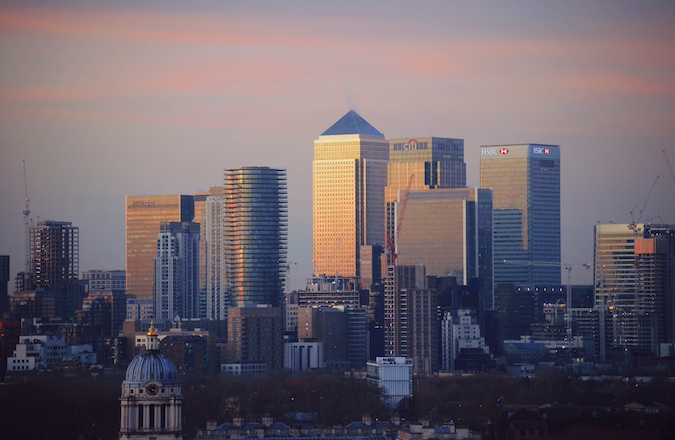
City centres are getting taller. New skyscrapers of flats and offices are being proposed and built at a fast pace. Developing one of these projects requires balancing a large number of constraints. One that sometimes can get left too late is aviation safeguarding.
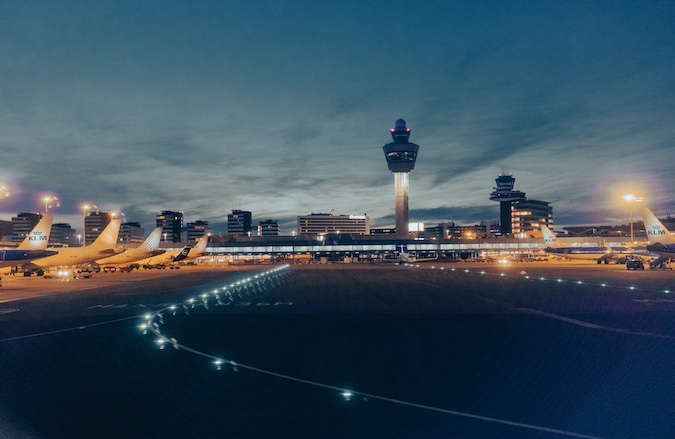
Tall buildings in cities with airports can face real constraints if they have the potential to significantly impact aviation operations and safety. In England this is most often seen in London, Birmingham, and Manchester, where tall developments and busy airports must co-exist safety.
Carrying out an aviation safeguarding assessment early can ensure these constraints are identified early and factored into the project’s design.
What does an aviation assessment do?
An aviation safeguarding assessment will consider a number of potential impacts, each of which can have significant effects on a project, including on its structure, shape and cost, these typically include:
- Radar impact;
- Obstacle limitation surfaces;
- Aviation lighting;
- Instrument flight procedures;
- Communications, navigation and surveillance equipment; and,
- The use of cranes.
Following this technical work, a round of consultation with the airport safeguarding team and other stakeholders, such as NATS, will likely take place. This will allow necessary mitigations to be discussed and agreed.
What significant aviation impacts can mean for a tall building development
Mitigating radar impacts typically involves software updates which must be in place before the structure is built. This can be an additional cost for the developer and affect the construction start date.
An infringement of an obstacle limitation surface can sometimes be accommodated, depending on the specific surface in question and the level of infringement. Where infringements cannot be accommodated, reductions in the building height may be necessary. If the infringement can be accommodated, aviation lighting will almost certainly be required.
If aviation lighting is required for a building, this can have knock-on effects for visual impact upon neighbouring buildings whose residents may have sight of the red warning lights during the night. The installation and maintenance of these lights is also another cost and responsibility the developer must bear.
Instrument flight procedures can be affected when a building is tall enough that the needed safety buffers are no longer maintained. Changing an instrument flight procedure is a lengthy and involved process; it may instead be necessary to reduce the building height, sometimes by several floors. This can be one of the most significant changes to a building as a result of aviation constraints and it could have serious implications for the return on investment of a project, as the number of flats or offices would reduce.
Cranes can be especially troublesome to assess as details typically aren’t nailed down until after planning permission has been granted and a crane contracted has been brought on board. Where cranes are impacting aviation safety, this may restrict when and where cranes can be used. In serious cases it may limit the type of crane that can be used or the height of them. This can complicate the construction process, again increasing costs if specialist cranes or plans are needed.
The benefits of starting early
Identifying impacts and the required mitigation allows any required changes to be built into the design from an early stage. This minimises the number of knock-on effects and rework that can occur when changes aren’t identified until late in the process.
If additional costs are needed, such as radar mitigation or aviation lighting, these can be included in budgets sooner allowing investors and clients to forecast the return on a project more accurately.
The most important benefit is managing expectation of what can be achieved with a given site. If a cap must be placed on the development height at a given location, due to an instrument flight procedure for example, and this isn’t identified until the eleventh hour, major changes may be needed to the overall proposal and potential return on the investment.
It also has the potential to offer a better outcome for the project, as any necessary stakeholder consultation can be undertaken earlier in the project, increasing the likelihood that compromises can be reached without delaying the project.
Another great benefit is the ability to address these impacts before submitting the planning application. Addressing impacts mid-planning can be significantly more difficult and can delay the project.
Conclusion
The key takeaway is that aviation can pose a significant constraint on buildings, both near and far from airports. Significant impacts have a very real possibility of adding costs, causing delays, or even reducing the height of a development.
Carrying out an aviation safeguarding assessment and consulting with an airport at an early stage can help inform the design and manage expectation of what can realistically be built, in addition to informing budgets and costs.
About Pager Power
Pager Power undertakes technical assessments for developers of renewable energy projects and tall buildings worldwide.
For more information about what we do, please get in touch.
Image accreditation: Hert Niks. (Oct 2020). Last accessed on 7 August 2026. Available at: https://unsplash.com/photos/low-angle-photography-of-high-rise-building-5YrxZ1HKhjs
post contents
About the Author: Phillip Charhill