Building Series: Planning Considerations for Aviation Lighting
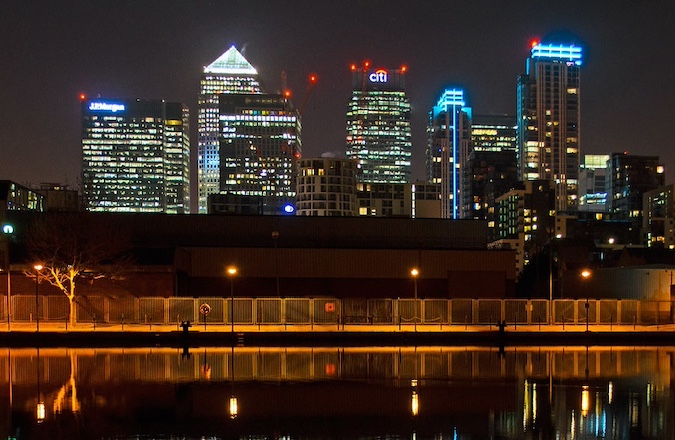
Aviation lights for buildings may seem like a simple topic at first glance. Put a couple of red lights on top of your building if it’s near an airport, and that should be the end of it. Unfortunately, it often gets more complicated for a range of reasons. This article seeks to explain some of the nuances that a tall building developer should know about.
The Need for Aviation Lighting
Collision risk is generally managed in two ways: limiting the height of a building in critical areas and/or requiring aviation lighting to be fitted to the building.
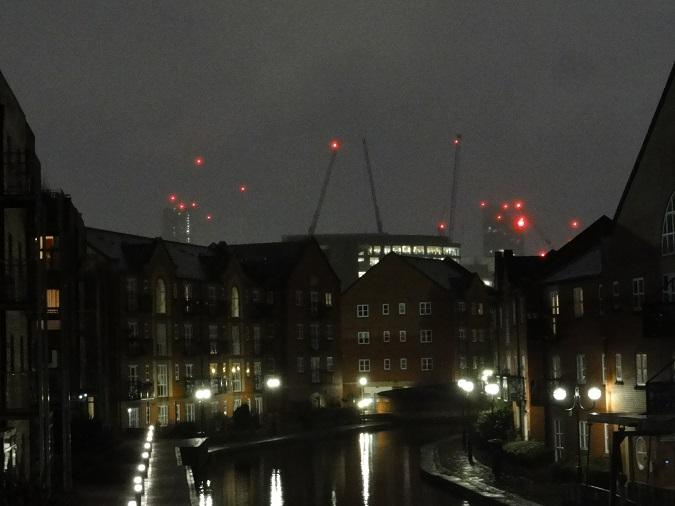
Figure 1: Aviation lighting on buildings and construction cranes – UK
Types of lighting
There are many kinds of lighting that can be utilised for aviation safety purposes. Variables include intensity, colour and whether the light is steady or flashing. In some cases, infra-red lights, which are not even visible to the naked eye, can also be utilised. Typical intensities for visible lights are 25 Candela, 200 Candela and 2,000 Candela. For reference, the tail light of a car has an intensity of around 25 Candela.
Steady red lights are a common choice for buildings and cranes in many parts of the world. However, flashing white lights, for example, are also a possible option.
The Rules for Lighting
Lighting requirements are usually defined by an individual country’s civil aviation authority. Specific requirements can also be set by military authorities. Individual stakeholders, such as large airports, may have their own preferences in terms of lighting that they would like to see.
For the UK, aviation lighting requirements are defined within the UK Civil Aviation Authority’s Civil Aviation Publication 168: Licensing of Aerodromes. Guidance on the subject is also available from the International Civil Aviation Organisation and the Ministry of Defence (MOD). Guidance from the European Union Aviation Safety Agency also exists, this no longer applies in the UK (which voted to leave the European Union in 2016), but does apply in other European countries.
Building Developments That Require Aviation Lighting
The maximum height – or more accurately, the maximum altitude above sea level – that a building can reach in the vicinity of an airport is typically defined by Obstacle Limitation Surfaces. A full discussion of Obstacle Limitation Surfaces is not presented here, suffice it to say that maximum altitudes for fixed obstructions are defined around major airports by considering imaginary surfaces surrounding them. Where a building infringes such a surface, aviation lighting is almost guaranteed to be a requirement (if the risk can be tolerated at all). This means that even modest buildings of one or two storeys can, in principle, require aviation lighting for safety reasons. This is particularly likely if they are on more elevated ground than the airport runways.
In many countries, there is a defined height from ground level above which aviation lighting is mandatory, regardless of where the nearest airport is. In the UK, for example, anything that is 150 metres or more above ground requires mandatory lighting.
Other factors that can determine the lighting requirement in practice include whether surrounding buildings in the area are fitted with lighting, requests from local airports/heliports and whether the building is likely to be illuminated by other sources.
Downsides of Aviation Lighting
Aviation lighting can be unpopular with surrounding residents on the grounds of amenity and light pollution. This can be of particular concern for intermediate lighting i.e. lights that are fitted on the sides of tall buildings, which can be particularly unpopular with residents of neighbouring tall buildings.
New Building Developments
When proposing a new development, it is important to understand the surrounding environment in an aviation context. If the development is within 20 km of an airport, detailed consideration of physical safeguarding (Obstacle Limitation Surfaces) is recommended, which may highlight a lighting requirement. The location of nearby local airfields and heliports should be considered.
If the development’s maximum height exceeds the mandatory lighting requirement, an aviation lighting scheme must be designed.
If lighting is required, the first step is to understand the published rules based on the development scale and location. There may be multiple options for a lighting scheme, all of which could satisfy the relevant requirements. Collaboration with the most significant stakeholders is advisable, which will often be the nearest major airport.
Once the rules are understood, a lighting scheme should be designed based on the applicable requirements and pragmatic considerations, including the surrounding environment.
The resulting scheme may require sign-off from a specific stakeholder, depending on the trigger for the lighting requirement.
Costs and Practicalities
- A single good quality light will likely have a list price of around £2,000;
- If multiple and/or flashing lights are required, additional control equipment may be required;
- Power supply arrangements for aviation lights must also be considered;
- Intermediate lights may be required for particularly tall developments.
Pager Power
Pager Power has been conducting aviation assessments since the early 2000s. The company has developed good relationships with aviation stakeholders in many countries and assisted in overcoming aviation issues for numerous projects. If you wish to discuss any of your existing or upcoming projects, please do not hesitate to contact the team.
Image accreditation: “Reflection on Wharf” by Nevalenx via Flickr / CC BY-SA 2.0 / Image cropped and resized from original.
post contents
About the Author: Kai Frolic

Latest News

The 2026 State of Play for Cooperative Automatic Detection Lighting Systems in the UK
Automatic Detection Lighting Systems (or ADLS as it is more [...]
British Horse Society Guidance and Glint and Glare
In August 2025, the British Horse Society (BHS) updated their [...]
How do Wind Turbines Affect Met Radar and What Constitutes a Significant Impact?
There are different types of radar that can be affected [...]