Sustainable Aviation Fuel for Wind Farm Servicing
Emissions from the aviation industry are a comparatively small but persistent aspect of global pollution. Reported values for the percentage of carbon emissions are typically around 2%-3% [1,2]. The industry itself is of course global and robust, such that advances in green technology in this sector have huge potential.
Airports themselves increasingly look for ways to reduce or offset their emissions on the ground, a topic we have covered elsewhere on our website (for example here and here).
Another area that continues to make progress pertains to the aircraft fuel itself.
Sustainable Aviation Fuel
The term ‘Sustainable Aviation Fuel’ generally refers to a fuel source that is produced from bio-waste materials. Emissions associated with this process can be reduced further if the energy used to convert the bio-waste into a usable fuel is powered by renewables. At present, this fuel is usually mixed with conventional fuel for use within aeroplanes. The reason they have to be mixed is due to safety. We have previously written about commercial airlines and companies that have taken strides in this field, including a flight from Paris to Montreal using a mix of regular fuel and Sustainable Aviation Fuel.
More recently [Reference 2], Virgin Atlantic has boasted the world’s first transatlantic flight from London to New York using 100% Sustainable Aviation Fuel.
Vestas Pilot Scheme
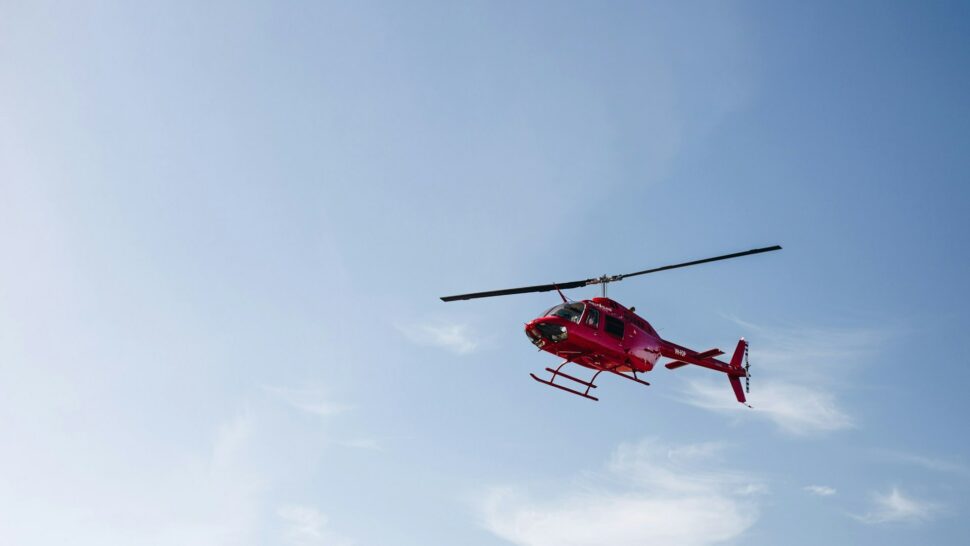
Vestas has recently announced [3] a pilot scheme pertaining to the Baltic Eagle Wind Farm in the Baltic Sea, whereby construction personnel will be transported via helicopters that use a blend of regular fuel and Sustainable Aviation Fuel. The Sustainable Aviation Fuel will contribute approximately 40% of the blend.
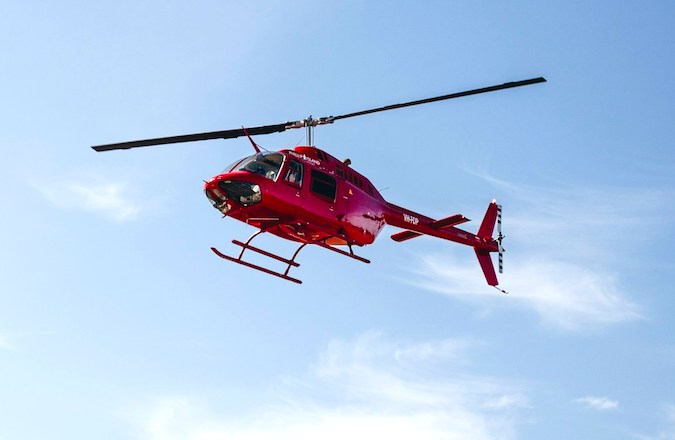
Figure 1: Helicopter in flight. [4]
Vestas predicts that the reduction in CO2 will be around 32% per flight and is part of their wider goal of having their own operations be carbon neutral by 2030. The scheme will run until September of 2024.
Pager Power
Pager Power has been supporting renewable energy and building developers for over 20 years, much of our work is in the aviation sector. This has included assessment of developments at airports to reduce emissions, as well as ensuring that developments of various descriptions do not adversely affect aviation safety.
References
[1] International Energy Agency (2022 data), Tracking Aviation (link), last accessed June 2024, IEA.[2] Imperial (2023), World’s first transatlantic flight on 100% sustainable aviation fuel takes off (link).[3] Vestas (Aarhus, May 2024), News Release (link), last accessed June 2024, Vestas[4] Isaac Benhesed (May 2019) from Unsplash.com. Last accessed on June 17th 2024. Available at: https://unsplash.com/photos/red-helicopter-nCm8AOjM_zEpost contents
About the Author: Kai Frolic

Latest News

US Continues to Build Out Solar Capacity
Earlier this month, the Solar Energy Industries Association (SEIA) released [...]
China’s Airborne Wind Turbines
In early 2026, China successfully developed an airborne wind turbine [...]
Shadow Flicker Assessments for Wind Turbines: A 2026 Update
Shadow flicker is the effect of rotating turbine blades, causing [...]