What Is the Difference Between Daylight Sunlight Assessments and Right to Light Assessments?
Last Updated: June 15, 2026
Share:
Daylight Sunlight Assessments and Right to Light Assessments are commonly confused however, they are different. It is important to discern between them so that the appropriate technical assessment can be employed at the appropriate moment.
Daylight Sunlight Assessments
A Daylight Sunlight Assessment is fundamentally a planning issue. Local authorities and councils have priorities to ensure building developments provide well-lit living spaces and do not significantly reduce the natural light level for neighbouring structures and open spaces. Where needed for an application, planners may request a Daylight Sunlight Assessment, with the aim of exploring whether the development is in accordance with planning guidance[1], which will inform their decision on granting permission.
Right to Light Assessments
A Right to Light Assessment is of a legal nature. It explores whether a property’s legal rights to natural light have been infringed and is commissioned to inform a legal argument. It does not consider planning policy and a planning officer will not request one as part of a planning application.
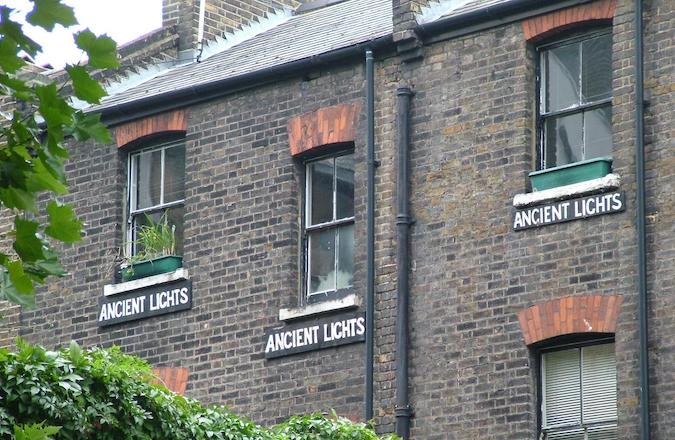
Right to light can be acquired in several different ways, but the most common is through prescription, under the Prescription Act 1832.
‘When the access and use of light to and for any dwelling house, workshop, or other building shall have been actually enjoyed therewith for the full period of twenty years without interruption, the right thereto shall be deemed absolute and indefeasible’ [2].
This means that the rights are acquired after 20 years of uninterrupted light to a window. For this period to be considered ‘interrupted’, light must be obstructed for a period of at least one year.
Once this right has been acquired, the owner is entitled to ‘sufficient light according to the ordinary notions of mankind’ [3], but this does not mean that they are entitled to completely unobstructed light.
How are they assessed?
Daylight Sunlight Assessment
Methodology for Assessing Existing Buildings
Existing buildings only require assessment if they are within three times the height of the proposed development from the window centre. Daylight is measured using Vertical Sky Component (VSC), with significant effects indicated where values drop below guidance thresholds. The no-sky line (DD) may also be assessed but requires accurate room and window information. Sunlight assessments only apply to certain south-facing windows and use (Annual Probable Sunlight Hours (APSH) to identify significant reductions.
Methodology for Assessing New Developments
All proposed windows should be assessed. VSC provides an initial indication of daylight performance, while detailed room daylight assessment follows BS EN 17037 and depends on room use and layout. Sunlight should be considered in the design, with preference for south-facing living spaces and assessment through APSH where appropriate. For rooms that don’t receive sufficient daylighting further analysis can be conducted using Daylight factor (DF) in order to provide a more comprehensive analysis.
Outdoor Spaces and Gardens
The planning guidance also states that outdoor areas such as gardens, parks, and playgrounds should be assessed. In order to determine that at least half of the space receives two hours of sunlight on the equinox.
Right to light Assessment
There are no formal requirements for determining the impact of a development towards rights to light, however the predominant method of assessing this is through the ’50:50 rule’ with consideration of the ‘sky factor’.
50% of the room (measured at a working plane of 838mm above floor level) should have a sky factor of 0.2% or greater, which essentially means that 50% of the room should be able to see at least 0.2% of the sky. Recent court cases have indicated that 55% of the room is now seen as a more appropriate threshold for residential buildings.
If a new development reduces a property’s light beneath this threshold, they may be entitled to remedies against the developer of the new development.
What is the result?
Daylight Sunlight Assessment
If the development passes then no further steps are required and it is likely that planning permission is granted. However, if it fails then further metrics can be assessed and or redesigns/ layout optimisations can be utilised to improve the developments daylighting. If the development still fails then it is likely that planning won’t be approved.
Right to Light Assessment
No further action is required If the development does not affect the neighbour’s right to light. If the development infringes upon this right, an injunction may be sought to prevent the building from being constructed. This could lead to development delays or even stop the project from proceeding entirely.
Alternatively, financial compensation may be awarded, and the value of lost light can be calculated using Light Standard Rent. However, developers should not assume they can simply buy their way out of right to light issues, as it is entirely at the court’s discretion which remedy is granted based on the specific circumstances of each case.
Further reading
For more information regarding Daylight assessment or right to light please consider the following links.
https://www.pagerpower.com/news/news-article-what-are-right-of-light-assessments/
https://www.pagerpower.com/news/daylight-sunlight-assessment-jargon-buster-complex-terms-simplified/
https://www.pagerpower.com/news/guidance-for-daylight-and-sunlight-assessments/
About Pager Power
Pager Power offers both Daylight Sunlight Assessment and Right to Light Assessment services to support planning applications and help reduce legal risks. Our expert assessments provide clear evidence to protect amenity, reassure consultees and demonstrate compliance with relevant policy and standards where required.
For more information about what we do, please get in touch.
References
[1]BRE209
[2] Section 3, Prescription Act 1832
[3] Colls v Home & Colonial Stores Ltd, [1904] UKHL 1
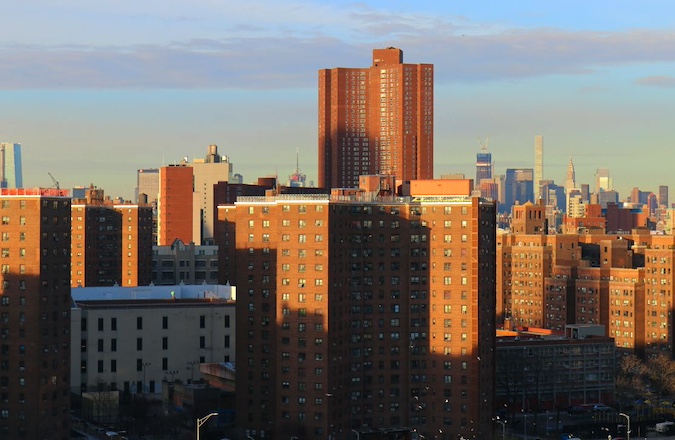
Image accreditation: Nicole Broetto (February 2019) from Pexels.com. Last accessed on 15 June 2026. Available at:https://www.pexels.com/photo/high-rise-buildings-in-the-city-14147708/
post contents
About the Author: Cameron Sabouni