The Road to Aviation Sustainability
Last Updated: May 31, 2024
Share:
In 2022, the International Energy Agency (IEA) identified the aviation sector as accounting for 2% of global carbon dioxide emissions, despite a significant fall from pre-pandemic aviation activity. [1]
In order to achieve global climate targets set in recent years, a large reduction in climate emissions will be required over the next decades, whilst at the same time it seems inevitable that demand for aviation services will increase, especially from the ‘developing world’. It is therefore clear that in order to serve this demand whilst meeting climate targets, new technologies will be required to decarbonise the aviation sector.
Many new technologies are currently being developed which could help the aviation sector move towards a net-zero future. One of the most promising of these are sustainable aviation fuels (SAF), of which the two main types are biofuels and electrofuels (e-fuels).
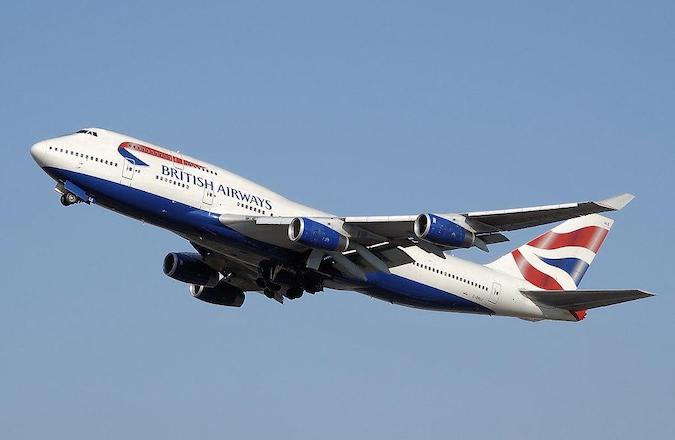
Figure 1: A British Airways 747 takes off from London Heathrow Airport.[2]
Biofuels
Biofuels can be produced from plants or animal biomass. As plants absorb CO2 while they grow, in theory biofuels would be carbon-neutral, with the fuels emitting the same amount of CO2 than the plants absorbed. In practice, there are always inefficiencies in the production process, and therefore the greatest emissions savings lie around 90-98%. [3]
In addition, not all biofuels are considered ‘drop-in fuels’ (fuels able to be used interchangeably with fossil fuels). This means that some fuels may require new engines to be developed, which is why the current focus of many agencies are on developing drop-in biofuels.
E-fuels
E-fuels are another type of synthetic fuels, which are made through combining captured carbon dioxide with hydrogen. In order to be carbon-neutral, green hydrogen must be used for the process, which is made by splitting water using renewable energy. E-fuels require large amounts of renewable energy to produce, and can therefore be considered as a method to store and transport energy produced by renewables.
The challenges faced for e-fuels are high production costs and issues scaling to meet demand. The process to produce e-fuels is very energy-intensive and therefore cheap renewable energy is required to drive costs down. This could be achieved in the near future if the cost of renewable energy production (particularly solar) continues to fall.
In addition, e-fuels could be considered a solution to grid connection issues in many areas, including the UK, as producing e-fuels would enable renewable electricity to be used on site with fuels transported to their point of use using existing infrastructure such as tankers or pipelines.
References
[1] IEA, (accessed at: https://www.iea.org/energy-system/transport/aviation on 30/05/24)
[2] Adrian Pingstone (21st October 2007) from WikiCommons. Accessed on: 30th May 2024.
[3] Stephen Doilente, “Bio-aviation fuel: A comprehensive review and analysis of the supply chain components” (10th July 2020), Frontiers in Energy Research
post contents
About the Author: James Plumb