Wind Turbine Consultation Open for the Eskdalemuir Seismic Array
Last Updated: April 15, 2026
Share:
What is the Eskdalemuir Seismic Array?
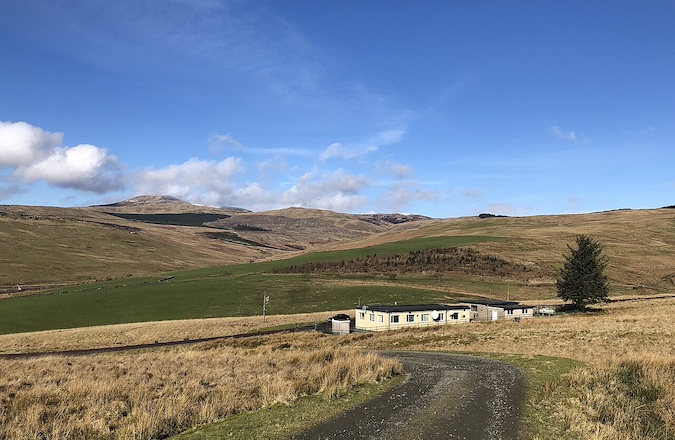
The Eskdalemuir Seismic Array is a seismological monitoring station located in the south of Scotland. Its primary purpose is to detect seismic signals from underground nuclear explosions, making it the UK’s main asset for monitoring nuclear testing across the world. It supports the UK’s obligations under the Comprehensive Nuclear Test Ban Treaty and provides information to the Government on possible nuclear testing activity by other countries.
Why Wind Turbine Development is Restricted
The Array operates continuously and must be carefully protected due to its ability to detect extremely small seismic signals. However, this sensitivity also makes it vulnerable to external vibrations or ‘noise’, such as those generated by wind turbines as they rotate. As a result of this, new wind turbine developments within a 50 km radius of the Array are currently reviewed.
In practice, this restriction has significantly limited new wind energy development in the area. The previously allocated budget for such projects was quickly exhausted, leaving little to no capacity for future expansion.
Proposed Changes to the Current Approach
Following new technical studies, the Government is proposing a revised approach that would:
- Expand the exclusion zone to 15 km;
- Introduce a 15–50 km restricted zone with updated rules;
- Use more accurate, turbine-specific modelling of seismic impact; and
- Introduce a Seismic Impact Limit (SIL) to control the impact of individual turbines.
Allocation and Fairness
It is important that the newly allocated noise budget is distributed fairly between wind developments on a first-come, first-served basis. This approach gives all developers an equal opportunity to obtain planning permission. At the same time, it ensures that the Array’s detection capabilities are protected, supports the development of onshore wind, and contributes to the overall goal of Net Zero.
Questions Still to be Resolved
There remain questions around re-powering and amending planning applications that could see developments going to the back of the queue for the allocation of the SIL. This is something that will have to be clarified. As it stands, a wind development essentially ‘leases’ its SIL allocation only for the lifetime of the current planning permission, and it cannot be automatically allocated to a new project requiring a new planning application in its place.
Consultation Period and Next Steps
The consultation is open from 20 March 2026 until 15 May 2026 (extended to 12 June 2026), and the link where you can submit queries or questions can be found here.
You can respond to the consultation here or email onshorewind@energysecurity.gov.uk.
The Government intends to review responses and publish a formal response in Summer 2026, with the broader objective of enabling policy changes that support Clean Power by 2030.
About Pager Power
Pager Power undertakes technical assessments for developers of renewable energy projects and tall buildings worldwide.
For more information about what we do, please get in touch.
References
Consultation on an Updated Approach to Managing Onshore Wind Turbine Interference with Eskdalemuir Seismic Array Safeguarding the Array whilst Delivering Clean Power. (n.d.).
Image accreditation: Seismological station, Eskdalemuir (March 2024) from Wikimedia Commons. Last accessed on 15th April 2026. Available at: https://commons.wikimedia.org/wiki/File:Seismological_station,_Eskdalemuir_-_geograph.org.uk_-_7724837.jpg
post contents
About the Author: Cameron Sabouni