Solar Developments: How Early Feasibility Assessments Strengthen The Investment Case
Last Updated: November 16, 2026
Share:
Records for solar generation and new solar installations continue to be broken within the UK and around the world. There were 269,000 new installations in the UK in 2025, meaning that there are now over 2 million solar installations in the UK [1]. Despite a temporary slowdown in the market in 2026, growth is expected to return, with global annual growth of between 7% and 13% expected in each year between 2026 and 2030. [2] There is an investment opportunity in solar development, but it comes with risks that need to be considered when making investment decisions.
Site Selection Stage: Why look at technical feasibility early?
The most significant calculation to undertake during the site selection process is that of expected solar energy generation. Energy pricing has been shown to be highly variable in recent years, fuelled by unrest and an increased strain on global supply chains. Over the long term, however, the expected revenue of a site could still be broadly expected to scale with the modelled generation of the solar farm. It follows that in the first instance, the sites with the highest potential energy yield should be most desirable.
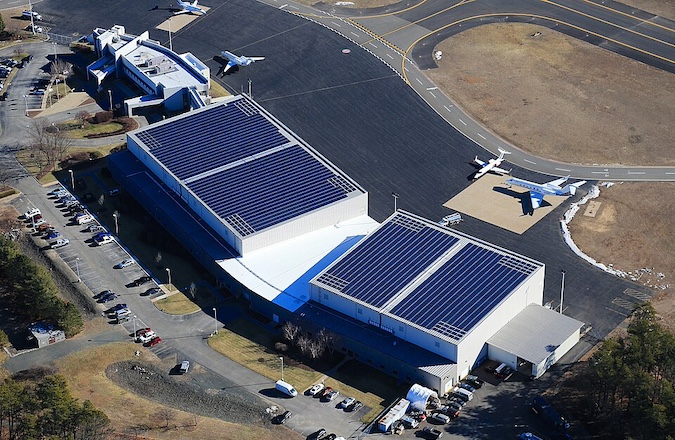
There is a case for also considering technical constraints before reaching a site selection decision. Glint and Glare, alongside other constraints including radar interference and aviation impacts, can bring with them additional requirements for some sites. These will need to be accounted for either in the setup costs or in the expected revenue of a development. In the most extreme case, solar glare effects have resulted in some solar sites needing to have panels removed after construction, such as at a solar farm in the vicinity of Amsterdam Airport Schiphol [3], after the Polderbaan runway was caused to be closed [4].
Technical constraints can significantly impact the revenue of a solar farm if they are not addressed properly during the selection and design of the site. The costs can also be impacted. Even if a site does not create unwanted impacts to a significant degree, planning and stakeholder requirements will still be a consideration in some markets. Larger sites which are close to more sensitive receptors including airports, busy roads, and large residential developments, can expect to take longer to make it through planning. This is especially true in the UK if they constitute a Nationally Significant Infrastructure Project (NSIP) or Development Consent Order (DCO). Not all processes can be initiated prior to site selection, but it is worth considering what feasibility assessments can be completed, as these will allow for a more expedited planning submission when a site has been chosen. This, in turn, could allow the selected site to deliver profits sooner.
By examining the technical feasibility of a site early, setup costs and risks of a project can be minimised, and those responsible for procuring and negotiating for sites can make better informed decisions with a more accurate idea as to which might be the most profitable.
What technical studies are needed for a solar EIA?
The range of technical studies needed for an Environmental Impact Assessment (EIA) of a solar farm is dependent on the nature of the site. The following studies are almost always required:
- Solar Glint and Glare Assessment
Solar panels are designed to absorb light, but their reflectivity increases as the incidence angle of the Sun increases. This can result in glare, which can present amenity issues towards local residents, and safety concerns for local roads, railways and airports. - Ecology Assessment
Consideration must be given to whether any protected species, for example bats in the UK, currently occupy the site. Proposed developments in the UK also have an obligation to deliver a biodiversity net gain. - Electromagnetic Fields (EMF) Assessment
Transmission infrastructure surrounding solar farms, including substations, Battery Energy Storage Systems (BESS) and high-voltage cables, can create electric and magnetic fields [5]. In extreme cases, such fields can create impacts towards human health and towards radio signals in the vicinity. In practice, the purpose of the assessment is to allay concerns about this happening. - Landscape and Visual Assessment
Solar farms can alter the landscape of which they are part. An LVIA determines to what extent they present a character or visual impact [6]. - Noise Assessment
The solar farm and surrounding transmission infrastructure can create noise towards sensitive receptors. Assessment is required to ensure that the rated noise level of the installation is acceptable in the context of the measured baseline noise level of the site.
Some sites may also require more specialist assessments, either as part of submission or to discharge a planning condition. These may include:
- Aviation Assessment
Solar farms in the vicinity of airfields have the potential to reflect signals from Communications, Navigation and Surveillance (CNS) equipment, including radar and navigational aids. Visibility of the site from these installations might need to be determined. - Lighting Assessment
Construction occurring during nighttime hours has the potential to cause light spill towards neighbouring sensitive receptors. If the development is collocated with a BESS facility and this has security lighting, a lighting scheme will need to be designed to carry out its intended function whilst avoiding light pollution or light spill. - Land
The land on which a development is situated may need assessing for its suitability for construction. Water moving through a site is considered in Hydrology Assessments and in Drainage Assessments. A Topography assessment can feed useful information about a site’s terrain into other studies. The makeup of the ground can be studied further within a Soil Assessment.
How do I demonstrate to investors that glare risk has been properly managed?
By commissioning a glint and glare assessment early in the project from an experienced and trusted provider, one can set up and move forward with a solar project with confidence that unexpected problems surrounding solar glare, which might include rework and delays, will be minimised later in the process.
A good glint and glare assessment will be conducted in line with robust and established methodology with quantitative outputs which reliably and deterministically predict whether glare is geometrically possible, alongside the magnitude of any impact.
Speak to an Expert
Pager Power has assisted with technical issues facing over 1900 solar developments worldwide, including solar glare, radar, aviation and EMF. Pager Power is able to draw on this experience to provide insight into the potential glare effects and possible required mitigation early in the stage of a development, in turn allowing investors to build up a better informed picture of the expected risks and rewards surrounding particular sites.
Pager Power’s analysis and stakeholder consultation withstands scrutiny from authorities worldwide. Whether you have sites to put through planning, or investor concerns to allay, you can contact us here.
References
[1] Britain continues to break clean power records. UK Government. Accessed 12/11/2026.
[2] Global Solar Market Outlook 2026-2030 p.55. SolarPower Europe. Accessed 12/11/2026. page 55
[3] Solar panels near Polderbaan Runway to be partially removed. Amsterdam Airport Schiphol. Accessed 12/11/2026.
[4] Glare Impact Closes Schiphol Runway. Pager Power. Accessed 12/11/2026.
[5] Do Planning Authorities Require EMF Studies for Solar or Wind Farms? Pager Power. Accessed 12/11/2026.
[6] Do I Need an LVIA (Landscape & Visual Impact Assessment)? WWA Landscape. Accessed 12/11/2026.
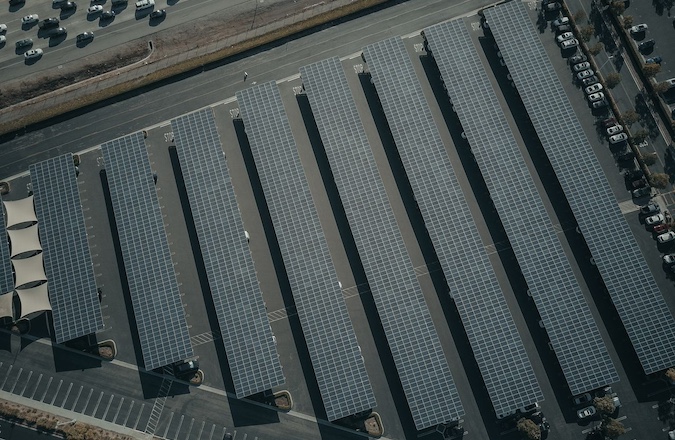
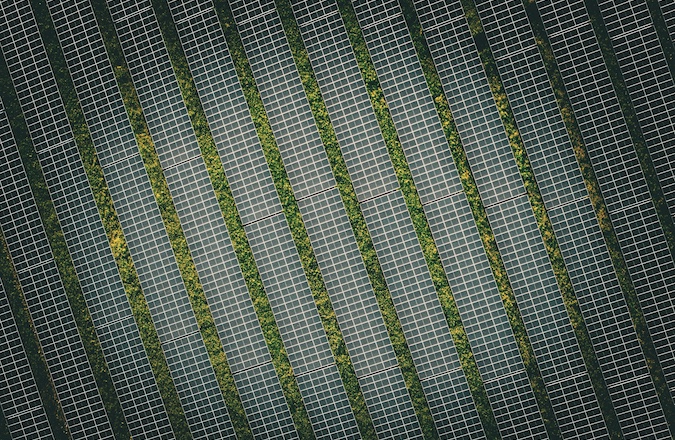
Image accreditation: Bernd Dittrich (April 2026) from Unsplash.com. last accessed on 16 November 2026. Available at: https://unsplash.com/photos/aerial-view-of-a-solar-panel-farm-with-green-grass-6YZL06HBQ6o
post contents
About the Author: Harry Watson