Results So Far From Plastic Bag Bans
In 1933, Polyethylene was created by accident at a chemical plant in Northwich, England. While Polyethylene had been created in small batches before, this was the first synthesis of the material that was industrially practical. It was initially used in secret by the British military during World War II. [1]
The first proper plastic bag was then created in 1965 by a Swedish company called Celloplast, which quickly replaced the cloth and paper bags used at the time. In 1979, the plastic bag then spread into Europe and the United States.
The First Ban on Plastic Bags
The first real alarm bells for plastic pollution came around in 1997, when sailor and researcher Charles Moore discovered the Great Pacific Garbage Patch (GPGP), which is the largest of several gyres in the world’s oceans where immense amounts of plastic have accumulated, threatening all marine life. It was estimated that the GPGP had a mass of approximately 100,000 tonnes. To put it into perspective, this weight is also equivalent to more than 740 Boeing 777’s. A total of 1.8 trillion plastic pieces were estimated to be floating in the GPGP, which is equivalent to 250 pieces of plastic debris for every human in the entire world. [2]
In 2002, Bangladesh became the first country in the world to implement a ban on plastic bags after it was found to have played a key role in clogging the drainage systems during disastrous flooding. In 2018, the United Nations Environment Programme (UNEP) found that 127 out of 192 countries have enacted some form of national legislation to address the plastic bag problem we now face.
Current Plastic Bans
Referring to a previous article [3], more recent bans in England of single use plastics from 2022 and 2023 have helped to reduce the amount of plastic pollution going into the environment.
In new studies from the US, bans in five US states and cities with a combined population of around 12 million people have cut single-use plastic bag consumption by about 6 billion bags a year. If everywhere adopted a ban that’s similar to the policies adopted by these US states and cities, we could eliminate an estimated 300 single-use plastic bags per person per year, according to their reports. [4]
Results so Far
Over 100 countries now have a full or partial ban on single-use plastic bags. UK official figures showed the use of single-use supermarket plastic bags had fallen 98% since retailers in England began charging for them in 2015. The government claimed the average person in England now bought just two single-use carrier bags a year from major retailers since the bans were introduced.
Reports have also found that bans in New Jersey, Vermont, Philadelphia, Portland in Oregon, and Santa Barbara in California have saved the use of many plastic bags as would circle the earth 42 times.
In 2008, Rwanda became the world’s first ‘plastic free’ nation, 10 years after it introduced a ban on all plastic bags and plastic packaging. Unlike many other countries, the African nation is strict when it comes to enforcing its ban.
Although there are few results from 2024 so far, we should be hopeful that the future will be a plastic free one.
Ways to Reduce Plastic Bag Use Even Further
– Retailers should not be permitted to distribute plastic film bags of any thickness at the checkouts.
– Companies could invest in providing bags made from different materials, such as bags made from the Cassava plant, as referenced here. [5]
– Countries should be stronger when adopting bans on single-use plastic to minimise plastic waste and close loopholes that weaken the effectiveness of the bans.
– Reusable bags such as cloth, hessian, bags for life and paper bags should be encouraged.
– Any plastic bags such as bags for life, should be priced as such that it encourages people to bring their own bags from home rather than constantly purchasing new bags.
– Retail companies or the Government could introduce incentives to reuse your own bags, for instance, you could get 50p off your final shopping bill for every reusable bag you use.
– There should also be more accessible recycling drop off points for bags that are no longer wanted or are damaged/broken. These could be recycled and created into more plastic bags.
About Pager Power
Pager Power undertakes technical assessments for developers of renewable energy projects and tall buildings worldwide. For more information about what we do, please get in touch.
References
[1] https://www.unep.org/news-and-stories/story/birth-ban-history-plastic-shopping-bag
[3] https://www.pagerpower.com/news/england-bans-single-use-plastic/
[5] https://www.pagerpower.com/news/are-dissolvable-carrier-bags-the-future/
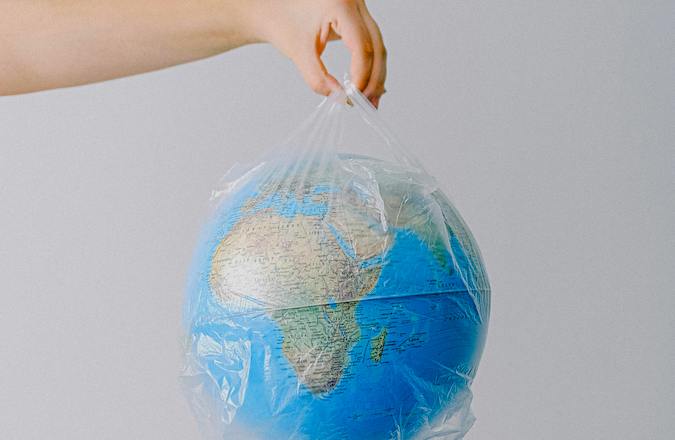
[6] https://www.pexels.com/photo/a-person-holding-a-plastic-bag-with-a-globe-4167546/ – Image accessed on 20/02/2024 from Pexels. Photo of someone holding a globe in a single-use plastic bag. Photo credit: Anna Shvets.
post contents
About the Author: Georgia Low

Latest News
US Continues to Build Out Solar Capacity
Earlier this month, the Solar Energy Industries Association (SEIA) released [...]
China’s Airborne Wind Turbines
In early 2026, China successfully developed an airborne wind turbine [...]
Shadow Flicker Assessments for Wind Turbines: A 2026 Update
Shadow flicker is the effect of rotating turbine blades, causing [...]