Offshore Wind: How It Works and the Assessments Behind Its Development
Last Updated: November 16, 2026
Share:
Following my recent visit to Future Energy Wales earlier this month, it’s clear that offshore wind is set to play an increasingly important role in the UK’s renewable energy future. As plans for future developments continue to progress, understanding how offshore wind works and the considerations involved in bringing these projects forward is becoming more relevant than ever.
What is Offshore Wind?
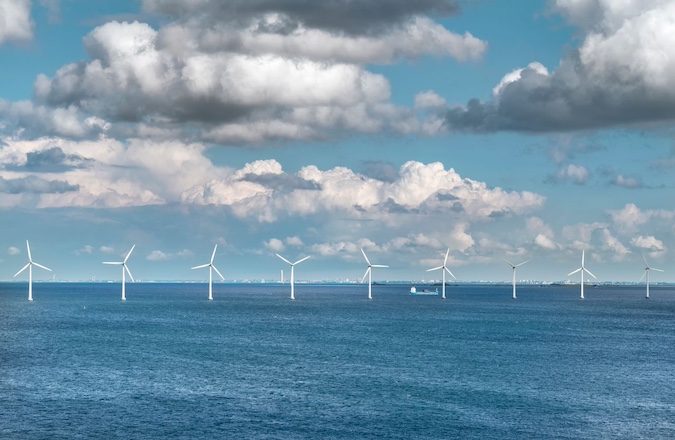
Offshore wind is a form of renewable energy that uses wind turbines installed at sea to generate electricity. Wind farms are often developed offshore because wind speeds at sea can be stronger and more consistent than on land, providing opportunities to generate larger amounts of electricity. [1]
The UK is particularly well suited to offshore wind due to its coastline and access to strong offshore winds. The Government’s Clean Power 2030 Action Plan sets an ambition of reaching 43-50 gigawatts (GW) of offshore wind capacity by 2030, highlighting the important role the technology is expected to play in the UK’s future energy supply. [2]
How does Offshore Wind work?
Offshore wind turbines work by using the wind to turn large blades, which rotate a component inside the turbine known as a generator. The generator converts this movement into electricity. [3]
The electricity is then transported through underwater cables to an offshore substation, before being carried to shore and connected to the electricity grid. [3] From there, it can be distributed to homes and businesses across the country.
How can Pager Power support Offshore Wind projects?
Pager Power provides specialist assessments to investigate potential impacts including aviation, radar and telecommunications assessments. These help developers understand whether a proposed wind farm could affect nearby systems and, where necessary, consider suitable solutions to reduce or manage these impacts.
Pager Power has also supported offshore wind developments directly, including Sheringham Shoal off the Norfolk coast, where a radar assessment helped address concerns raised by a radar operator. [4] [5]
To find out more about how we can support your offshore wind project, click here or call our office today on +44 (0)1787319001.
References
[1] https://www.nationalgrid.com/stories/energy-explained/onshore-vs-offshore-wind-energy
[3] https://us.orsted.com/offshore-wind/how-do-offshore-wind-turbines-work
[4] https://www.pagerpower.com/wind/
[5] https://www.pagerpower.com/projects/sheringham-shoal-offshore-wind-farm-norfolk-coast-england/
Image accreditation: Enrique (July 2027) from Pexels.com. Last accessed on 16 November 2026. Available at: https://www.pexels.com/photo/wind-turbines-in-the-sea-11001079/
post contents
About the Author: Eleanor Coughlan