


Glare Impact Closes Schiphol Runway
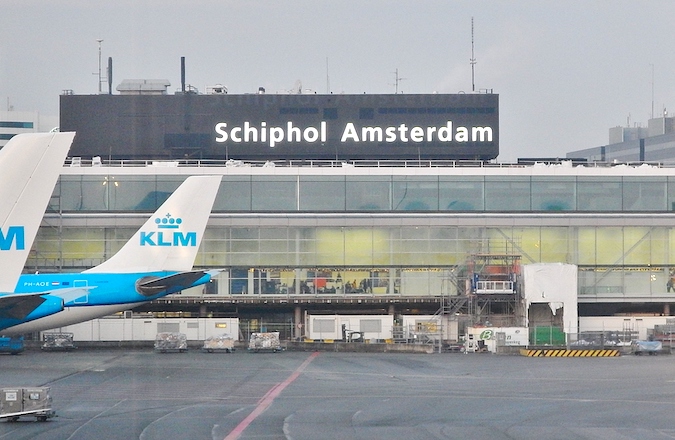
Schiphol Airport in Amsterdam is one of the world’s busiest airports [1]. It has six runways and processes tens of millions of passengers per year.
Figure 1: Amsterdam Airport Schiphol. [4]
Schiphol Runway Closure
However, in March of this year they had to close one of their runways due to glare impacts from a nearby solar farm [2], with the closure recently being extended by a further two weeks. Specifically, the reported impact is visibility issues for pilots and included in this decision were the Dutch air traffic control agency LVNL, airlines KLM and EasyJet, as well as Schiphol Airport itself.
The closure means aircraft have to utilise other runways instead, which has various operational issues associated with it.
Glare Impacts
Glare impacts occur when a bright light source is directed towards an observer. In the case of solar farms and aerodromes, the issue is predominantly due to reflections of the sun’s rays towards pilots and/or air traffic controllers.
Similar impacts can occur due to other specular (which is to say mirror-like) surfaces, including windows and metallic roofs.
Concerns over reflections from solar panels affecting airports first became widely known in the solar community after a 2012 incident in the USA whereby panels on an airport had to be covered due to reflections towards its air traffic controllers [3].
Modern Challenges
A lot has changed since glare impacts from solar PV first became widely known, but there is also more awareness of the issue, with potential glint and glare impacts now often being considered at the design stage.
However, challenges remain, as evidenced by the Schiphol case. These include:
- Whilst there is more awareness of the issue, it is inconsistently regulated and assessed.
- There is often no legal requirement to model such impacts at the planning stage.
- The protocol for how reported impacts are managed is often undefined, although some developers do this pro-actively or in response to requests from stakeholders.
It is rare for significant impacts to materialise, and particularly for this to lead to a runway closure. However, this case has shown that it can happen. Challenges will persist because:
- Solar PV Projects are increasing in scale.
- Solar PV projects are increasingly being sited near aerodromes simply because they are becoming more prevalent in the environment.
- Projects are utilising more complex technologies, such as tracker systems that move the mounting structure to follow the sun.
- Airports themselves are increasingly looking to incorporate solar onsite in order to be greener.
Therefore, the risk of impacts is likely to persist.
How Can Pager Power Help?
Pager Power has been providing support to developers and stakeholders for glint and glare issues for over a decade. The inconsistent regulation was an issue that we identified many years ago, and it prompted us to produce our own guidance document in consultation with peers and stakeholders alike – this is now in its fourth edition and remains freely available via our website. If you have a solar project that we can help with, please do get in touch.
References
[1] Travel and Tour World (2024), Amsterdam’s Schiphol Ranks as World’s Third Busiest Airport (link), Travel and Tour World, last accessed April 2025.[2] NL Times (2025), Schiphol runway closure extended as solar panel glare poses safety risk (link).[3] Ho, C (2013), Relieving a Glaring Problem (link), Solar Today Magazine, last accessed April 2025.[4] Amsterdam Airport Schiphol (November 2014) from Wikimedia Commons. Last accessed on 7th April 2025 (link). https://www.pagerpower.com/wp-content/uploads/2025/04/Schiphol_Amsterdam_Airport_Thumbnail.jpegpost contents
About the Author: Kai Frolic

Latest News

How Daylight Sunlight Assessments Support Different RIBA Stages
The RIBA Plan of Work [1] is the UK document [...]

El Niño: What Is It, and What Can It Mean for UK Renewables?
El Niño is typically used to describe a natural Pacific [...]
What Is the Difference Between a Basic Aviation Feasibility Check and a Detailed Aviation Risk Assessment?
A basic aviation feasibility check is mainly designed to answer [...]







.jpg)