El Niño: What Is It, and What Can It Mean for UK Renewables?
Last Updated: June 16, 2026
Share:
El Niño is typically used to describe a natural Pacific weather pattern that raises global temperatures, occurring through the warming of the sea surface in the central-east equatorial Pacific. (BBC, 2026a; Met Office, n.d.)
The current likelihood of an El Niño event occurring this year is 90%, and although there is some uncertainty in forecasting models, most predict that its strength will be moderate to strong. As such, there is likely to be an increased risk of weather and climate extremes over the following year, leading to significant global impacts (WMO, 2026; BBC, 2026a).
Global and Local Impacts
Global warming is often characterised as a linear increase in global average temperatures. However, although this describes long-term trends in climate change, average temperatures vary significantly and are often influenced by El Niño (heating) or La Niña (cooling) weather events (BBC, 2026b).
The most significant El Niño event in recent history occurred in 2015-2016, which was, according to some measures, the strongest in 145 years. During this period of time, many disruptive and extreme weather events were observed across the globe, including:
- Droughts and increased temperatures in Australia, Southern Africa, the Amazon, India and Europe;
- Extreme rainfall in China and India;
- Increased prevalence of cyclones in the North Pacific;
- High C02 releases into the atmosphere due to forest fires globally (Seneviratne et al, 2021).
In the UK, the impacts of El Niño are less direct, and impacts often lag behind the initial event. Higher temperatures are more likely during summer, but the impact will likely be felt more significantly in the winter months (BBC, 2026c).
UK Renewables
The impact of climate change and exacerbating weather events such as El Niño is two-fold, affecting both the generative capacity of renewables, which is reliant on weather and temperature patterns, and legislative pressure towards the transition to renewables.
The impacts on renewable energy generation are explored by Solaun and Cerdá, (2019), below:
Solar:
- An increase in temperature may negatively impact the efficiency of solar cells, and subsequently, power output. An increase of 1°C lowers the efficiency of PV modules by around 0.5%;
- Increases in solar irradiation may increase power output;
- Increases in atmospheric particles such as dirt, dust and snow would decrease energy output;
- Increases in wind speed may cool down the modules more effectively, increasing productivity, but may also cause damage from debris;
- Extreme weather events increase the likelihood of damage to PV panels.
Wind:
- Changes in wind speed may reduce generation, as turbines cannot operate in very high or very low winds;
- Increases in temperature may reduce air density and power output, as well as decrease the efficiency of the equipment;
- Sea level rise may damage offshore turbine foundations;
- Extreme weather events increase the likelihood of damage to wind turbines.
Research has also found that legislative pressure from the general public may also increase as awareness of climate change improves (Liao and Junco, 2022), which could play an important role in the future of renewables across the UK and worldwide.
“El Niño is arriving on our doorstep in the coming months with 90% certainty. The world must treat it as the urgent climate warning it is.”
– UN Secretary-General António Guterres (WMO, 2026)
Our Experience
Pager Power is a specialist technical consultancy based in the United Kingdom and has been providing independent expertise on planning issues for solar, wind, and building developments for over 20 years.
Established in 1997, the company initially specialised in assessing the impact of wind turbines on radar systems. Pager Power has since expanded into a multidisciplinary technical planning consultancy that offers a comprehensive range of services and has supported renewable and building projects in more than 60 countries. This includes completing over 1,800 glint & glare assessments.
For more information about what we do, please get in touch.
Sources
BBC, 2026a. El Niño under way and threatens weather extremes, scientists say. 2026 BBC. Available at: https://www.bbc.co.uk/news/articles/c75ylx7g00xo
BBC, 2026b. Prepare for El Niño, UN warns – it could be the strongest in decades. 2026 BBC. Available at: https://www.bbc.co.uk/news/resources/idt-54f4e985-a7fb-48b2-8246-f3be0d699402
BBC, 2026c. Is a ‘Super El Niño’ on the way and how will it affect the UK?. 2026 BBC, Available at: https://www.bbc.co.uk/weather/articles/cj94nzj33m0o
Liao, Y. and Junco, P.R., 2022. Extreme weather and the politics of climate change: A study of campaign finance and elections. Journal of Environmental Economics and Management, 111, p.102550.
Met Office, What are El Nino and La Nina?. N.d. Crown Copyright. Available at: https://weather.metoffice.gov.uk/learn-about/weather/oceans/el-nino
Solaun, K. and Cerdá, E., 2019. Climate change impacts on renewable energy generation. A review of quantitative projections. Renewable and sustainable energy Reviews, 116, p.109415.
Seneviratne, S.I., X. Zhang, M. Adnan, W. Badi, C. Dereczynski, A. Di Luca, S. Ghosh, I. Iskandar, J. Kossin, S. Lewis, F. Otto, I. Pinto, M. Satoh, S.M. Vicente-Serrano, M. Wehner, and B. Zhou, 2021: Weather and Climate Extreme Events in a Changing Climate. In Climate Change 2021: The Physical Science Basis. Contribution of Working Group I to the Sixth Assessment Report of the Intergovernmental Panel on Climate Change[Masson-Delmotte, V., P. Zhai, A. Pirani, S.L. Connors, C. Péan, S. Berger, N. Caud, Y. Chen, L. Goldfarb, M.I. Gomis, M. Huang, K. Leitzell, E. Lonnoy, J.B.R. Matthews, T.K. Maycock, T. Waterfield, O. Yelekçi, R. Yu, and B. Zhou (eds.)]. Cambridge University Press, Cambridge, United Kingdom and New York, NY, USA, pp. 1513–1766
World Meteorological Foundation [WMO], 2026, WMO: Prepare for El Nino. 2026 World Meteorological Organization (WMO). Available at: https://wmo.int/news/media-centre/wmo-prepare-el-nino
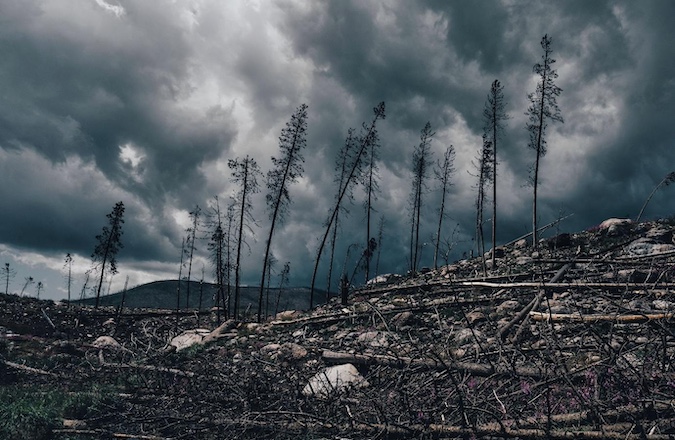
Image Accreditation: Alfo Medeiros (July 2022) from Pexels.com. Last accessed on 16 June 2026. Available at: https://www.pexels.com/photo/burnt-trees-on-the-ground-12983197/
post contents
About the Author: Adam Hardie