UK Met Office Safeguarding And Wind
As of April 2015, the UK Met Office became a statutory consultee for wind developments. Prior to this, Met Office radar concerns were raised by the Defence Infrastructure Organisation (DIO) of the Ministry of Defence (MOD).
This means that applicants must now consult the Met Office directly regarding proposed wind developments in order to understand whether there are any potential impacts.
Met Office Concerns
Objections to wind development proposals from the Met Office are predominantly due to potential adverse impacts on their weather radar. Consultation is also required for additional meteorological radio sites [1]; however this is a less common issue in practice.
Impacts on Weather Radar
The main physical effects of wind turbines on weather radar are:
- Beam blocking – the wind turbines degrade the radar signal in their shadow.
- Reflection – the wind turbines redirect the radar signal in an unwanted direction.
In terms of the actual consequences for the Met Office, the impacts of concern resulting from the above are:
- Impact on weather forecasts / warnings.
- Impact on hydrological forecasts / warnings.
- Impact on atmospheric pollutant hazard warnings.
Weather Radar Sites
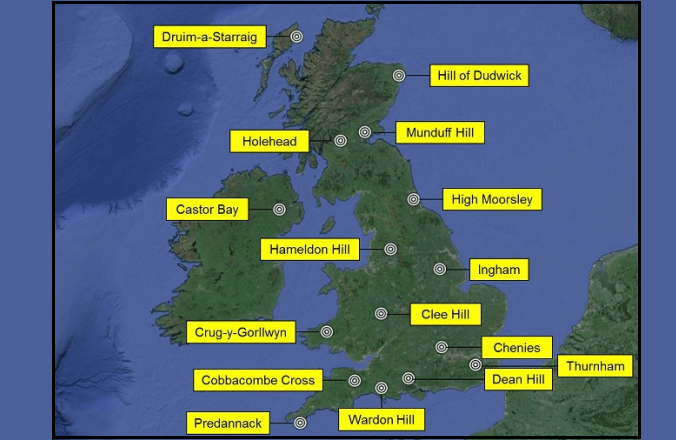
The figure below shows a number of the UK Met Office safeguarded sites (imagery sourced from Google).
 Figure 1: UK Met Radar Sites.
Safeguarding Approach
The safeguarding approach adopted by the UK Met Office has been informed by OPERA / EUMETNET [2] safeguarding criteria. These are understood to have been endorsed by the World Meteorological Organisation [3], which is a United Nations Agency. This approach is summarised in the figure below.
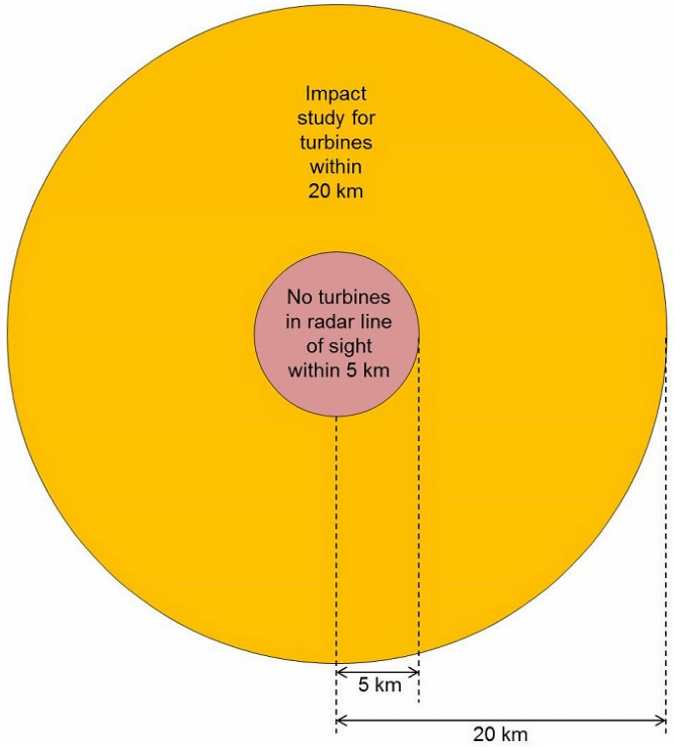 Figure 2: Safeguarding approach.
Therefore, any wind development within 20 km of a Met Radar is likely to require an assessment. It should be noted that there are other considerations, such as:
- The operational sensitivity of the area.
- The cumulative effect of other wind developments.
Therefore, there can be particular issues that will be highlighted following engagement / assessment. However, the initial approach for safeguarding Met Radar is more clearly defined than other radar types, including those used in aviation and/or defence.
Mitigation
A detailed discussion of radar mitigation is not presented in this article. However, there are steps that can be taken to minimise potential effects on Met Radar, particularly before the design freeze stage. These include:
- Layout optimisation relative to terrain – any terrain that already affects radar coverage in the direction of the development will be material in quantifying the impact.
- Adjusting turbine tip height – ensuring the tips are below the radar main beam (if possible) can greatly reduce the potential impact.
- Turbine alignment relative to the radar – this can reduce the size of the affected area of coverage.
- Technical mitigation at the radar – this could include physical changes or upgrades to the radar, or utilisation of alternative coverage sources.
Keep in Mind
The Met Office is a statutory consultee for wind developments, and an objection due to potential impacts on weather radar can stop a development going ahead.
The safeguarding approach for weather radar is well established, more so than other radar types.
Early engagement (pre-planning) and consideration of mitigation options before the design freeze can be the difference between a hiccup and a disaster for a proposed development.
Image accreditation: Google Imagery, © 2016
References
[1] Met Office guidelines for wind farm developers: meteorological radar and other technical sites used for meteorology, the Met Office, publication dated April 2012. (Last accessed 16/02/2016)
[2] EUMETNET OPERA. This a group of European meteorological services that produce various publications pertaining to safeguarding met radar, among other things. (Last Accessed 16/02/2016)
[3] World Meteorological Organization (Last Accessed 16/02/2016)
post contents
About the Author: Mike

Latest News
US Continues to Build Out Solar Capacity
Earlier this month, the Solar Energy Industries Association (SEIA) released [...]
China’s Airborne Wind Turbines
In early 2026, China successfully developed an airborne wind turbine [...]
Shadow Flicker Assessments for Wind Turbines: A 2026 Update
Shadow flicker is the effect of rotating turbine blades, causing [...]