Mobile Phone Reception Surveys Now Available
Last Updated: August 7, 2017
Categories:
Share:
Overview
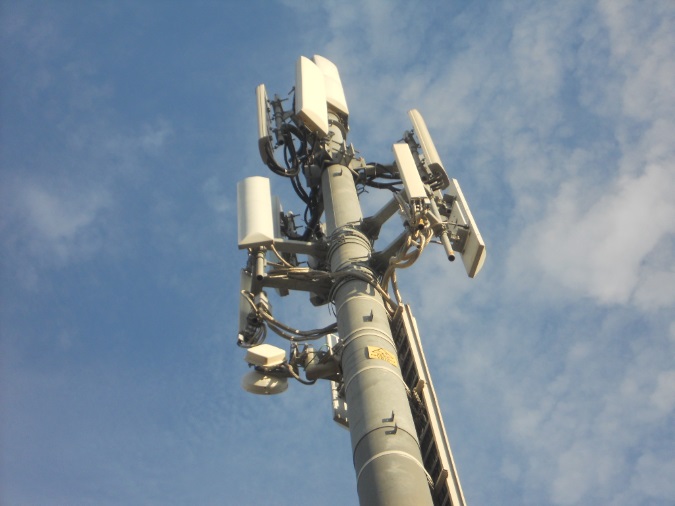
Pager Power is delighted to announce the ability to undertake mobile phone reception surveys, a brand new service available to all clients. We have over 10 years of experience completing television and radio surveys and this new addition will further aid developers understand how their proposed development will impact upon telecommunications signals. The results of the mobile phone reception survey may be used to identify key interference areas, signal hotspots/dead spots, or to identify internal mobile reception quality for new building developments. There are many ways in which a mobile phone reception survey can benefit a proposed or existing development and the following article discusses a variety of the survey’s applications.
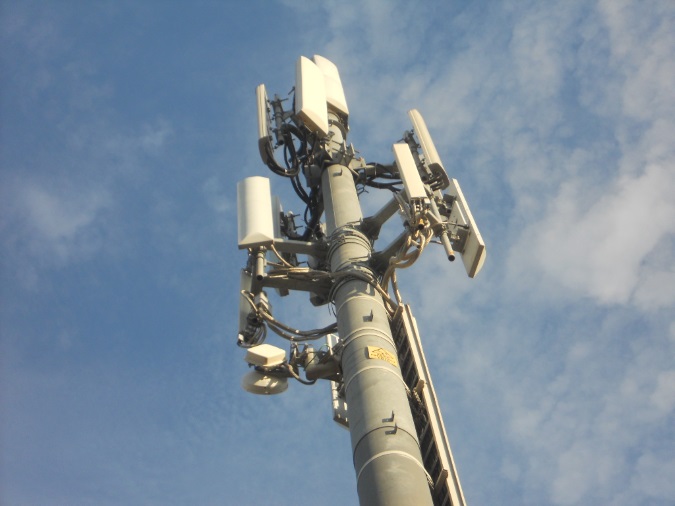
Figure 1: Mobile phone mast[1]
Mobile Phone Reception Equipment
Pager Power uses the Siretta Snyper-LTE Spectrum which allows for both static point and continuous live readings of the mobile phone signal. The analyser can receive all of the current European wireless mobile phone standards (5G/4G/LTE, 3G/UMTS & 2G/GPRS) for all mobile phone networks in the UK (e.g. EE, Three, Vodafone etc.). Figure 1[2] below shows the Siretta Snyper Spectrum device.
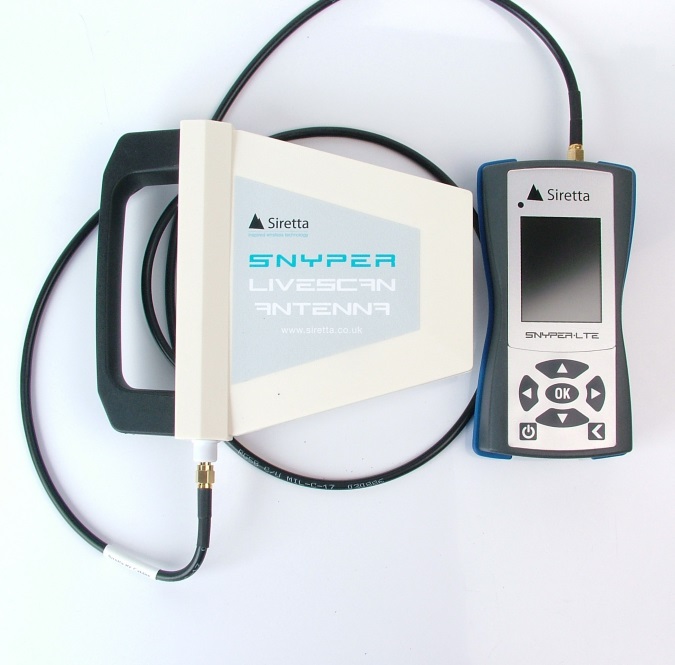
Figure 1: Siretta Snyper Spectrum mobile phone reception device.
Reception from each network operator can be compared and contrasted to determine which has the best signal in a given area. The analyser can also be programmed to ignore signals below a specific threshold, where only signals above a certain dB level are of interest.
Mobile Phone Reception Survey Options
A mobile phone reception survey may be required for developers working on large construction projects such as wind or building developments. The following list gives three potential uses for this type of study.
- To understand baseline reception conditions in the area surrounding the proposed development by determining current signal quality in key interference areas;
- To understand post-construction conditions to determine the new baseline quality in the area surrounding the proposed development and/or investigate interference complaints;
- To assess the internal signal quality of a new building development, and to assess and understand coverage for future occupiers.
The results of each survey are provided within a full technical report suitable for submission with a planning application.
Enquire today
If you are interested in finding out more or require a mobile phone reception survey please feel free to get in touch to discuss your project and discover how we can help you.
References
[1] ShareAlike 2.0 Generic (CC BY-SA 2.0). Last accessed 02/08/17.[2] Taken from the Siretta website. Last accessed 02/08/17.
post contents
About the Author: Mike

Latest News
US Continues to Build Out Solar Capacity
Earlier this month, the Solar Energy Industries Association (SEIA) released [...]

China’s Airborne Wind Turbines
In early 2026, China successfully developed an airborne wind turbine [...]

Shadow Flicker Assessments for Wind Turbines: A 2026 Update
Shadow flicker is the effect of rotating turbine blades, causing [...]