Turning Rubbish into Climate Control: How Common Plastics Could Revolutionise Building Temperatures
Exciting developments have emerged from researchers at Princeton University and UCLA, paving the way for a revolutionary passive mechanism to alter how we heat and cool our buildings.
As highlighted in a recent article for Cell Reports Physical Science, the team has ingeniously utilised special clear coatings made from household materials such as polypropylene— often used in manufacturing products such as food containers and packaging —to enhance thermal exchange with the surroundings.
This innovative method promises to maintain buildings at a comfortable temperature during the scorching summer months and keep them cosy throughout the winter, potentially lessening our dependence on energy-intensive heating and cooling systems [1].
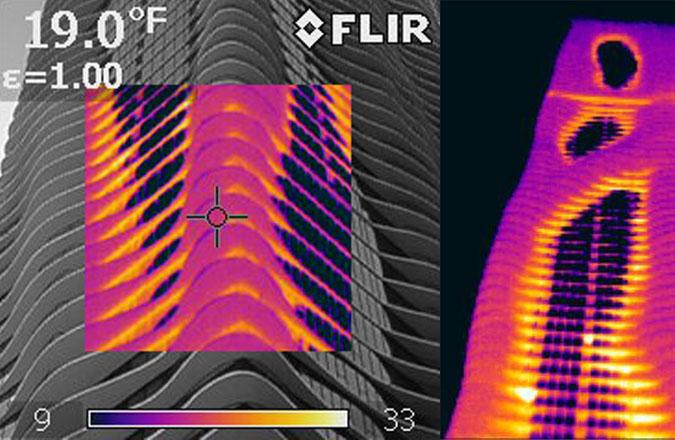
Click here to see a thermal photograph by Princeton University of the heat radiated by buildings.
Researcher Jyotirmoy Mandal, an assistant professor of civil engineering at Princeton University, said:
“With the increase in global temperatures, maintaining habitable buildings has become a global challenge.”
“Buildings exchange a majority of heat with their environment as radiation, and by tailoring the optical properties of their envelopes to exploit how radiation behaves in our environment, we can control heat in buildings in new and impactful ways.” [2]
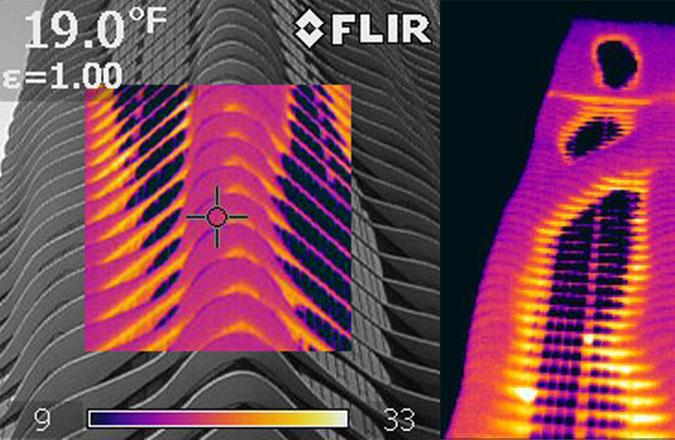
Figure 1: Thermal Imaging of the Aqua Tower in Chicago. [3]
Chilling Effects: The Cool and Not-So-Cool Impacts of Air Conditioning on Our Planet
Centuries-old practices of using reflective roofs and walls to cool buildings are seeing a modern resurgence. While cool roof coatings have garnered attention, cooling walls and windows present a more complex challenge. Research has revealed how heat transfers differently to the sky versus the ground, opening innovative possibilities for improving cooling efficiency. This could lead to self-cooling buildings, offering respite from the heat without the environmental toll of air conditioning.
“By coating walls and windows with materials that only radiate or absorb heat in the atmospheric window, we can reduce broadband heat gain from the ground in the summer, and loss in the winter, while maintaining the cooling effect of the sky. We believe that this idea is unprecedented, and beyond what traditional roof and wall envelopes can achieve,” Mandal said.
Using air conditioners and electric fans to stay cool currently contributes to almost 20% of the total electricity consumption in buildings globally. This increasing demand for space cooling is straining electricity systems in many countries and leading to higher emissions. Unless effective policies are implemented, the global market for space cooling and the energy needed to meet it will continue to rise for many years. However, there is a significant opportunity to quickly influence energy demand growth related to cooling through policies to enhance equipment efficiency.
A crucial report called The Future of Cooling from the International Energy Agency (IEA) aims to raise global awareness about one of the most critical energy issues of our time. It outlines a sustainable path towards the future of cooling that will enable people to enjoy the benefits of cooling without overwhelming the energy system or harming the environment [4].
Conclusion
The discovery that the common material polypropylene can selectively radiate or absorb heat into the atmosphere offers promising prospects for thermoregulating buildings on a large scale. Researchers have noted substantial energy savings potential at the building scale, comparable to the benefits of painting dark roofs white. This development could offer a sustainable solution to soaring air conditioning costs and heat-related casualties worldwide.
“The mechanism we proposed is completely passive, which makes it a sustainable way to cool and heat buildings with the seasons and yield untapped energy savings,” Mandal said. “In fact, the benefits of the mechanisms and materials we show are highest for buildings in the global south. So, it could be a more equitable solution in resource-poor communities, even more as they see increasing cooling demands and heat-related mortalities.” [1]
About Pager Power
Pager Power undertakes technical assessments for developers of renewable energy projects and tall buildings worldwide. For more information about what we do, please get in touch.
References
[1] Using Plastic to Passively Heat and Cool Buildings by Lab Manager. Accessed on 10/07/24. Available at: https://www.labmanager.com/using-plastic-to-passively-heat-and-cool-buildings-32435
[2] Common Plastics Could Passively Cool and Heat Buildings with the Seasons by Princeton University. Accessed on 10/07/24. Available at: https://engineering.princeton.edu/news/2024/06/27/common-plastics-could-passively-cool-and-heat-buildings-seasons#:~:text=%E2%80%9CWe%20were%20really%20excited%20when,atmospheric%20window%2C%E2%80%9D%20Raman%20said.
[3] Aqua Tower Thermal Imagaging. Accessed on 17/07/24. Available at: https://commons.wikimedia.org/wiki/File:Aqua_Tower_thermal_imaging.jpg and https://commons.wikimedia.org/w/index.php?search=aqua+tower+thermal&title=Special:MediaSearch&go=Go&type=image
[4] The Future of Cooling report by IEA. Accessed on 12/07/24. Available at: https://www.iea.org/reports/the-future-of-cooling
post contents
About the Author: Gabby Rush

Latest News
US Continues to Build Out Solar Capacity
Earlier this month, the Solar Energy Industries Association (SEIA) released [...]

China’s Airborne Wind Turbines
In early 2026, China successfully developed an airborne wind turbine [...]

Shadow Flicker Assessments for Wind Turbines: A 2026 Update
Shadow flicker is the effect of rotating turbine blades, causing [...]