The United Nations Renews Calls for Climate Investments
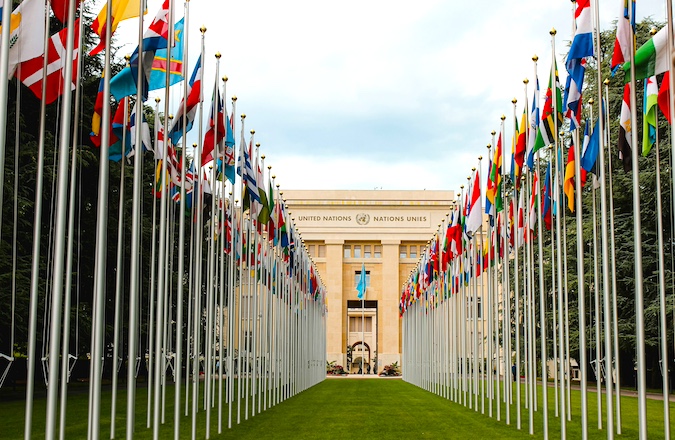
Global heating targets
In 2015, an international treaty was negotiated in Paris at the United Nations Climate Change Conference. This is often referred to as the ‘Paris Agreement’. It was a landmark agreement, with 195 nations being parties to it, and only three that did not ratify it. The agreement sought to keep the Earth’s average temperature well below 2 degrees Celsius, ideally within 1.5 degrees Celsius, relative to pre-industrial levels by the year 2100.
However, in October 2025, the Secretary General of the UN, Antonio Guterres said that it was inevitable that humanity will miss this target and the consequences will be devastating.
UN calls for action
December of 2025 has seen the United Nations Environnment Programme publish its Global Environment Outlook 7 report. Key aspects of the report include:
- It has been authored by over 280 scientists from over 80 countries.
- It calls for a “whole-of-society and whole-of-government approaches” to the issue.
- A predicted $20 trillion per year benefits by 2070.
The report also stresses that there are upfront costs for achieving this, but they are outweighed by the future benefits. Inger Anderson is the Executive Director of the United Nations Environment Programme, and has advised that one of the first thing we need to do is move beyond GDP as a measure of economic well-being. Instead, indicators relating to human health and natural capital must also affect business decisions.
Appetite for change
Societal and political attitudes to climate change have always been variable. However, as the year 2025 draws to a close, the divide in the western is perhaps widening. Increasing populist sentiment is generally not associated with increased interest in green objectives, although we should be careful not to stereotype too broadly. Perhaps the clearest example of a pull away from environmental concerns is the USA, which has this year (for the second time) pulled out of the Paris Agreement. The current administration is openly unfriendly to green initiatives, and has reportedly removed fossil fuels as a cause of global warming from its Environmental Protection Agency website.
In addition, many countries have been, and remain, in the throes of more obviously imminent crises. These include the pandemic, war, cost of living increases among others. These issues, therefore, dominate not just our headlines but our attention in general.
Delayed gratification
Another issue that the climate change lobby has to contend with is the long turnaround time for predicted benefits. The earth’s climate is, of course, not something we can repair overnight. However, the idea of economic pain now for a predicted benefit in almost 50 years can be a difficult thing to sell to the public.
Nevertheless, cliché or not, we only have one planet, so the cause must continue. Perhaps a helpful step would be for the climate lobby to distill the most immediate tangible actions that we can take now, because “whole-of-society and whole-of-government approaches” can sound very daunting.
Progress
We should also not lose sight of progress that continues to be made. This year saw three Dutch cities ban fossil fuel ads in public spaces, a ruling that was passed at the start of the year and challenged unsuccessfully in court in the Spring. Researchers have made progress in generating electricity from falling droplets, a potential mechanism for generating power from rain (good news for the UK!). Globally, renewable energy generation overtook coal for the first time.
The extent to which the latest calls from the UN are heeded remains to be seen.
Pager Power
Pager Power has worked alongside renewable energy developers for over 20 years. Our areas of expertise include wind energy, solar energy, aviation safety, telecommunications interference and shadow flicker. If we can help you with your project, please do not hesitate to get in touch.
References
[1] United Nations (undated), The Paris Agreement (link), United Nations, last accessed December 2025. [2] Watts, J and Xipai, W (October 2025), ‘Change course now’: humanity has missed 1.5C climate target, says UN headI (link), The Guardain, last accessed December 2025. [3] UNEP (December 2025), Global Environment Outlook 7 (link), United Nations, last accessed December 2025.[4] Gilliver, L (December 2025), ‘A planet in peril’: UN calls for global climate investment to unlock €17 trillion benefit by 2070 (link), Euronews, last accessed December 2025.
[5] Borenstein, S (December 2025), ‘We look ridiculous’: US government website removes fossil fuels as cause of global warming (link), Euronews, last accessed December 2025.
[6] ANP (May 2025), Delft joins The Hague, Utrecht in bannig fossil fuel ads in public spaces (link), NL Times, last accessed December 2025.
[7] Ann Hughes, R (April 2025), Clean energy from rain? Scientists generate electricity from falling droplets (link).
[8] Ambrose, J (October 2025), Global renewable energy generation surpasses coal for first timeI (link), The Guardian, last accessed December 2025.
Image accreditation: Mathias Reding (May 2020) from Unsplash.com. Last accessed on 16th December 2025. Available at: https://unsplash.com/photos/flags-on-green-grass-field-near-brown-concrete-building-during-daytime-yfXhqAW5X0c
post contents
About the Author: Kai Frolic

Latest News
US Continues to Build Out Solar Capacity
Earlier this month, the Solar Energy Industries Association (SEIA) released [...]
China’s Airborne Wind Turbines
In early 2026, China successfully developed an airborne wind turbine [...]
Shadow Flicker Assessments for Wind Turbines: A 2026 Update
Shadow flicker is the effect of rotating turbine blades, causing [...]