Renewables Beside Data Centres: Electromagnetic Fields (EMFs) and Planning Risks
Last Updated: August 17, 2026
Share:
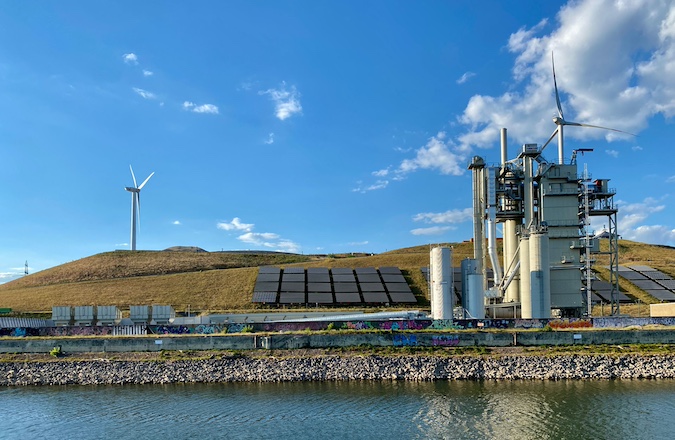
The fastest way to get power to a data centre is to stop waiting for the grid and build the generation right next to it. Many companies, such as Google, Intersect Power, and TPG Rise Climate, are developing industrial parks in the United States where solar and wind farms are located beside data centres [1], [2]. Putting the power generator and the user in the same place speeds up construction, offsets greenhouse gas (GHG) emissions and avoids waiting years for a grid connection [3].
This is a good idea, but it also creates a new kind of planning problem. You are no longer just siting a warehouse full of servers. You are siting a warehouse, a power station, high-voltage equipment, and often a battery yard, all in one spot, frequently in a rural area that has never dealt with anything like it [4].
As a result of all of this development, EMFs are produced. Each one of these pieces of equipment produces fields because electricity is flowing through them, and as the power draw is non-stop, the fields are present continuously rather than in short bursts [5], [6]. That is why EMF comes up so often when planning these projects, and why this should be treated as a technical issue [7].
Electromagnetic Fields
EMFs are invisible fields that exist wherever electricity flows, such as a power line, a substation, or even a kettle in your kitchen [8]. An electric field is made by voltage, and a magnetic field is made by the flow of current. A normal building’s demand goes up and down through the day, but a data centre pulls a heavy flow of steady current around the clock, so the magnetic field it creates never really drops. The fields are measured in two ways: electric fields in volts per metre, and magnetic fields in microteslas.
ICNIRP stands for the International Commission on Non-Ionizing Radiation Protection. They research how electric and magnetic fields, radio waves, and other kinds of “non-ionising” energy affect the human body and then turn all of that into practical safety limits that other people can use. The UK adopted the ICNIRP 1998 exposure guidelines [9] in 2004 [10] and it is regulated for electrical infrastructure through the Electricity Safety, Quality and Continuity Regulations and a voluntary industry code, with advice from the UK Health Security Agency. The maximum exposure allowed for the public is 100 microteslas for magnetic fields and 5 kilovolts per metre for electric fields.
The limit is set to stop fields that are strong enough to affect your nerves and muscles, but it also makes sure that new projects never get close to it. That is why it is important to know where the field comes from. Usually, the strongest fields on a site are always from the lines and cables that feed the substation. They are not from the equipment inside the substation. That is why the cable route, across a road, a footpath or farmland, gets attention.
High-voltage power and electrical infrastructure
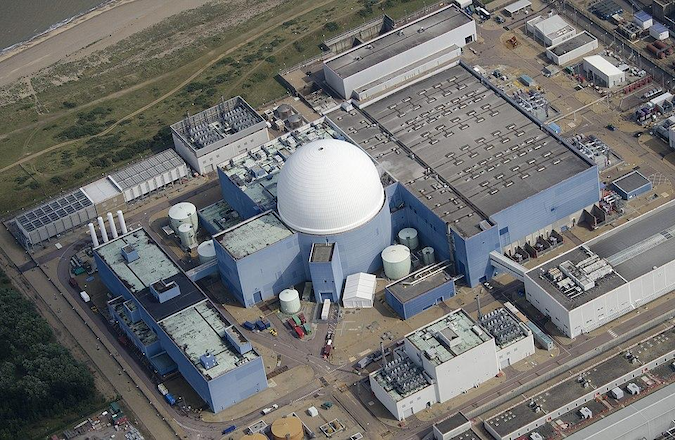
Transformers and substations are the biggest sources of EMFs. On a co-located site, you have step-up transformers that boost the generation to on-site voltages and step-down transformers to drop the transmission voltages for distribution and a massive substation to manage it. High-capacity transformers and substations produce the strongest magnetic and electric fields on the property, and because the load is constant, the fields are not intermittent [11], [12].
Overhead transmission lines and underground cables carry the power between the location of generation, the substation, and the data centre, and out to the grid. They carry the highest currents on the site, so they produce the strongest magnetic fields of any equipment there. Burying a cable removes the electric field because the ground shields it, but the magnetic field passes through the soil and remains detectable directly above the cable path, which is why cable easements that cross public land or farmland are assessed with care [13], [14].
Switchgear, feeders, busways, busbars, Power Distribution Units (PDUs) and circuit breakers transmit high current through the facility to supply that power. Busways are the solid metal bars that move very large currents along the electrical rooms, and PDUs branch off that supply out towards the racks. Because they carry continuous current close to where people work, they create local magnetic fields right around them [15]. Circuit breakers protect the system by cutting the supply when something goes wrong [16]. The moment circuit breakers open or close, they produce a brief, sharp burst of electrical noise that can spread into the wiring nearby.
Uninterruptible Power Supply (UPS), battery banks and Battery Energy Storage System (BESS) store energy, manage supply and demand and maintain and provide electricity for the site during any interruption. Their rectifiers, inverters, and switching electronics are sources of harmonics and electromagnetic interference (EMI) [17], [18].
Diesel generators, generator alternators, and automatic transfer switches (ATS) provide backup power when the utility supply fails. They sit idle most of the time except for when they are on, during which their alternators generate magnetic fields [19]; any generator that doesn’t have the same impedance as the source that generates the electricity from the utility causes harmonic distortion (change in the smooth shape of an electrical current) [20].
Wind turbine generators, internal turbine cables and solar/BESS inverters are also sources of magnetic fields and electrical noise. Wind generators produce fields within the nacelle, and high-current cables running down the tower can also produce fields along their route. Solar and battery inverters rapidly switch DC into AC, making them also sources of harmonics mainly at close range [21].
High-power AI racks draw large, continuous currents and create low-frequency EMF. The large number of switched-mode power supplies can add harmonics into the site’s electrical system; networking equipment also adds smaller amounts of high-frequency and radio-frequency noise.
To keep the thousands of chips from overheating, large chillers, pumps, and fans run constantly. Variable-frequency drives [22] control the speed of a motor by rapidly switching its power supply. They are also sources of harmonics and sudden voltage spikes on the whole site.
What Pager Power can do to help
Pager Power can assess the EMF for solar, wind, battery, and substation projects, and calculate, from site drawings and the equipment data, what the electrical and magnetic fields will be at the edge of the site and along any cable route. The aim is to show that the level sits comfortably below the UK public limit. Where the numbers look like they approach the limit or are over the limit, we can help make changes to the site and suggest mitigation.
Pager Power can also look at interference, which is the other half of the picture. That means checking that the site will not disturb nearby systems such as aviation radar, radio and television reception, or other electronics, and that its own sensitive equipment keeps working reliably.
For more information about what we do, please get in touch.
References
[1] “Intersect Power, Google, TPG partner on up to $20B renewable energy push for data centers | Facilities Dive.” Accessed: Aug. 12, 2026. [Online]. Available: https://www.facilitiesdive.com/news/intersect-power-google-tpg-partner-on-up-to-20b-renewable-energy-push-fo/735867/
[2] “A new approach to data center and clean energy growth,” Google. Accessed: Aug. 12, 2026. [Online]. Available: https://blog.google/innovation-and-ai/infrastructure-and-cloud/global-network/new-approach-to-data-center-and-clean-energy-growth/
[3] C. Schorsch, “Battery Storage for Data Centers in 2026: FEOC Compliance, FERC Co-Location, and the Deals Getting Done Now,” Davis Graham. Accessed: Aug. 13, 2026. [Online]. Available: https://davisgraham.com/news-events/battery-storage-for-data-centers-in-2026-feoc-compliance-ferc-co-location-and-the-deals-getting-done-now/
[4] M. Chediak, M. Ma, and Bloomberg, “Data centers are finding a surprising way to deploy batteries,” Fortune. Accessed: Aug. 13, 2026. [Online]. Available: https://fortune.com/2026/04/24/data-centers-ai-batteries-natural-gas-power/
[5] “AI Data Centers and Grid Harmonics: Power Quality Impacts Extending Miles Beyond Facilities – EHN.” Accessed: Aug. 13, 2026. [Online]. Available: https://www.ehn.org/data-centers-grid-harmonics
[6] LearnMetering, “Data Centers – Part 1: Understanding the Modern Data Center Load,” Learn Metering. Accessed: Aug. 13, 2026. [Online]. Available: https://learnmetering.com/data-center-load-utility-impact/
[7] “EMF Consideration for Data Centers Near Transmission Lines: Corridor Width Recommendations,” ELECTRA. Accessed: Aug. 13, 2026. [Online]. Available: https://electra.cigre.org/341-august-2025/technology-e2e/emf-consideration-for-data-centers-near-transmission-lines-corridor-width-recommendations.html
[8] “Electric and Magnetic Fields,” National Institute of Environmental Health Sciences. Accessed: Aug. 12, 2026. [Online]. Available: https://www.niehs.nih.gov/health/topics/agents/emf
[9] R. Matthes and J. H. Bernhardt, Eds., Guidelines on limiting exposure to non-ionizing radiation: a reference book based on the guidelines on limiting exposure to non-ionizing radiation and statements on special applications. in ICNIRP, no. 7. Oberschleißheim: International Commission on Non-Ionizing Radiation Protection, 1999.
[10] S. Mayor, “UK recommends adoption of international guidelines on exposure to electromagnetic fields,” BMJ, vol. 328, no. 7443, p. 790, Apr. 2004.
[11] E.-E. E. Portal and E. Csanyi, “Where do the strongest electric and magnetic fields come from in a power substation?,” EEP – Electrical Engineering Portal. Accessed: Aug. 13, 2026. [Online]. Available: https://electrical-engineering-portal.com/where-do-the-strongest-electric-and-magnetic-fields-come-from-in-a-power-substation
[12] “(PDF) Electric- and Magnetic-Field Measurements in an Outdoor Electric Power Substation,” ResearchGate, Jul. 2026, doi: 10.1109/TPWRD.2008.917690.
[13] “What electricity infrastructure is near me? | EMFs.” Accessed: Aug. 12, 2026. [Online]. Available: https://www.emfs.info/electricity-system-and-sources/what-is-near-me
[14] “Electric and magnetic fields from transmission overhead lines | EMFs.” Accessed: Aug. 13, 2026. [Online]. Available: https://www.emfs.info/electricity-system-and-sources/overhead-line/transmission
[15] “High-Power Busbar Design | Magnetic Field, AC Loss & Shielding Analysis,” EMWorks. Accessed: Aug. 13, 2026. [Online]. Available: https://www.emworks.com/application/how-to-design-high-power-busbars-for-optimal-performance-and-safety
[16] “What Are Switching Transients and How to Mimimize Them | Joslyn Clark.” Accessed: Aug. 13, 2026. [Online]. Available: https://www.specialtyproducttechnologies.com/joslyn-clark/blog/switching-transient
[17] M. Glinkowski et al., “DATA CENTER POWER SYSTEM HARMONICS: AN OVERVIEW OF EFFECTS ON DATA CENTER EFFICIENCY AND RELIABILITY”.
[18] F. Johnson-May and D. H. your say, “The hidden disruptor of data center harmony: Vol 1.” Accessed: Aug. 13, 2026. [Online]. Available: https://www.datacenterdynamics.com/en/marketwatch/the-hidden-disruptor-of-data-center-harmony-vol-1/
[19] “How Diesel Generator Alternators Work,” Jubaili Bros. Accessed: Aug. 13, 2026. [Online]. Available: https://ae.jubailibros.com/blogs/diesel-generator-basics/what-s-the-role-of-alternators-in-generator-sets
[20] “What you need to know about harmonics and generators,” Eaton. Accessed: Aug. 13, 2026. [Online]. Available: https://www.eaton.com/us/en-us/products/controls-drives-automation-sensors/harmonics/harmonics-faq-video-library/what-you-need-to-know-about-harmonics-and-generators.html
[21] L. C. McCallum, M. L. Whitfield Aslund, L. D. Knopper, G. M. Ferguson, and C. A. Ollson, “Measuring electromagnetic fields (EMF) around wind turbines in Canada: is there a human health concern?,” Environ. Health, vol. 13, no. 1, p. 9, Feb. 2014, doi: 10.1186/1476-069X-13-9.
[22] “Harmonics & VFDs: Causes,Solutions,and Key Insights-ytelect.com,” Shanghai Yingtong Electric Co., Ltd. Accessed: Aug. 13, 2026. [Online]. Available: https://www.ytelect.com/blog/harmonics-vfds-causes-solutions-and-key-insights_b310
Image accreditation: Orlando s. (Aug 2022) from Pexels.com. Last accessed on 17 August 2026. Available at: https://www.pexels.com/photo/solar-light-panels-on-grass-near-windmills-13205474/
post contents
About the Author: Vijayatha Vijayaraghavan