Exploring Instrument Flight Procedures (IFPs)
What is an Instrument Flight Procedure?
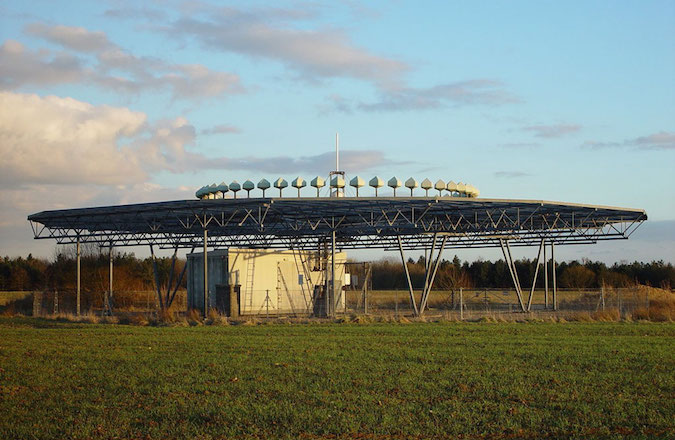
An Instrument Flight Procedure (IFP) is a set of instructions regarding navigation around aerodromes. There are two basic types, one using precision instruments and one using non precision instruments. The advantages of these over visual procedures are that approaches and departures can be regulated a further distance from the aerodrome before pilots can see the runway, allowing for easier and safer management of air traffic. Precision IFPs are typically found at larger aerodromes within the UK. Among these there are Instrument Landing Systems (ILS), which have localisers found before the landing threshold, and radar based systems such as Precision Area Radar (PAR).
Smaller aerodromes will more likely have non precision approach procedures. Depending on the system used the position of the aircraft is calculated based on distances and bearings from certain localisers, radars or beacons. Non Directional Beacons (NDB) and VHF Omnidirectional Ranges (VOR) are examples of these, and aircraft can tune into their frequencies to help determine their location.
How is an instrument flight procedure laid out?
An IFP comprises numerous segments for both take off and landing. The exact specification of these varies according to the type of procedure, and navigational aids used, although there are some recurring themes. The approach generally includes an arrival segment, which outlines the route further away from the aerodrome, before an initial approach, which prepares the aircraft for its entry into the aerodrome. Here there are a number of options including racetrack, reversal or other turning procedures, but the idea is that at the end of it, the aircraft is approaching the runway almost head on, if not exactly. This is followed by an intermediate approach and a final approach which establish the aircraft at an altitude and then guide it in along the runway centreline. A similar principle follows for the departure, and here no turns are allowed before a certain height, at which points turns can start. There are also options for limits on height within a certain distance of the aerodrome (Minimum Sector Altitude) and for circling.
How is Pager Power involved in all of this?
Alongside the Obstacle Limitation Surfaces (OLS) and the Obstacle Free Zone (OFZ), IFPs are one of the main things to consider when wanting to build a tall building or wind farm near an aerodrome!
Within the design of IFPs, rules are set out regarding obstacle clearance to ensure the necessary safeguarding of these procedures. Pager Power is able to model the existing and new OLS, and can provide a high-level assessment of IFPs in order to provide an indication of the likely result of a detailed IFP assessment. IFPs can take a much wider range of shapes than the OLS, some of which can be very specific. It is for this reason that a detailed IFP assessment should also be carried out by the Approved Procedure Design Organisation (APDO) who designed the IFPs being assessed, as they will have the greatest understanding of the layout of these specific procedures.
For more information, please contact us.
post contents
About the Author: Harry Watson

Latest News

US Continues to Build Out Solar Capacity
Earlier this month, the Solar Energy Industries Association (SEIA) released [...]

China’s Airborne Wind Turbines
In early 2026, China successfully developed an airborne wind turbine [...]
Shadow Flicker Assessments for Wind Turbines: A 2026 Update
Shadow flicker is the effect of rotating turbine blades, causing [...]