Dutch Temporary Framework for Solar near Airports
Last Updated: July 24, 2026
Share:
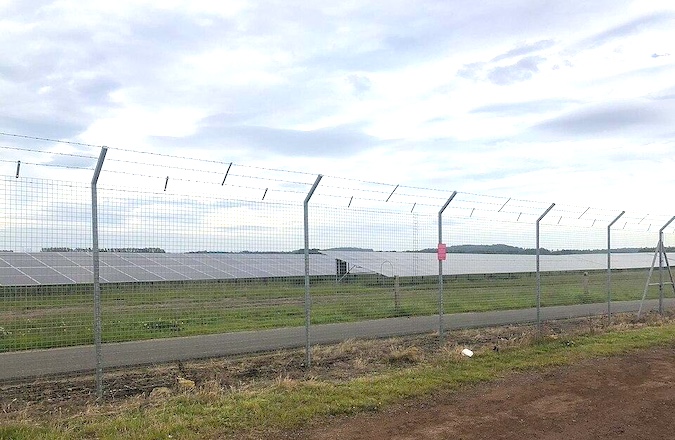
In March 2025, glare from a nearby solar farm temporarily closed one runway at Amsterdam Schiphol Airport, causing significant disruption as incoming flights had to be diverted to alternative runways. In order to resolve the issue, the developer had to initially cover the offending panels and eventually, the Dutch Government required them to remove approximately 78,000 panels [1].
This event caused the Ministry of Infrastructure and Water Management in the Netherlands to develop a temporary framework, which will introduce new conditions that will need to complied with when developing solar PV near airports. The framework is only formally applicable in the Netherlands and is temporary as it is expected that the European Aviation Safety Agency (EASA) will be introducing new regulations on glare after 2029 [2].
How Does the Framework Change Glare Assessment?
The framework applies a ‘prudence criterium’, which is intended to be ‘stricter and safer’ than the FAA 2013 guidance, and whilst this 2013 guidance is no longer officially applicable, it is still widely used and referenced within glint and glare assessments worldwide. The document explains that the prudence criterium is based on the lower limit of tested values for after-image, whereas the FAA 2013 guidance is based on an average of all values.
In practice, this is a lowering of the allowable thresholds for glare intensity in the Netherlands, and developers and glare assessors will need to be aware of the new guidance in order to inform decisions on how to proceed with solar sites in the vicinity of Dutch aerodromes.
The intent is for this framework to be reviewed at least every two years by the Ministry of Infrastructure and Water Management, so there may be further updates on this in the future.
Could the Framework Face Further Challenge?
The solar trade body Holland Solar responded by querying whether it was appropriate for solar PV to be held to a higher assessment standard than other reflective surfaces, such as water bodies or greenhouses. This opens the possibility that there could be challenges to this new policy and a request for further justification of the change. Alternatively, it could lead to stricter safeguarding practices for all developments consisting of materials capable of producing specular reflections. While significant, the incident at Schiphol Airport was just a single example of problematic glare and is not necessarily an indication that the current method of assessing glint and glare is insufficient – there could be other reasons for this, and limited information is publicly available regarding how the event came to occur
What is a Glint and Glare Assessment?
A glint and glare assessment is a technical assessment undertaken to assess the effects of solar reflections from solar panels or a building towards a variety of receptors. These can include residential dwellings, roads, railways, public rights of way, and both licensed and unlicensed airfields for fixed-wing aircraft and helicopters.
Pager Power has produced its own glint and glare guidance on how to assess and classify the effects of solar reflections, which is now in its fourth edition. Click here to find out more.
If you want to see some case studies of projects we have worked on, including glint and glare assessments, click here.
References
[1] Emiliano Bellini, ‘Solar glare forces panel removal at Amsterdam Airport’, PV Magazine (23rd December 2025), Accessed at: https://www.pv-magazine.com/2025/12/23/solar-glare-forces-partial-panel-removal-at-amsterdam-airport/
[2] Ministerie van Infrastructuur en Waterstaat, “Tijdelijk kader zonnepanelen rond landingsbanen” (20th April 2026)
[3] Patrick Jowett, ‘Netherlands proposes stricter rules for solar near airports’, PV Magazine (20th July 2026), Accessed at: https://www.pv-magazine.com/2026/07/20/netherlands-proposes-stricter-rules-for-solar-near-airports/
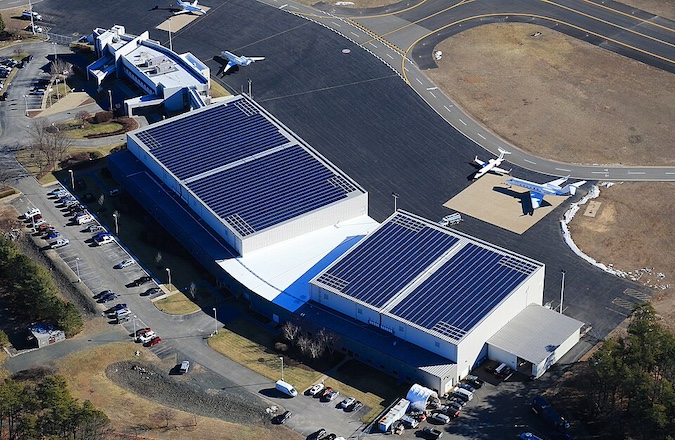
Image accreditation: Richard Webb (21st June 2024) from WikiCommons. Last accessed on 22nd July 2026.
post contents
About the Author: James Plumb