Boxing Day Beach Clean-Up
Last Updated: December 4, 2024
Share:
It is common for families to have different traditions during the Christmas period. Some like to go for a refreshing festive dunk in the sea on Christmas morning, others like to go for a long walk after Christmas dinner, whilst some might nap after their dinner, or play games with the family.
A new tradition
A new festive tradition is surfacing, nicknamed the Boxing Day Beach clean-up. This is where families or groups of friends, gather at beaches near them, to help with a beach clean-up. They bring bin bags, recycling bags and litter pickers and sweep the beaches for litter. This can be sorted as it is picked up, into rubbish and recycling, or processed after. It is a great way to get out into the fresh air and do a good deed, whilst still spending time with friends and family.
Plastic has added much value to our lives: it’s a cheap, versatile, and sterile material used in various applications, including construction, home appliances, medical instruments, and food packaging. However, when plastic waste is mismanaged – not recycled, incinerated, or kept in sealed landfills – it becomes an environmental pollutant.
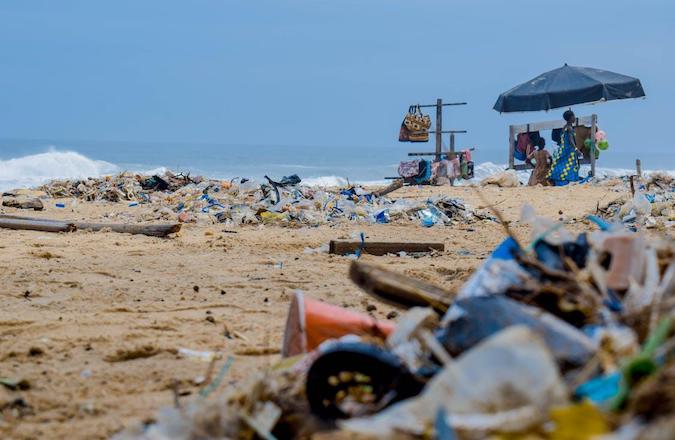 [4] Image of a beach covered in plastic waste.
Beach litter facts
- According to a study conducted by the Ocean Conservancy, an estimated 8 million tons of plastic enter the oceans each year, with a significant portion washing up on beaches worldwide. [1]
- In the UK alone, the Marine Conservation Society’s Great British Beach Clean found an average of 425 items of litter per 100 meters of beach surveyed in 2020, with plastic pieces being the most common.
- The Marine Conservation Society’s annual Beach watch report reveals that over 60% of all litter collected during beach clean-ups consists of single-use plastic items.
- Plastic waste on our beaches has increased by 140% since 1994. That amount is expected to increase significantly by 2040.
Beach waste poses a significant threat to marine life, ecosystems, and the overall aesthetic appeal of our beaches. Litter can include various items such as:
- Plastic bottles,
- Cigarette butts,
- Food wrappers,
- Plastic bags
- Larger debris such as fishing nets.
How plastics affect Marine life
As stated above, an estimated 8 million tons of plastic enter the oceans each year. Marine life then come into contact with these plastics, some might play with it and then get caught up in it, such as a fish stuck in a bottle. Some might mistake it for food and eat it. They are then unable to digest the plastics and if it gets caught in their digestive tract, they will get sick and/or die. An estimated 300,000 whales, dolphins and porpoises die every year from discarded plastic fishing gear. [2] Sea birds also mistake plastic for food and ingest it. No animals can digest plastic and therefore, eating plastic may lead to loss of nutrition, internal injury, intestinal blockage, starvation, and even death. On average, 100 million marine animals die each year from plastic waste alone. Marine Wildlife experts are calling for the Government to instruct stronger bans on companies for the production and process for disposing of plastics. Please see here for the latest on the plastic bans updates. [3]
The improper disposal of waste not only disrupts the natural balance, but also endangers the wildlife that call these coastal habitats home. By removing beach litter, we safeguard marine life, preserve ecosystems, and protect the delicate balance of our coastal habitats. We can also improve the look of our beaches, making them more attractive to attend. By acknowledging the impact of litter on beaches, understanding the statistics, and actively participating in beach clean-up initiatives, we can work together to combat this pressing environmental challenge.
Will you be joining the Boxing Day Beach Clean-up this year?
About Pager Power
Pager Power undertakes technical assessments for developers of renewable energy projects and tall buildings worldwide. For more information about what we do, please get in touch.
References
[1] https://www.wastemanaged.co.uk/our-news/summer/beach-litter/
[3] https://www.pagerpower.com/news/results-so-far-from-plastic-bag-bans/
[4] Image of a beach covered in plastic waste. Image accessed on 20/11/2024. Photo credit: Lucien Wanda. https://www.pexels.com/photo/piles-of-garbage-by-the-shore-2827735/
post contents
About the Author: Georgia Low