Back to Basics, Part 1: Sustainability and Sustainable Development
NEW for 2024: Back to Basics is a series of articles that broadly considers the definition, history, and theoretical development of topics and tech that serve as the underpinnings of the renewables industry.
Sustainability and Sustainable Development
- Where does the term sustainability originate from?
- What caused this concept to emerge?
- Why is it necessary for development to be sustainable?
What is Sustainability?
The word itself is derived from the Latin sustinére, which combines the words sub (up from below) and tenére (to hold) [1]. Equivalent words for sustainability have been used in a synonymous context in other languages for centuries. For example, durabilité in French [2], and in German, Nachhaltigkeit which translates as lastingness. However, the term sustainability as we now understand it did not become commonplace until the 1960s. And even more recently, in 1978, the term ‘sustainable development’ gained a universally acknowledged definition:
‘…development that meets the needs of the present without compromising the ability of future generations to meet their own needs’ [3]
Sustainability may be understood as three overlapping dimensions: social (People), environmental (Planet), and economic (Profit) [Figure 1]. The social dimension regards justice, harmony and peace, alleviation of poverty and ‘human ecology’. This also considers the social and cultural legacy to later generations. The environmental dimension refers to the use of resources, disposal of waste and pollution in all its forms. The economic dimension refers to economic growth which is sustainable [4].
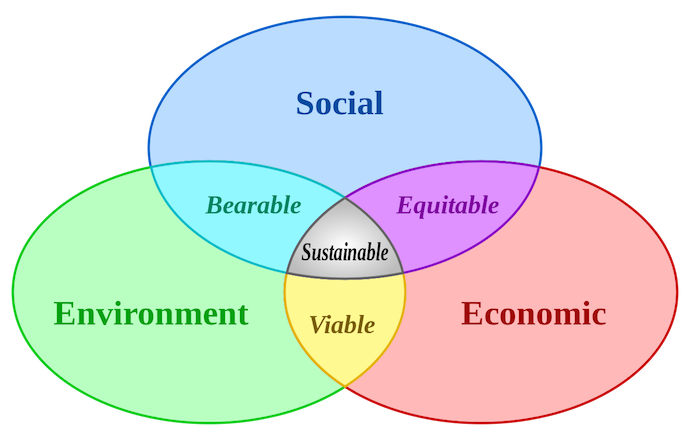
Figure 1 – The Concept of Sustainability [5]
To summarise, sustainability is ‘the goal for people to co-exist on Earth over a long time’ [6]. It has recently been described by scholars as a ‘galvanizingly powerful term’ which supports several other movements, whilst some worry that its meaning has become too vague, putting consumers at risk of ‘greenwashing’ [1].
Are We Still Revelling in the Industrial Revolution?
It is a common assumption within the environmental debate that concern is linked to the problem of industrial pollution and considers this to be a unique feature of industrial societies [1, 7]. Historically, however, humanity has been dogged by environmental hazards, to a greater or lesser extent, for most of its existence. Examples of this include:
- pollution,
- deforestation,
- land degradation,
- chemical food adulteration
Dating as far back as the 5th century BC, human beings have shown an awareness of the damaging effects of advancement, and some environmental archaeologists would argue that ancient civilisations, including the Babylonian Empire, may have collapsed due to such degradation. Heavy metal pollution, especially lead pollution, is considered one of the major factors that contributed to the fall of Rome [7].
Fast-forward to the 20th century, and the snowball effect of rapidly increasing populations and subsequent brain power facilitates the most profound shift in the human-environment relationship that the Earth has experienced. This period is unique in history, not only because of its enormous technological progress and rise in the standard of living, but because no other century in human history can be compared for its growth in energy use, depletion of natural resources and overall growth of problems related to global environmental sustainability. Since dubbed ‘The Great Acceleration’, this period is arguably the most profound and rapid shift in the human-environment relationship that the Earth has experienced [1, 8].
Globalisation has actively spurred the movement – ‘when past civilisations were challenged, they were relatively isolated from other parts of the world, but today, in our highly interconnected global system, massive social or environmental failure in one region threatens the entire system’ [8]. By the turn of the 21st century, environmental agents began to flag that the natural world is giving ‘vital signs’ [7], quickly drawing the crusade for sustainable development to be the centrepiece of international accords.
A Renewable Era?
Today, businesses are increasingly driven by local, national, and global initiatives to invest in sustainable supply chains and reduce or eliminate the use of finite resources. The most comprehensive example of a global initiative may be the United Nations’ Sustainable Development Goals [9]. On an individual level, most can say they are making an effort in some way to support sustainable development by switching to renewable energy providers, eating locally grown produce, moving away from fast fashion, or driving an electric vehicle.
In case you missed it… We recently set out some examples of small changes to our lifestyle that can have a positive impact for the environment, in the form of Green New Year’s Resolutions. Take a look!
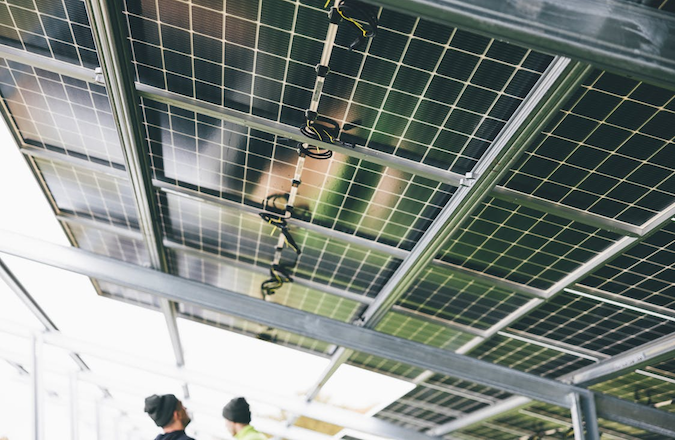
Whilst there are a breadth of sustainable development agendas demanding our attention, renewable energy is arguably one of the most crucial aspects in transforming our environmental impact. Considerable progress has already been made, for example, as of November 2023, solar capacity in the UK alone hit 15.6 GW [10]. Renewables sources are now powering nearly 30% of energy consumption in the electricity sector [11], and more than 130 countries are receiving continuous policy support to facilitate rapid implementation of renewable sites [12]. Nonetheless, it remains to be seen how these developments will infiltrate our societies into 2024 and beyond.
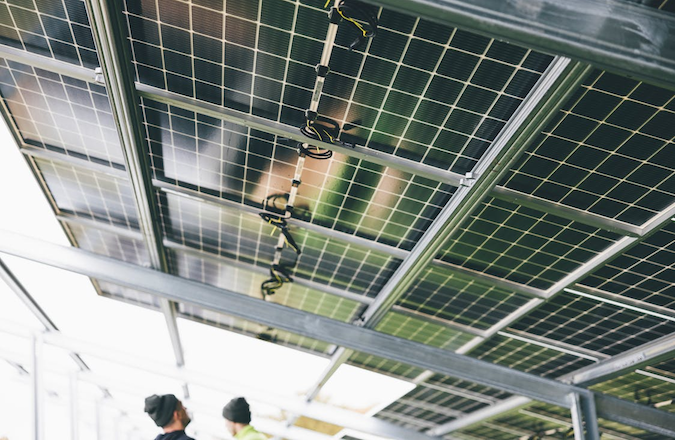
Figure 2: Close up of solar panels [13]
About Pager Power
Pager Power undertakes technical assessments for developers of renewable energy projects and tall buildings worldwide. For more information about what we do, please get in touch.
References
[1] Caradonna, J. (2022). Sustainability: A History, Accessed on: 12/01/2024. Available at: https://books.google.co.uk/books?hl=en&lr=&id=EtrbEAAAQBAJ&oi=fnd&pg=PP1&dq=history+of+sustainability&ots=TmldMDYkmt&sig=kdaBgA-3Sp5xIHlyi8gPvJ4hkzs&redir_esc=y#v=onepage&q=history%20of%20sustainability&f=false
[2] Jacobus A. Du Pisani Professor of History (2006) Sustainable development – historical roots of the concept, Environmental Sciences, 3:2, 83-96, DOI: 10.1080/15693430600688831. Accessed on: 11/01/2024. Available at: https://www.tandfonline.com/doi/pdf/10.1080/15693430600688831
[3] Brundtland, G.H. (1987). Report of the World Commission on Environment and Development: Our Common Future. Accessed on: 12/01/2024. Available at: https://sustainabledevelopment.un.org/content/documents/5987our-common-future.pdf
[4] Mele, D. (2012). Management Ethics: Placing Ethics at the Core of Good Management, Palgrave Macmillan: NY. Accessed on: 11/01/2024. Available at: https://books.google.co.uk/books?hl=en&lr=&id=CFpuoCjCZHcC&oi=fnd&pg=PP1&dq=management+ethics+mele&ots=XDokgnlAga&sig=uvgUlRWdY_SOEiXZYF5-OldFDto&redir_esc=y#v=onepage&q&f=false
[5] The Concept of Sustainability. Accessed on: 11/01/2024. Available at: https://commons.wikimedia.org/wiki/File:Sustainable_development.svg
[6] Sustainability, Wikipedia. Accessed on: 12/01/2024. Available at: https://en.wikipedia.org/wiki/Sustainability
[7] Mebratu, Desta. (1998). Sustainability and Sustainable Development: Historical and Conceptual Review, Environmental Impact Assessment Review, 18, 493-520. Accessed on: 12/01/2023. Available at: https://edisciplinas.usp.br/pluginfile.php/1917506/mod_folder/content/0/texto_5_sustainab_and_sust_develop.pdf
[8] Costanza, R. et al. (2007). Sustainability or Collapse: What can we learn from integrating the history of humans and the rest of nature?, Ambio, 36:7, 522 – 527. Accessed on: 12/01/2024. Available at: https://openresearch-repository.anu.edu.au/bitstream/1885/28895/2/01_Costanza_Sustainability_or_Collapse:_2007.pdf
[9] United Nations: Sustainable Development Goals for 2030. Accessed on: 11/01/2024. Available at: https://www.un.org/sustainabledevelopment/sustainable-development-goals/
[10] UK solar capacity hits 15.6 GW. Accessed on: 15/01/2024. Available at: https://www.pv-magazine.com/2024/01/05/uk-solar-capacity-hits-15-6-gw/
[11] United Nations: 7 Affordable and Clean Energy. Accessed on: 15/01/2024. Available at: https://www.un.org/sustainabledevelopment/energy/
[12] Renewables 2023 (IEA). Accessed on: 15/01/2024. Available at: https://www.iea.org/reports/renewables-2023
[13] Close up of solar panels. Accessed on: 15/01/2024. Available at: https://www.pexels.com/photo/close-up-photo-of-solar-panels-14384697/
post contents
About the Author: Tori Harvey

Latest News
US Continues to Build Out Solar Capacity
Earlier this month, the Solar Energy Industries Association (SEIA) released [...]
China’s Airborne Wind Turbines
In early 2026, China successfully developed an airborne wind turbine [...]
Shadow Flicker Assessments for Wind Turbines: A 2026 Update
Shadow flicker is the effect of rotating turbine blades, causing [...]