What are Daylight Sunlight Assessments?
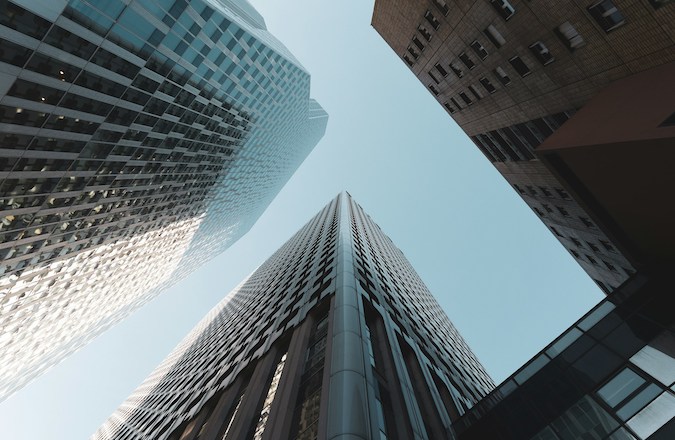
A Daylight, Sunlight and Overshadowing (DSO) assessment analyses the amount of natural sunlight and daylight received directly within a proposed building development, as well as determining the impact of any reduction in daylight and sunlight for existing buildings surrounding it due to overshadowing.
These assessments are undertaken to ensure that newly developed building developments comply with the British Standard 17037:2018, which details that adequate daylight must be provided within new and existing buildings [1].
Key Definitions
The key terms commonly used within these assessments are skylight, sunlight, and overshadowing and are defined as follows:
- Skylight – the part of sky radiation capable of causing a visual sensation;
- Sunlight – the part of direct solar radiation capable of causing a visual sensation i.e. in direct view of the Sun;
- Overshadowing – the effect upon skylight and sunlight at an observer’s location, from neighbouring buildings or obstructions. [3]
The term ‘daylight’ is used to refer to all visible parts of global solar radiation i.e. skylight and sunlight.
The Daylight Sunlight Assessment
Where a new building development has the potential to block daylight to existing residences or offices in its vicinity, an assessment of the ‘Vertical Sky Component’ is required to give a ‘before and after’ assessment to ensure minimum standards are maintained within the existing buildings, as well as the new building itself. The ‘Vertical Sky Component’ is a measure of the amount of diffuse daylight reaching a window. [4]
Overshadowing, or loss of sunlight to existing properties, is analysed using annual probable sunlight hours (APSH). This is a measure of how much sunlight a window can receive before and after the new building development is constructed.
The Building Research Establishment (BRE) has developed a guidance document with recommendations on how daylight standards should be assessed. The BRE guidance states that any DSO assessment should consider the effect upon residential properties within the proposed and existing buildings. The rooms that should be assessed include the living rooms, kitchens, and bedrooms, but there is no requirement to consider the effect upon bathrooms, staircases or corridors. As well as residential properties, BRE recommends the assessment of offices in both the proposed and existing buildings. Drawing from our sunlight model used within our glint and glare assessments, our newly developed bespoke software has the capability to model these impacts upon residences and offices in the proposed development, as well as those in the existing buildings surrounding it. For further information on the BRE guidance, please refer to our Guidance for Daylight and Sunlight Assessments article.
Pager Power
Pager Power is a dedicated technical consultancy that has been providing independent guidance and advice regarding solar developments, wind farms, and building developments internationally since 2002. Further details about the services we provide can be found here.
If you require a Daylight, Sunlight and Overshadowing assessment for your proposed building development then please call us on +44 (0)1787 319001 or fill out our contact form.
References
[1] BS EN 17037:2018
[2] Sirisvisual (2021) from unsplash.com. Last accessed on 29.04.2024. Available at: https://unsplash.com/photos/low-angle-photography-of-high-rise-buildings-J4M9FKPEaUA
[3] BS EN 17037:2018 and BRE 209 (Site layout planning for daylight and sunlight)
[4] https://bregroup.com/services/testing-certification-verification/natural-light
post contents
About the Author: Hannah McNaul

Latest News
US Continues to Build Out Solar Capacity
Earlier this month, the Solar Energy Industries Association (SEIA) released [...]
China’s Airborne Wind Turbines
In early 2026, China successfully developed an airborne wind turbine [...]
Shadow Flicker Assessments for Wind Turbines: A 2026 Update
Shadow flicker is the effect of rotating turbine blades, causing [...]