How it’s done – Assessing Wind Farm Radar Interference
Last Updated: October 10, 2017
Categories:
Share:
Wind farms and radar
Wind farm developments around the world face objections from radar operators. This is because large wind turbines can interact with radar signals, causing interference.
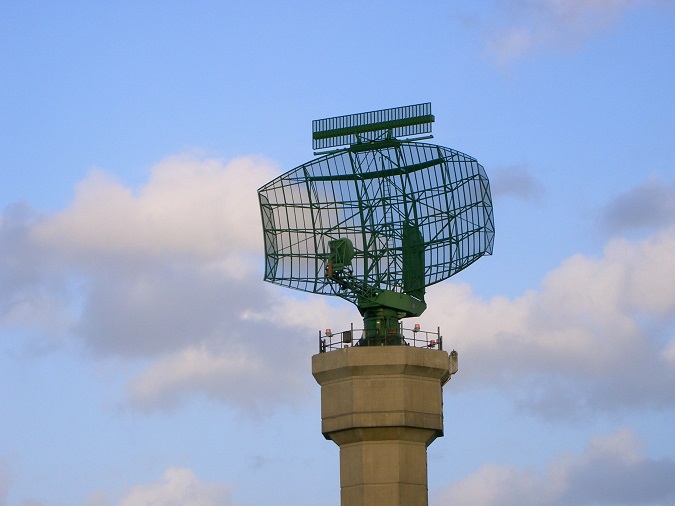
Figure 1: Radar installation.
Types of interference
A comprehensive discussion of wind farm radar interference is not presented here. The two most common concerns are:
- Reflection of the radar signal by one or more turbines – causing radar clutter (for primary radar) or bearing errors (secondary radar).
- Shadowing – reducing the radar’s ability to detect aircraft[1] beyond the wind farm. Note that this concern can apply to buildings as well.
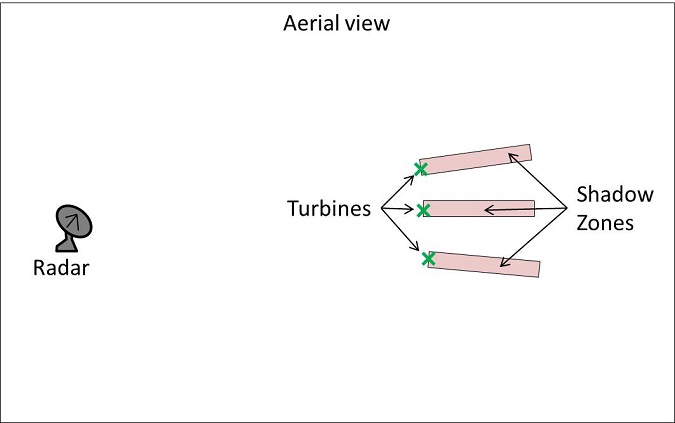
Figure 2: Shadowing illustration.
Resolving issues
In a perfect world, all wind farms would be built such that there was no radar line of sight i.e. so that no interference was possible. In practice, this is not feasible because radar coverage is very widespread, particularly over exposed elevated terrain which is ideal for wind farm development.
Where issues need to be addressed, it is important to know which potential impacts need to be prioritised. This can vary dramatically based on radar type and radar operator. Different countries prioritise different issues as well.
Reducing reflections
In some cases, the operator is most concerns with the impact of reflections from the wind turbines. This is common in the UK for primary radar impacts. Options for minimising reflection impacts include:
- Reducing the number of turbines.
- Reducing the height of the turbines.
- Design the wind farm such that turbines are not detectable to the radar (read more).
Reducing shadowing
Shadowing concerns are common for secondary radar operators in the UK, and primary radar operators internationally – although this varies from one country to another. Options for reducing shadowing effects include:
- Reducing the turbine height (to minimise the volume of affected airspace).
- Adjusting the turbine layout. Note that aligning the turbines on a radial – i.e. the same bearing form the radar – reduces the volume of affected airspace because the shadow zones will overlap. The downside of this is that the shadow becomes ‘darker’ due to attenuation from multiple turbines. This is illustrated in Figure 3 below.
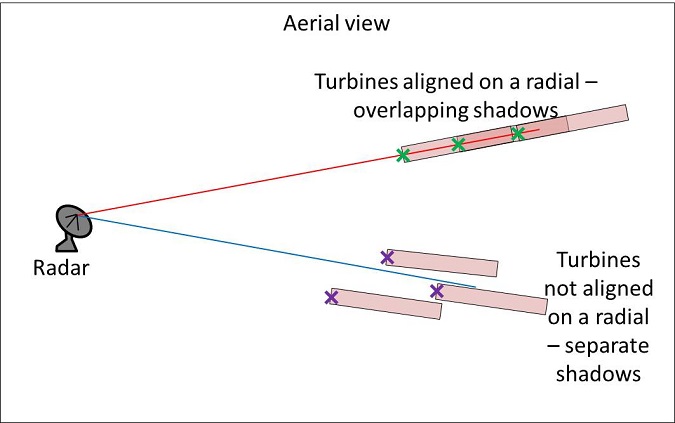
Figure 3: Illustration of turbines on a radial.
Other considerations
The relative altitude of the turbines and the radar can be important. Ensuring that the turbine blade tips are below the horizontal radar beam can resolve concerns in some cases – particularly for weather radar operators. This is illustrated in Figure 4 below.
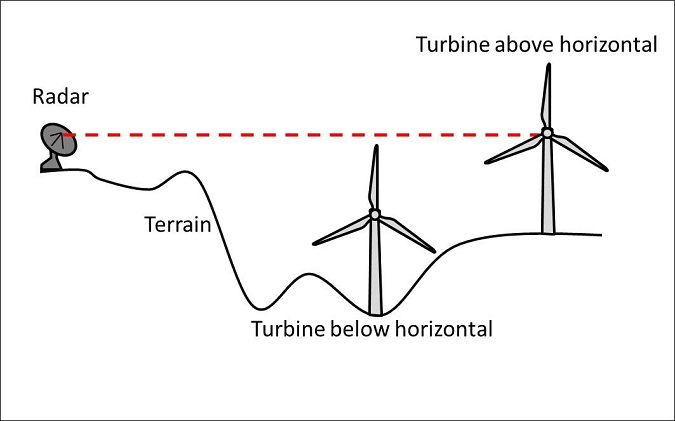
Figure 4: Turbines and horizontal radar beam.
Where a wind farm is in line of sight, the total width and separation between existing wind farms can be significant. In some cases, ensuring that radar effects are confined within a given angular width can be important to a radar operator. This is illustrated in Figure 5 below. Note that the angular separation between adjacent wind farms can also be a factor in some cases.
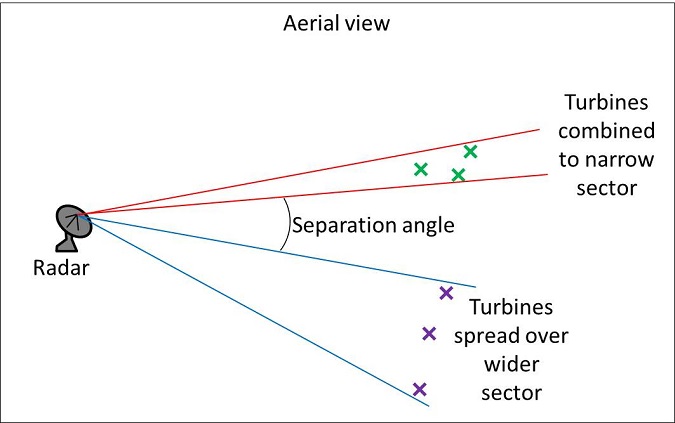
Figure 5: Affected sectors.
Why it matters
The ideal scenario is to mitigate all potential impacts. When this is not possible, it is necessary to mitigate the most significant impacts. In order to remove an objection, it is important to understand which issues are the most critical to the radar operator, and form a mitigation strategy accordingly.
Pager Power prides itself on maintaining the most up to date technical tools, as well as building stakeholder relationships to ensure we are well placed to develop the optimal strategy for progressing wind farm development.
Footnotes
[1] Some radar types are not designed to detect aircraft, e.g. marine radar and weather radar. The interference principles are largely the same.
post contents
About the Author: Mike

Latest News

Are London Homes Getting Too Hot?
London, like most large cities, experiences an average temperature that [...]
What is Wind Farm Repowering?
There are a lot of potential constraints when it comes [...]
Do Construction Cranes Require Aviation Consent or Lighting, and Who Sets the Rules?
Cranes used for construction will likely reach elevations above the [...]