Do Solar Panels produce PV glare?
Last Updated: May 27, 2018
Categories:
Share:
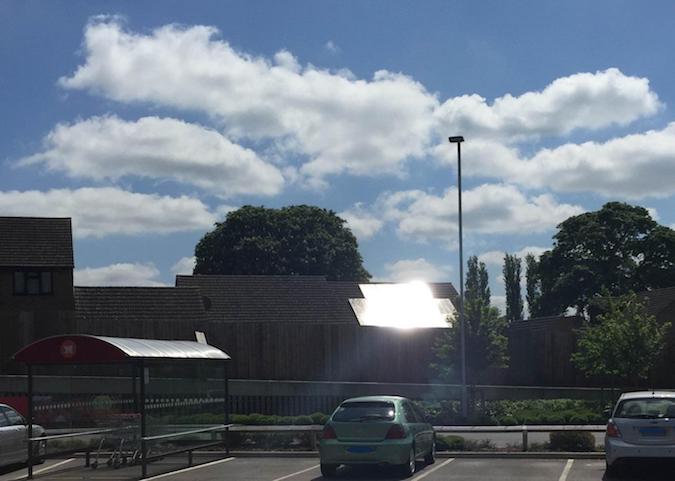
Yes they do. Strong (Photovoltaic) PV glare may be caused by reflections from a low sun. Whilst panels are designed to efficiently absorb direct and diffuse light they are often highly reflective at low angles. The claim that PV glare cannot occur because solar panels are designed to absorb light is not always true.
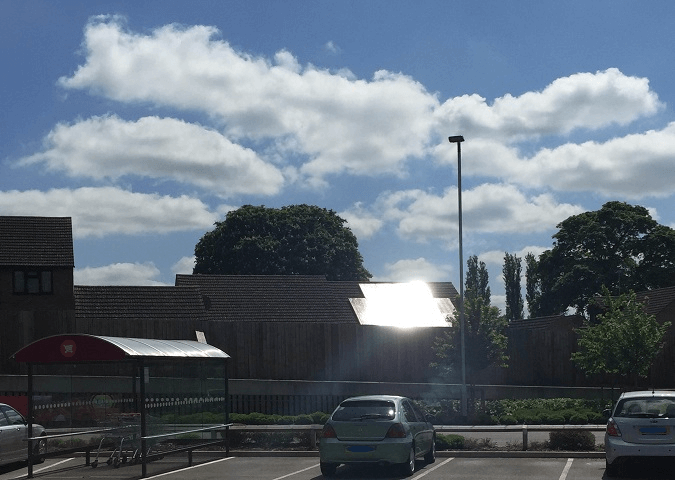
When is PV Glare most likely?
The precise timings of PV glare can be modelled using a computer simulation. Typically the strongest reflections occur when the sun is low – due to the optical characteristics of typical solar PV panels. This means that PV glare is most likely to occur in the morning and in the evening after sunrise and before sunset.
What types of panel are most likely to cause PV Glare?
All types of panel can cause PV glare although the duration and intensity of glare is dependent on the panel design. The types of panel that are modelled include:
- Smooth glass
- Smooth glass with anti-reflective coating (ARC)
- Lightly textured glass
- Lightly textured glass with anti-reflective coating (ARC)
- Deeply textured glass
Smooth glass causes the most intense glare whilst deeply textured glass causes less intense glare but causes glare for longer periods.
Do anti-reflective coatings reduce PV Glare?
Anti-reflective coatings (ARC) make solar panels more efficient. They result in more light being absorbed and more electricity being generated. They do reduce the amount of light reflected from panels and make them appear darker.
The majority of commercial anti-reflective coatings are not very good at reducing reflections from the low angles at which significant solar PV glare occurs. Our experience is that most ARC products do not significantly reduce PV glare in practice.
Is it possible to reduce PV Glare with anti-reflective coatings?
At least one manufacturer is developing a coating specifically for reducing PV glare. The coating will however also reduce the energy efficiency of the PV panel.
What type of receptors can be affected by PV glare?
The following receptors can be affected by glare and may be assessed in Glint and Glare assessments.
- Dwellings
- Aircraft
- Road vehicles
- Rail vehicles
- Shipping
- Animals
What is the best strategy for reducing PV Glare?
Where an initial assessment identifies that significant PV glare may occur further work may be necessary to reduce the predicted PV glare. Measures that can be taken include:
- Assessing shielding by vegetation and terrain
- Changing panel orientation and layout
- More detailed impact assessment
- Installing/planting additional shielding
- Changing panel type
How can Pager Power help manage PV Glare
Pager Power undertakes Glint and Glare assessments and advises on mitigating Glint and Glare impacts. For further information contact us on +44 (0) 1787 319001
post contents
About the Author: Mike

Latest News
US Continues to Build Out Solar Capacity
Earlier this month, the Solar Energy Industries Association (SEIA) released [...]
China’s Airborne Wind Turbines
In early 2026, China successfully developed an airborne wind turbine [...]
Shadow Flicker Assessments for Wind Turbines: A 2026 Update
Shadow flicker is the effect of rotating turbine blades, causing [...]