Biodiversity Net Gain vs Aviation Safety – The Role of Wildlife Hazard Management
Last Updated: November 12, 2026
Share:
Biodiversity Net Gain (or BNG) is the act of creating and improving biodiversity (flora and fauna) on a development site through design and management. It is a policy developed by the UK Government to ensure that new development doesn’t just maintain the immediate ecological environment, but improves upon the baseline. However, this can be at odds with aviation safeguarding policy, where careful management of the land surrounding an aerodrome (typically 13km or more) is required to ensure adverse threats caused by wildlife are reduced. Any increase in wildlife activity or change of existing known behaviours created by new habitat could increase the risk to aviation safety, and therefore it is essential that the principles and delivery of BNG and aviation safety, through wildlife hazard management (WHM), are considered together. This article explains the relationship between the two through a high-level review of guidance and best practice advice.
The BNG Legislation
In 2023, the Department for Environment, Food & Rural Affairs (DEFRA) in the UK published guidance on BNG through the government’s website. It has a vast array of resources for developers and planners that explain its principles and implementation. BNG is required for all projects seeking approval through the Development Consent Order (DCO) process and most projects that require planning permission through the Town and Country Planning Act 1990 (see ‘exemptions‘), and where it is, the overall objective is as follows:
Biodiversity gain objective
(1) The biodiversity gain objective is met in relation to development for which planning permission is granted if the biodiversity value attributable to the development exceeds the pre-development biodiversity value of the onsite habitat by at least the relevant percentage.
(2) The biodiversity value attributable to the development is the total of—
(a) the post-development biodiversity value of the onsite habitat,
(b) the biodiversity value, in relation to the development, of any registered offsite biodiversity gain allocated to the development, and
(c) the biodiversity value of any biodiversity credits purchased for the development.
(3) The relevant percentage is 10%.
If it is not possible to achieve the 10% improvement on site, a developer may achieve the gains through BNG improvements to the developer’s existing land, offsite procurement of biodiversity units on the market, or the purchase of biodiversity credits from the government. More information on this can be found here. The efforts employed around gaining the initial 10% BNG improvement must be maintained for at least 30 years after the development is completed to ensure any new ecological development is maintained, and this is very important from a WHM perspective – see below.
The WHM Guidance
WHM guidance is regulated in Civil Aviation Authority (CAA) guidance through the Civil Aviation Publication (CAP) 772 [1] and the Combined Aerodrome Safeguarding Team’s (CAST) Advice Note 3 [2]. The International Civil Aviation Organization’s (ICAO) guidance document titled Airport Services Manual, Doc 9137, Part 3 also provides relevant guidance [3]. The defining principles behind these are around minimising risks caused by wildlife, fundamentally around wildlife strike (birds and bats), but also by land-based animals, though wildlife strike is typically the greater risk. The documents recommend minimising impact ‘through the application of appropriate and effective bird control measures adopted by aerodrome operators, working in conjunction with other organisations and specialists‘ (CAP 772).
Some examples of where wildlife has been the cause of impacts to aviation operations can be found here.
BNG and WHM Best Practice
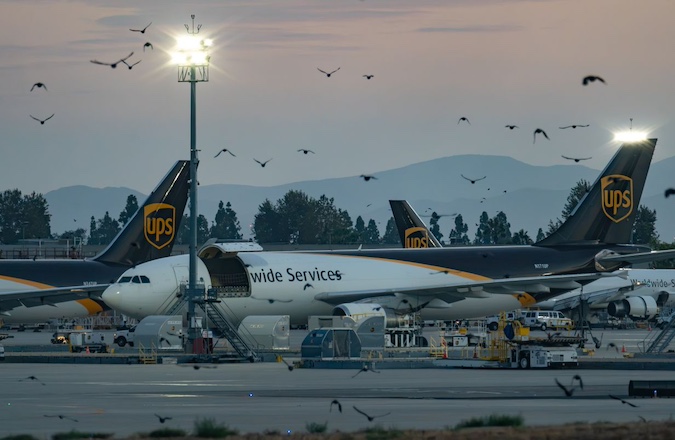
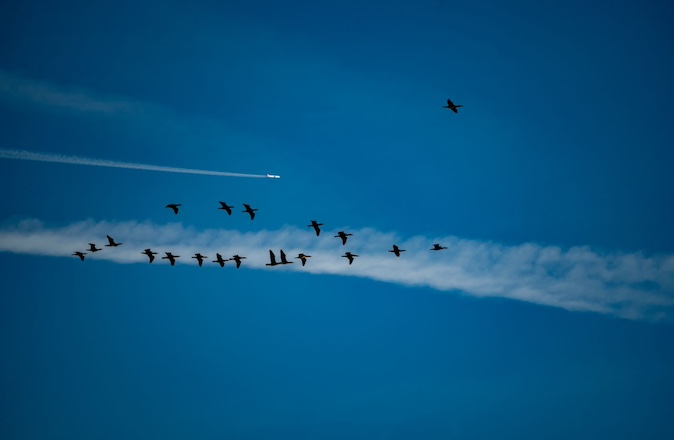
Improving biodiversity without thought to aviation activity could increase the risk of impacting aviation operations or worse, with the most notable threat being through the increase in bird populations and/or the attraction of predatory birds. The threat is not just limited to your site, for example, whilst you may encourage small bird populations that aren’t deemed a hazard by themselves, it could lead to an increase in predatory birds that fly to the development site and thus increase the risk to aviation safety. The birds may be an immediate threat to aviation activity by being present on the site, or even through their transit of airspace to get to and from the development. Land animals can also pose a threat if they can access the airfield, or, similarly to birds, attract larger predatory species that could be. It is therefore essential to think not only about the fauna now present on site, but those that routinely migrate to and from it.
Naturally then, the principles of BNG and wildlife hazard safeguarding can be at odds, but this is where effective wildlife hazard management comes in. With early planning, consultation and careful management, both BNG and safe aviation operations can be successfully achieved. To give the greatest chance of success, consideration for aviation safeguarding should start at the feasibility stage of a project (or RIBA stage 1), especially if a specific area or design concept is to be designated for BNG. This is because simple fixes may prioritise safety without the need for redesign, which can cause delays and cost money. When assessing for WHM, it is therefore essential to have an understanding of the design as much as possible, and the following plans are particularly useful:
- Roof layout drawings, including any green roofs.
- Surface water layout drawings or details of any Sustainable Drainage Systems (SuDS) features, including ponds, swales, attenuation basins and other water management features.
- Landscape drawings and planting plans.
- Open space and public realm proposals.
As mentioned previously, the legislation states that any BNG proposals should be maintained for 30 years to ensure they are not simply ignored once the operation of the development begins. Within this, it would be sensible to embed WHM strategies to ensure the proposals do not ‘snowball’ and cause a greater aviation impact over time. Therefore, any Wildlife Hazard Management Plan should not just be a starting point, but a document that defines a process that should be managed over the lifetime of the development.
Conclusions
When an aerodrome is required to work around wildlife hazards, it costs money and increases safety risks, but BNG does not necessarily need to be at the expense of aviation safety. Understanding the ecology of the site, existing baseline conditions, and how your proposed development may attract wildlife is fundamental to reducing the risk. Day one risk may be different to year five risk, thus WHM must then be considered for the lifetime of the development to ensure any animal populations are not allowed to grow unmanaged to unacceptable levels. If there are fundamental reasons why BNG cannot be achieved on site without compromising aviation activity, then alternate offsite options are available.
Speak to an Expert
Considering wildlife hazards early in a project can avoid objections, significant alterations and reactive mitigation measures later down the line. Pager Power’s subject matter experts help developers assess risks near UK aerodromes and prepare the Wildlife Hazard Management Plans that aerodromes need to meet their safeguarding obligations.
To discuss a project close to an aerodrome, contact our team on +44 (0) 1787 319001 or visit our website.
About Pager Power
Pager Power is a dedicated technical consultancy that has been providing independent guidance and advice regarding solar, wind, and building developments internationally since 2002.
Pager Power has completed over 1,900 glint and glare assessments, over 1,000 aviation, radar and safeguarding assessments, and over 1,000 telecommunications assessments, including the assessment of point-to-point link infrastructure, and television, mobile phone, and radio reception surveys. Pager Power is a truly international technical planning consultancy, having worked in over 60 countries.
References
[1] CAA (2017) CAP 772: Wildlife Hazard Management at Aerodromes. Available at: https://www.caa.co.uk/publication/download/13426 (Accessed: 08 October 2026).
[2] CAST (2024) Advice Note 3: Wildlife Hazards Around Aerodromes, CAA. Available at: https://www.caa.co.uk/media/0vjkbyeh/cast-advice-note-3-wildlife-hazards-around-aerodromes-april-2024.pdf (Accessed: 08 October 2026).
[3] ICAO (2020) Airport Services Manual, Doc 9137, Part 3 – Wildlife Hazard Management.
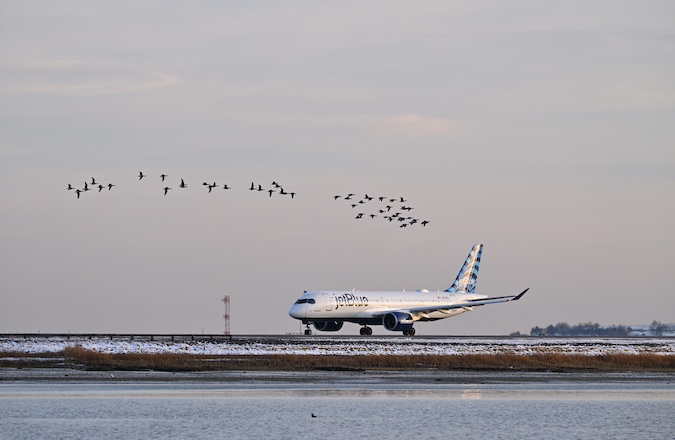
Image accreditation: A flock of birds at Boston Logan International Airport (December 2024) from Wiki MediaCommons. Last accessed on 12 November 2026. Available at: https://commons.wikimedia.org/wiki/File:JetBlue_A220-300_and_flock_of_geese_at_Boston_Logan_Airport_Dec_2024.jpg
About the Author: Danny Scrivener