Understanding the 13km Wildlife Safeguarding Area Around UK Aerodromes
Last Updated: October 14, 2026
Share:
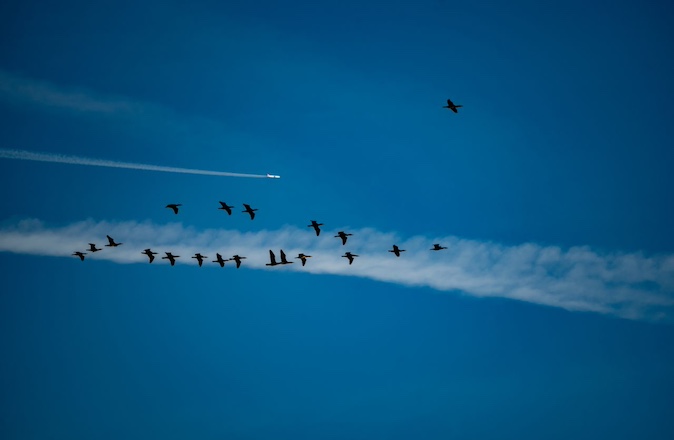
Bird strikes are recognised as one of the major controllable hazards to aviation, and the risk does not end at the airport fence. Because birds are highly mobile, attractive features located well beyond an aerodrome boundary can increase the hazard to aircraft. Although documentation on this matter refers to wildlife more broadly, according to CAA data [1], birds are the greatest wildlife risk to UK aircraft and so are the focus of this article.
To manage the risk of bird strike, new projects should consider the potential impact within a 13km radius around the aerodrome reference point. In the UK, safeguarding maps use this area to identify where bird-attracting developments should be referred to the aerodrome for comment.
Where the 13km Comes From
The International Civil Aviation Organization (ICAO) and UK Civil Aviation Authority (CAA) define the internationally accepted bird hazard safeguarding area as 13km. The 13km is specifically referenced in ICAO’s Airport Services Manual, Doc 9137, Part 3 [2]; the CAA’s Civil Aviation Publication (CAP) 772; and the Combined Aerodrome Safeguarding Team’s (CAST) Advice Note 3 [3].
The justification relates to aircraft height at the location of a potential bird attractant. Most birds fly relatively close to the ground, and CAST Advice Note 3 notes that the majority of recorded bird strikes occur below about 2,000 feet above ground. An aircraft on a standard approach descends through this height at roughly 13km from the runway. The 13km radius therefore covers the area beneath the approach and departure paths where aircraft and birds are most likely to meet.
Habitats within the safeguarded area need to be considered because birds are drawn to features such as open water, waste sites and certain types of landscaping. Those features can influence where birds feed, roost and fly, including across flight paths.
Not a Hard Limit
The 13km area gives aerodromes a consistent trigger for being consulted before new attractants are created; however, the risk does not simply stop at 13km, and a new project just beyond it could still raise concern. The CAST Advice Note 3 describes the zone as a planning guide [3], and CAP 772 notes that the radius may be extended or reduced based on a wildlife evaluation. Where doubt arises, planning applications outside the radius may still be referred to the aerodrome safeguarding team.
Aerodromes themselves may also extend the 13km, though as stated in CAP 772, the CAA expects their Wildlife Hazard Management Plan to explain the rationale.
What This Means for Developers
Within the safeguarded area, applicants will likely be expected to carry out a comprehensive assessment of wildlife hazards. The first stage is typically to identify all of the risks associated with the proposals against the known wildlife in proximity to the nearest aerodrome(s). Depending on the findings, the development may be acceptable as proposed, or may need alteration. A specific Wildlife Hazard Management Plan for the development is then typically provided to the aerodrome, which will be in force in perpetuity or until the development is decommissioned.
Typical considerations of the wildlife hazard management work include:
- The habitat types and water features in the design;
- Species most relevant to the aerodrome’s strike risk;
- Proximity to existing attractants and known bird movements;
- Management and monitoring commitments after construction.
Pager Power
Considering wildlife hazards early in a project can avoid objections, significant alterations and reactive mitigation measures later down the line. Pager Power’s subject matter experts help developers assess risks near UK aerodromes and prepare the Wildlife Hazard Management Plans that aerodromes need to meet their safeguarding obligations. To discuss a project close to an aerodrome, contact our team on +44 (0) 1787 319001 or visit our website.
References
[1] CAA (2017) CAP 772: Wildlife Hazard Management at Aerodromes. Available at: https://www.caa.co.uk/publication/download/13426 (Accessed: 08 October 2026).
[2] ICAO (2020) Airport Services Manual, Doc 9137, Part 3 – Wildlife Hazard Management.
[3] CAST (2024) Advice Note 3: Wildlife Hazards Around Aerodromes, CAA. Available at: https://www.caa.co.uk/media/0vjkbyeh/cast-advice-note-3-wildlife-hazards-around-aerodromes-april-2024.pdf (Accessed: 08 October 2026).
Image accreditation:
Vladimir Srajber (Nov 2024) from Pixels.com. Last accessed on 14 October 2026. Available at: https://www.pexels.com/photo/migrating-birds-and-plane-in-clear-blue-sky-29536693/
post contents
About the Author: Michael Sutton