COP31: Why Global Climate Talks Matter for Renewable Energy Planning
Last Updated: November 11, 2026
Share:
COP31 is the 31st annual UN Climate Change Conference, where countries that have signed the UN Climate Convention meet to negotiate a shared response to climate change. This year’s meeting is in Antalya, Türkiye, from 9 to 20 November 2026. [1] Its purpose is to agree decisions on cutting emissions, adapting to climate impacts, and funding climate action. These decisions shape national policy and investment. This year’s talks are expected to focus on climate finance and adaptation. [2]
A New Leadership Model
The hosting of COP31 was the subject of a prolonged dispute between Türkiye and Australia, both of which submitted bids and neither of which were prepared to withdraw. The two countries reached a compromise under which responsibility for the conference would be shared. [3] Türkiye will host the conference in Antalya, with Murat Kurum, Minister of Environment, Urbanisation and Climate Change, appointed as President. [4] Australia will lead the formal negotiations between countries, while Türkiye will retain responsibility for the Action Agenda. [5] This division of responsibilities is unusual, and its effectiveness in practice remains to be seen. [6]
Finance, Adaptation and the Pacific
The COP31 negotiations are expected to focus on climate finance, which is the funding provided to help developing countries reduce emissions and cope with climate change. Adaptation and resilience, meaning how communities adjust to and recover from climate impacts, will also feature. [7] Particular attention is being given to the Pacific, where small island nations contribute little to global emissions but are highly exposed to its effects. The Action Agenda includes a session on their climate finance needs, giving world leaders a platform to make commitments. [8]
The UK’s National Targets
The UK’s main renewable energy commitment is Clean Power 2030. [9] The government’s action plan aims for at least 95% of generation to come from clean sources by 2030, with carbon intensity below 50gCO2e/kWh. [10] The plan sets out ranges for each technology, including 43–50 GW of offshore wind, 27–29 GW of onshore wind and 45–47 GW of solar. [11] Industry professionals have argued that the solar range is below the sector’s full potential. [12] However, meeting these ranges still means getting a very large number of projects consented in a short time, something we touched upon at the start of 2025.
The UK Planning System: What Has Changed
Planning reform is central to delivering these targets. The Planning and Infrastructure Act 2025, which received Royal Assent on 18 December 2025, streamlines consenting for large energy projects in England and Wales and prioritises clean, ready-to-build projects for grid connections. [13] For projects decided locally, the August 2026 National Planning Policy Framework (NPPF) says renewable energy and grid infrastructure benefits should carry substantial weight. It also says proposals outside areas identified in local plans should be assessed against the NPPF as a whole. [14] We recently published two articles that cover recent planning changes to solar panels at a residential level, one of these can be found here.
What This Means For Renewable Energy Projects
International commitments only become real when they are turned into projects, and that depends on planning. Stronger ambition and clearer finance signals from COP31 can add to the pressure to bring forward solar, wind, storage and grid projects. However, each of those will still need a well-prepared planning case.
With the new emphasis on benefits, applications can do more than show that a project generates renewable electricity. They can set out their contribution to energy security and economic growth alongside a flexible, low-carbon electricity system. Landscape, ecology, heritage and community impacts remain important, so early engagement and robust assessment still matter.
About Pager Power
Pager Power undertakes technical assessments for developers of renewable energy projects and tall buildings worldwide.
For more information about what we do, please get in touch.
References
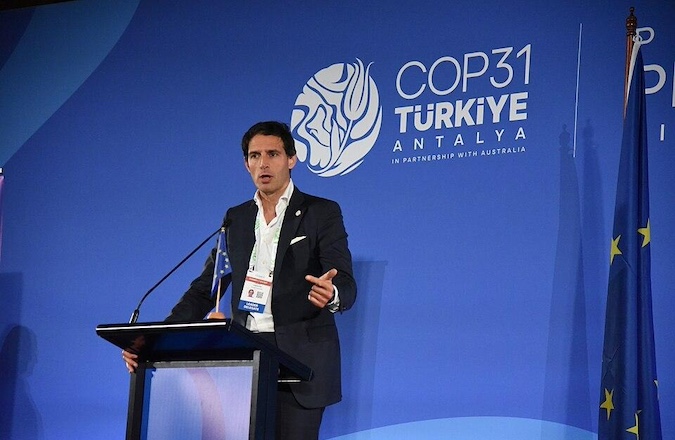
[1] UNCCD (2026) 2026 UN Climate Change Conference COP31. Available at: https://www.unccd.int/index.php/events/other/2026-un-climate-change-conference-cop31 [2] The News International (2026) Road to Antalya. Available at: https://www.thenews.pk/print/1415664-road-to-antalya [3] Associated Press (2025) ‘Next year’s UN climate talks set for Turkey as Australia backs out of bid in compromise’, Mongabay, November. Available at: https://news.mongabay.com/short-article/2025/11/next-years-un-climate-talks-set-for-turkey-as-australia-backs-out-of-bid-in-compromise/ [4] Bernama (2026) ‘COP31 climate summit in Antalya scheduled for Nov 9-20 – ministry’, Bernama, 2 January. Available at: https://bernama.com/tv/news.php?id=2508181 [5] UNFCCC (2025) Türkiye-Australia partnership modalities. Available at: https://unfccc.int/sites/default/files/resource/20251121_COP31_Presidency_Modalities-CLEAN-AGREED.pdf [6] Ada Derana (2025) Turkey set to host COP31 as Australia steps aside. Available at: https://www.adaderana.lk/news/114895/turkey-set-to-host-cop31-as-australia-steps-aside [7] The News International (2026) Road to Antalya. Available at: https://www.thenews.pk/print/1415664-road-to-antalya [8] Prime Minister of Australia (2025) COP to be hosted by Türkiye with Australia leading negotiations. Available at: https://www.pm.gov.au/media/cop-be-hosted-turkiye-australia-leading-negotiations [9] Charles Russell Speechlys (2025) The UK’s Clean Power 2030 Action Plan. Available at: https://www.charlesrussellspeechlys.com/en/insights/expert-insights/real-estate/2025/the-uks-clean-power-2030-action-plan/ [10] The Chemical Engineer (2024) UK unveils clean power plan to tackle ‘volatile’ fossil fuel market. Available at: https://www.thechemicalengineer.com/news/uk-unveils-clean-power-plan-to-tackle-volatile-fossil-fuel-market/ [11] TGS4C (n.d.) UK Government unveils Clean Power 2030 Action Plan. Available at: https://www.tgs4c.com/news/uk-government-unveils-clean-power-2030-action-plan-nid30667.html [12] pv magazine (2024) UK targets 45 GW solar, 23 GW BESS in Clean Power 2030 plan. Available at: https://www.pv-magazine.com/2024/12/13/uk-targets-45-gw-solar-22-gw-bess-in-clean-power-2030-plan/ [13] Baker, C. and Bayliss, C. (2026) Planning and Infrastructure Act 2025: key changes and implications, January. Available at: https://beale-law.com/?p=25670 [14] Frankham (2026) NPPF 2026: a summary of the five key changes for renewable energy projects. Available at: https://www.frankham.com/nppf-2026-a-summary-of-the-five-key-changes-for-renewable-energy-projects/Image accreditation: Wopke Hoekstra, European Commissioner for Climate, Net Zero and Clean Growth.
WikiCommons (2026) Wopke Hoekstra during his press conference. Available at: https://commons.wikimedia.org/wiki/File:Participation_of_Wopke_Hoekstra,_in_the_Pacific_PRECOP31_(P-070678-00-03).jpg
post contents
About the Author: Rosie Stammers