Permitted Development for Wind Turbines: What the New Consultation Means for You
Last Updated: May 11, 2026
Share:
England’s wind turbine planning standards are being reviewed in their most comprehensive form since 2011. In March 2026, the Department for Energy Security and Net Zero launched a formal consultation to propose a new category of permitted development rights (PDR) rules that would allow certain construction work to proceed without a full planning application, with a focus on small-scale, non-domestic wind turbines. [1]
The Current Framework
Under current legislation, most onshore wind turbines in England require full planning permission. Only home premises are subject to the restricted exceptions. Currently, if certain requirements are fulfilled, a single turbine may be built as permitted development on a detached property or as an independent unit inside the boundaries of a house or block of apartments. [2] These rules were implemented in 2011 and have not been significantly modified since. [1]
Current Domestic Permitted Development Conditions
- Only one turbine per property.
- Standalone turbines: maximum tip height of 11.1 metres; blade swept area no greater than 3.8 m².
- Building-mounted turbines: must not exceed roof height by more than 3 metres, or 15 metres overall.
- Minimum 5 metres ground clearance beneath blades.
- Must comply with Microgeneration Certification Scheme (MCS 020) standards.
- Not permitted on listed buildings, scheduled monuments, SSSIs, or in AONBs and World Heritage Sites.
What the 2026 Consultation Proposes
The government is considering adding a new PDR category for small-scale non-domestic turbines with a maximum tip height of 30 meters and a rotor swept area of 200m² or less. [1] For the first time, businesses, farms, and other non-domestic landowners would be able to erect wind turbines without completing a formal planning application, pending prior clearance from the local planning authority.
“Onshore wind has a vital role to play in decarbonising our electricity system, enhancing our energy security, and supporting economic growth.” — Department for Energy Security and Net Zero, 2026. [1]
The consultation expressly excludes major repowering and community energy projects from the new PDR, stating that they have more complex environmental and community implications that are better managed by the present planning system. [1]
Labour’s Clean Power 2030 Ambition
The suggestions are directly derived from the Clean Power 2030 Action Plan, published in December 2024, and the Onshore Wind Taskforce Strategy, announced in July 2025, both of which highlighted onshore wind as a key technology for meeting energy security and net-zero targets. [1] According to industry data, onshore wind farm building in England plummeted by around 96% between 2016 and 2022 compared to the previous four years under the government’s 2015 strategy. [3]
The Role of Local Planning Authorities
Even in cases where PDRs apply, local planning agencies (LPAs) play a significant gatekeeping function through previous permission requirements. Before development can begin, LPAs may investigate whether an installation will have a harmful impact on adjoining properties, protected landscapes, or heritage interests. [4] Separate Article 4 Directions can also eliminate approved development rights in certain localities, therefore landowners must still confirm their rights with the relevant LPA before proceeding with any project.
PDR for Wind Turbines and Aviation
Possible aviation impacts and how this is managed remain a key consideration for wind turbine PDR. There is a possibility that unmanaged wind turbine proliferation could significantly affect aviation operations and safety, and whilst the guidance states that impacts to radar and aviation should be considered (see below), it is not yet defined how.
Radar
In addition, we are considering whether it is necessary to include an extra condition to mitigate interference with radars, such as air traffic control and air defence radars, or navigations aids. This is because wind turbines can cause interference with radar and navigation systems, and we need to ensure that they can continue to operate safely and effectively after any changes to PDRs. We are currently exploring what this condition could look like, and how far the exclusion of safeguarded land is likely to mitigate any potential interference. We welcome comments and evidence on additional conditions to avoid radar interference.
…
“Safeguarded land” means land which— (a) is necessary to be safeguarded for aviation or defence purposes.
Therefore careful consideration of possible aviation impacts must be given, and this will be a key outcome of the consultation. To understand more about how Pager Power could assist in this area, click here.
What Should You Do Now?
The consultation period, which began on March 18, 2026, encourages responses from locals, businesses, local governments, environmental organisations, turbine manufacturers, and all other interested parties. Those involved in the development, installation, or assessment of wind energy projects, whether residential or commercial, should read the consultation document and consider sending a response to help influence the final policy. [1] Before beginning any project, it is strongly suggested that you speak with a licensed planning professional who is knowledgeable about renewable energy legislation.
If you would like to review or respond to the consultation for wind turbine PDR, the link can be found here.
About Pager Power
Pager Power undertakes technical assessments for developers of renewable energy projects and tall buildings worldwide. For more information about what we do, please get in touch.
References
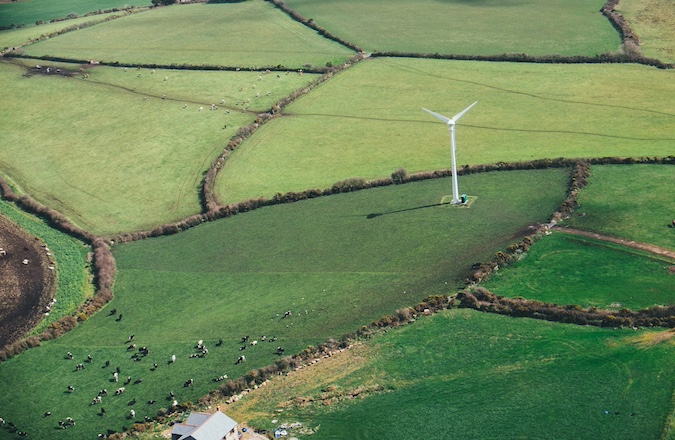
[1] Department for Energy Security and Net Zero (DESNZ) (2026) Permitted development rights for onshore wind turbines in England: consultation document. Published 18 March. [2] Planning Portal (2025) Planning permission: stand-alone wind turbines. [3] Lumify Energy (2025) Wind turbine planning permission: the ultimate guide. [4] Renewable Energy Hub (2026) Legal planning permission for wind turbines.Image accreditation: Annie Spratt (2016) Wind Turbine in Farming Field in Land’s End. Last accessed on 11 May 2026. Available at: https://unsplash.com/photos/birds-eye-view-of-wine-mill-on-grass-field-Iqwnr00mfQM
post contents
About the Author: Rosie Stammers