Are London Homes Getting Too Hot?
Last Updated: March 14, 2026
Share:
London, like most large cities, experiences an average temperature that is higher than it’s surrounding suburbs and countryside (4-6°C higher). This increase in temperature is due to the urban heat island effect, read more about that here. As temperatures rise higher still in London due to climate change, are London homes equipped to deal with this heat, and is London Planning Policy hampering potential solutions?
Passive Cooling and Current Planning Policy
Active cooling measures such as air conditioning are not currently encouraged by the London Plan, instead passive cooling measures are favoured in new developments, this includes increasing vegetation and shading [1].
Additionally, new developments are under strict regulations to provides lots of insulation to new developments such that many dwellings are effectively airtight, to increase the energy efficiency of the homes with regards to heating. Well insulated dwellings should also remain cooler in hot weather, as insulation works both ways, however, due to daylight and sunlight requirements, many developers are placing increasingly larger amounts of windows in developments. This, combined with the almost airtight insulation, turns dwellings into a sort of greenhouse.
The Limits of Passive Measures Alone
With no active cooling measures, and passive cooling being unable to effectively reduce the temperature of a room once it has already risen, residents will purchase cooling devices such as fans and internal air conditioners, which are unlikely to be particularly effective, and, crucially, will almost certainly be less energy efficient than an air conditioning unit built into the building itself.
The Case for a Combined Approach
It is likely that the most effective and energy efficient solution will be a combination of passive and active cooling techniques, however for this to be widely implemented, changes in the planning landscape will be needed. London’s Heat Risk Delivery Plan is currently being drafted by City Hall and aims to increase the passive cooling within London. [1]
About Pager Power
Pager Power undertakes technical assessments for developers of renewable energy projects and tall buildings worldwide.
For more information about what we do, please get in touch.
References
[1] BBC News, “London homes ‘overheating due to climate change’”, 12 March 2026.
(Online) Available: https://www.bbc.co.uk/news/articles/cedzj2dp6llo [Accessed 13 March 2026].
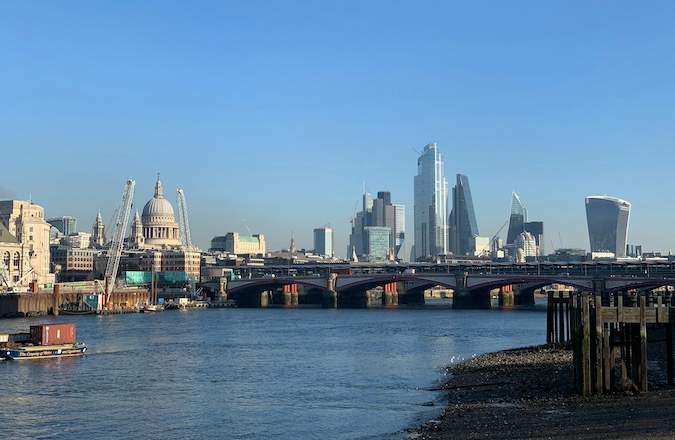
Image accreditation: Hert Niks (October 2022) from Unsplash.com. Available at: https://unsplash.com/photos/city-skyline-across-body-of-water-during-daytime-ZT6XDAGOtEw [Accessed 13 March 2026]
post contents
About the Author: Jacob Cunningham