Can the British Library’s Solar Heat Project Inspire Decarbonisation of Other Public Buildings?
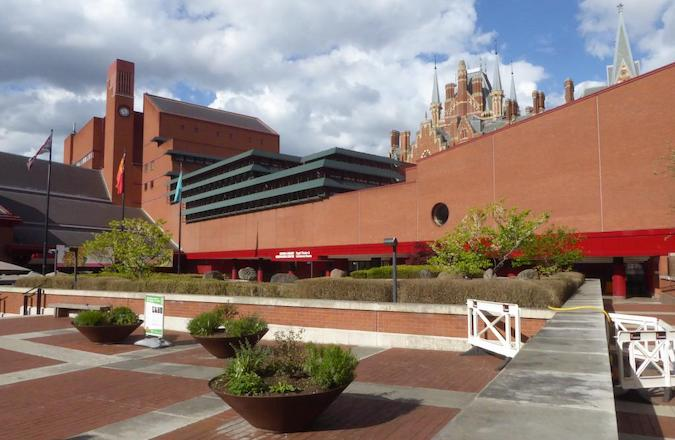
In a commendable stride towards sustainability, the British Library has embraced solar energy by installing panels across its roof to capture both power and heat from the sun. This forward-thinking initiative is not just about harnessing renewable energy; it represents a significant commitment to mitigating climate change to reduce their CO2 emissions by an impressive 55 tonnes annually [1].
As one of the world’s foremost cultural and academic institutions, the British Library is leading by example, showcasing how heritage and innovation can blend in pursuing a greener future.
Special planning permission was required for the solar installation on the Grade I-listed building, which is not visible from street level.
Spanning more than 712 Square meters, the installation comprises 950 solar collectors on the library’s roof. The installation uses high-density solar technology from UK-based renewable energy company Naked Solar [1].
Cristophe Williams, founder and CEO of Naked Energy, described the project as an “immense undertaking”.
“It’s an honour to partner with such an iconic British institution and be part of their journey to meet net zero goals,” he said
Jon Benford, managing director at CBRE Global Workplace Solutions, which delivered the project, said work on the Grade I-listed English Heritage building came with “unique challenges”.
“We’re proud of the role this project will play in both preserving the past and protecting the future,” he added [3].
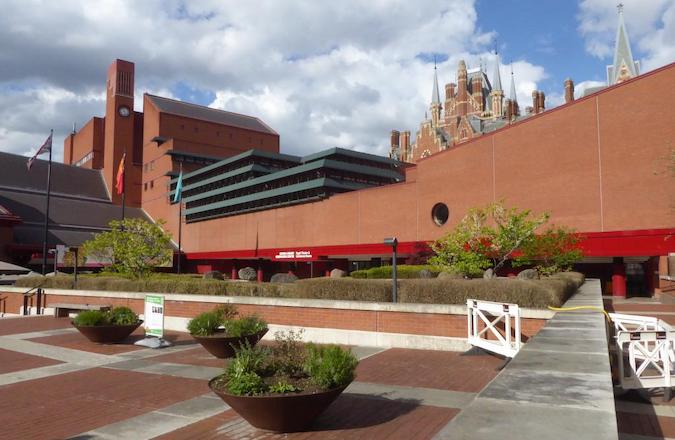
Figure 1: The British Library, London [2]
How Does it Work?
The installation utilises high-density solar technology from the UK-based renewable energy company Naked Solar. This hybrid solar collector combines solar photovoltaics (PV) and solar thermal technology to harness the sun’s energy for electricity and heat. It can save up to four times more carbon than conventional solar panels, making it an ideal solution for decarbonising more significant urban buildings such as hotels and sports centres.
This technology at the British Library will provide hot water and heating for staff and visitors. Additionally, it will help protect the precious national collections, many requiring specific temperature and humidity levels to be maintained.
Supported by the UK Government’s Decarbonisation Scheme
The project was funded by the UK’s Public Sector Decarbonisation Scheme, which aims to reduce emissions from public sector buildings by 75 per cent by 2037.
The Government Department for Energy Security and Net Zero runs a scheme to help buildings, such as schools and hospitals, to reduce emissions. This initiative supports the transition to cleaner heating and air conditioning systems, installing solar panels, and improving insulation and energy efficiency, among other measures.
The British Library has received two grants from this scheme, one of which was used explicitly for installing solar heating. This initiative is part of the library’s broader sustainability and climate change strategy, which has already led to the installation of heat pumps, an increase in recycling efforts, and sharing of climate-related narratives through its exhibitions and events.
“We hope that this project can serve as a catalyst to inspire others in the public sector to join the energy transition and move away from fossil fuels once and for all,” says Christophe Williams [1].
About Pager Power
Pager Power undertakes technical assessments for developers of renewable energy projects and tall buildings worldwide. For more information about what we do, please get in touch.
References
[1] The British Library’s Solar Heat Project. Euro News. Accessed on 12/11/24. Available at: https://www.euronews.com/green/2024/10/16/will-the-british-librarys-giant-solar-heat-project-inspire-other-public-buildings-to-decar
[2] The British Library by Julia C (30th April 2024) from WikiCommons. Accessed on 12/11/24. Available at: https://commons.wikimedia.org/wiki/File:British_Library_2024-04-30.jpg
[3] BBC News. Accessed on 12/11/24. Available at: https://www.bbc.co.uk/news/articles/c4g08lzpn2yo
post contents
About the Author: Gabby Rush

Latest News
US Continues to Build Out Solar Capacity
Earlier this month, the Solar Energy Industries Association (SEIA) released [...]
China’s Airborne Wind Turbines
In early 2026, China successfully developed an airborne wind turbine [...]
Shadow Flicker Assessments for Wind Turbines: A 2026 Update
Shadow flicker is the effect of rotating turbine blades, causing [...]