Could Lab-Grown Meat be an Avenue to Achieving Renewable Targets for the UK?
Proposed solar farms in the UK continue to grow in size, with recent applications including single developments spanning over two thousand acres that could feed the energy demands of over ninety thousand British homes. A significant step towards a cleaner, safer future for the UK. However, opposition to such projects are frequently raised by local groups. Chief among common concerns is “the loss of productive, agricultural land.”
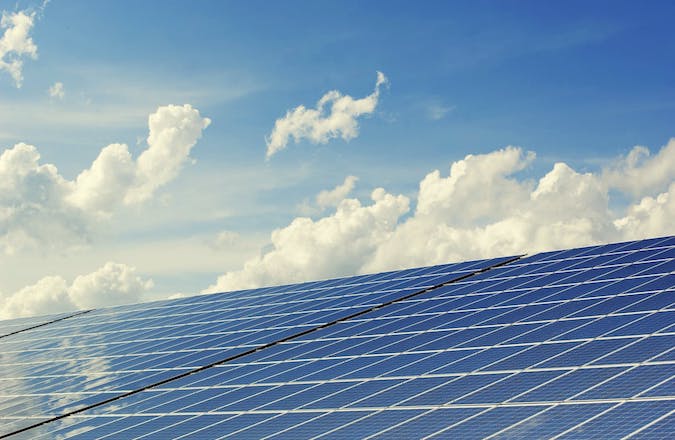
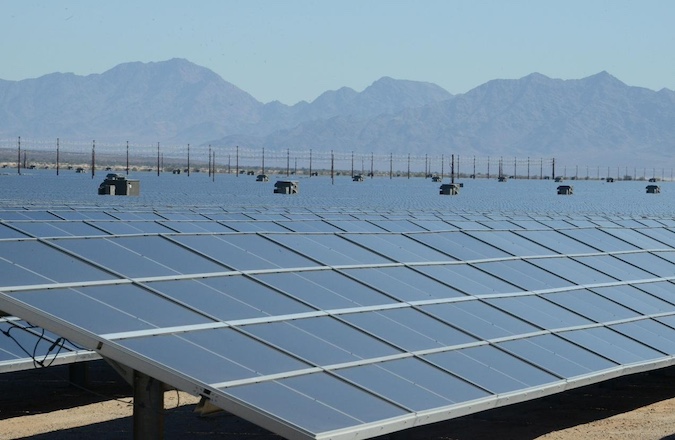
Figure 1: Solar Panels [1]
By putting on our economist’s hat for a moment we can understand the merit of this argument. If land is purchased and solar farms are constructed, this land cannot as easily be used for other purposes such as growing crops or grazing livestock. By choosing to use land for one purpose, we forgo the benefit of using it for another purpose – economists call this opportunity cost. A reduction in the amount of land available for agriculture will reduce the supply of agricultural products including food. Low supply, and a fixed level of demand, induces a price increase for this product – the age-old relationship between scarcity and value. British consumers have experienced this effect first hand over the last few years as the cost-of-living crisis has increased prices of essential goods in supermarkets. Understandably, people are not enthused by the prospect of developments that could exacerbate food prices.
This is where lab grown meat may step in to alleviate this objection and allow renewable projects to progress more smoothly. But what exactly is lab-grown meat? It goes by many names: lab-grown meat, cultivated meat, no-kill meat. Without getting into scientific detail, the production process operates by nutrients that spur growth being added to animal cells in laboratories that grow into meat which can then be shaped and into meat products as if they had been butchered. More structured products such as steaks and drumsticks are also in the works, according to reporting from the Associated Press [2].
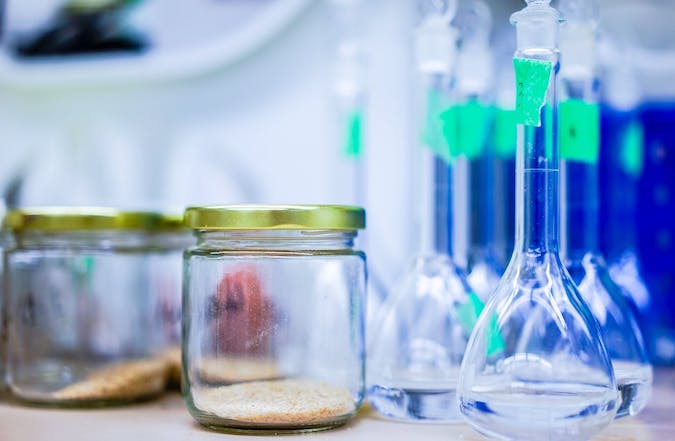
Figure 2: Laboratory equipment [3]
While this technology is new and developing, it shows promising benefits including reduced demand for land for livestock grazing and housing. A UK government report [4] in 2020 stated 42% of utilised agricultural land in England was permanent grasslands. Lab-grown meat has the potential to free up the use of this land from livestock. This means the opportunity cost of building solar farms decreases; by building solar farms we do not forgo the benefit of grazing livestock, because we can produce food in another way. With this concern lessened, solar projects could be built that much faster, hastening the UK to energy independence and renewable targets.
Lab-grown meat is sadly not just around the corner. The primary hurdle the newest generation of nuggets need to jump is regulation. Singapore was the first country to allow sales of lab-grown products [5] and did so in 2020. Applications for product approval have been made in the UK, the first from a company called Aleph Farms. The Telegraph reports this application has been fast-tracked to drive UK food security [6]. As such, these science steaks may arrive too late to save current solar farm applications from objection. But perhaps a continued effort towards the development of lab-grown meat could lessen demand for agricultural land and allow more solar farm projects to proceed less impeded.
About Pager Power
Pager Power undertakes technical assessments for developers of renewable energy projects and tall buildings worldwide. For more information about what we do, please get in touch.
References
[1] Solar Panel photography (July 2011) from Pexels, Accessed 12 Dec 2023. Available at: https://www.pexels.com/photo/blue-solar-panel-board-356036/
[2] Aleccia, J. Ungar, L. (2023). ‘Meat grown from animal cells? Here’s what it is and how it’s made’ Associated Press, 21 June. Available at: https://apnews.com/article/cultivated-meat-grown-cells-d92a4efa67309eb670d6b13bcca11604 (Accessed: 12 December 2023)
[3] Laboratory Equipment photography (November, 2016) from Pexels, Accessed 12 Dec 2023. Available at: https://www.pexels.com/photo/two-clear-glass-jars-beside-several-flasks-248152/
[4] Department for Environmental Food and Rural Affairs (2020) Farming Statistics – Land Use, Livestock Populations and Agricultural workforce at 1 June 2020 – England. Available at: https://assets.publishing.service.gov.uk/media/5f9047fbd3bf7f5d51187e0d/structure-landuse-june20-eng-22oct20.pdf (Accessed: 12 December 2023)
[5] Carrington, D. (2020). ‘No-kill, lab grown meat to go on sale for first time’, The Guardian, 2 December. Available at: https://www.theguardian.com/environment/2020/dec/02/no-kill-lab-grown-meat-to-go-on-sale-for-first-time (Accessed: 12 December 2023)
[6] Pinkstone, J. (2023). ‘UK to fast-track approval for lab-grown meat with Israel deal’ The Telegraph, 29 September. Available at: https://www.telegraph.co.uk/news/2023/09/29/uk-lab-grown-meat-fast-track-approval-israel-deal/ (Accessed: 12 December 2023)
post contents
About the Author: Phillip Charhill

Latest News
US Continues to Build Out Solar Capacity
Earlier this month, the Solar Energy Industries Association (SEIA) released [...]
China’s Airborne Wind Turbines
In early 2026, China successfully developed an airborne wind turbine [...]
Shadow Flicker Assessments for Wind Turbines: A 2026 Update
Shadow flicker is the effect of rotating turbine blades, causing [...]