Deep-Sea Metal Lumps Unveil ‘Dark Oxygen,’ Sparking a Rethinking Rumble on Life’s Origins
Embarking on an extraordinary journey into the heart of the North Pacific Ocean’s expansive Clarion-Clipperton Zone (CCZ), researchers have unlocked a secret of the deep that could forever alter our view of marine life and its environments. Amidst the shadowy depths, where light dares not venture, lies an unexpected source of life-giving oxygen.
These are not your ordinary seabed features; they are polymetallic nodules scattered like gems across the ocean floor, with the remarkable ability to generate oxygen. This discovery, dubbed “dark oxygen,” heralds a new era in our quest to understand the intricate web of life that thrives in the ocean’s most secluded corners.
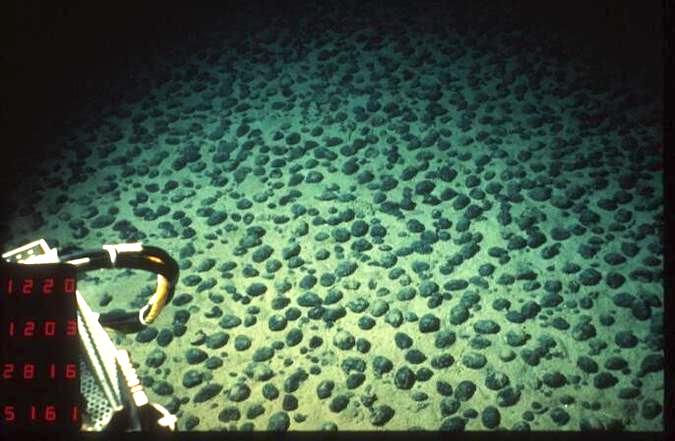
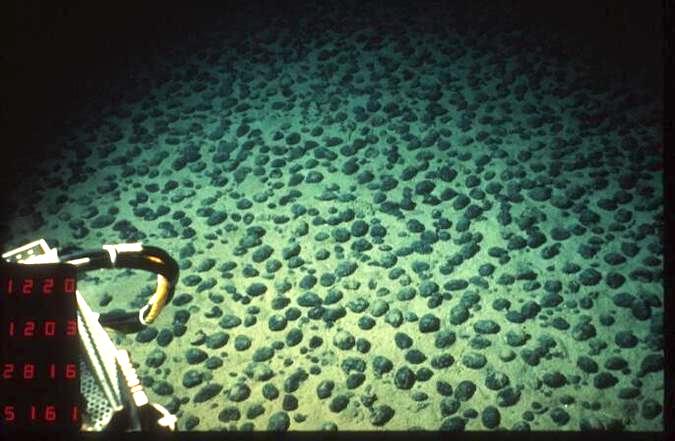
Figure 1: Deep Sea Manganese Nodules (Pacific Ocean) [2]
Dark Oxygen
Venturing further into the abyss, the intrigue deepens with the revelation that these are no ordinary stones. These polymetallic nodules, roughly the size of potatoes, are repositories of transition metals like cobalt and nickel, oxides of iron and nickel, oxides of iron and manganese as well as rare earth elements. But their value extends beyond their mineral content. In a revelation that seems almost science fiction, it has been found that these nodules possess the unique ability to produce oxygen without sunlight, a feature previously thought impossible without the presence of living organisms.
This breakthrough challenges our current understanding of biochemical processes. It ignites a spark of curiosity, pushing the boundaries of what we know about the hidden treasures and mysteries resting in the ocean’s uncharted territories [1].
“When we first received this data, we thought the sensors were faulty because every study conducted in the deep sea had only observed oxygen being consumed rather than produced,” said study lead author Andrew Sweetman, a professor and leader of the seafloor ecology and biochemistry research group at the Scottish Association for Marine Science (SAMS). “But when the instruments kept showing the same results, Sweetman and his colleagues knew they were onto something groundbreaking and unprecedented,” he added.
A breakthrough occurred when Sweetman watched a documentary on deep-sea mining in a hotel bar in São Paulo, Brazil. According to CNN, he heard a character refer to the nodules as “a battery in a rock.” This triggered an idea in his mind: could oxygen be generated electrochemically?
When a standard AA battery is placed into saltwater, bubbles form, and a fizzing sound can be heard. This occurs as the electricity splits water molecules, generating hydrogen and oxygen gases in a process known as electrolysis. The researchers suspected the same phenomenon was happening in the deep ocean, facilitated by the polymetallic nodules. Indeed, voltage measurements on the nodule’s surface confirmed the rocks carried as much voltage as 0.95 volts. It was slightly below the theoretical requirement of 1.5 volts for seawater electrolysis, but the researchers suspected that the nodules’ clustering helped the reaction overcome this barrier.
“This is one of the most fascinating projects we have ever worked on,” Franz Geiger, a physical chemist at Northwestern University and co-author of the paper, tells Scientific American [3].
Prospects in the Realm of Deep-Sea Mining
In 2013, researchers in the Clarion-Clipperton Zone (CCZ) discovered that deep-sea nodules, crucial habitats for half of the area’s large megafauna species, are threatened due to deep-sea mining interests. These nodules contain metals like cobalt, nickel, copper, and manganese, essential for modern technologies such as batteries, smartphones, wind turbines, and solar panels.
Despite the ecological significance of these habitats, mining these areas is gaining traction, with The Metals Company starting a trial in 2022, leading to widespread concern among conservationists.
The International Seabed Authority oversees these activities and has issued 16 contracts for seafloor surveys in the CCZ, covering about 400,000 square miles. Research, such as that by Sweetman, is critical to understanding the potential impacts of mining, enabling stakeholders to make informed decisions and finding ways to reduce environmental harm as the industry develops [3].
About Pager Power
Pager Power undertakes technical assessments for developers of renewable energy projects and tall buildings worldwide. For more information about what we do, please get in touch.
References
[1] Discovery of ‘Dark Oxygen’. Accessed on 02/08/24. Available at: https://www.space.com/deep-sea-dark-oxygen-from-metal-lumps-evidence-for-origins-of-life
[2] Deep Sea Manganese Nodules (Pacific Ocean). Accessed on 02/08/24. Available at: https://commons.wikimedia.org/wiki/File:Champ_de_nodules_dans_le_Pacifique_%C3%A9quatorial_nord.jpg
[3] Scientists Discover ‘Dark Oxygen’. Accessed on 06/08/24. Available at: https://www.smithsonianmag.com/smart-news/scientists-discover-dark-oxygen-on-the-ocean-floor-generated-surprisingly-by-lumps-of-metal-180984778/
post contents
About the Author: Gabby Rush

Latest News
US Continues to Build Out Solar Capacity
Earlier this month, the Solar Energy Industries Association (SEIA) released [...]

China’s Airborne Wind Turbines
In early 2026, China successfully developed an airborne wind turbine [...]
Shadow Flicker Assessments for Wind Turbines: A 2026 Update
Shadow flicker is the effect of rotating turbine blades, causing [...]