WindRunner Takes to the Skies to Increase Onshore Wind
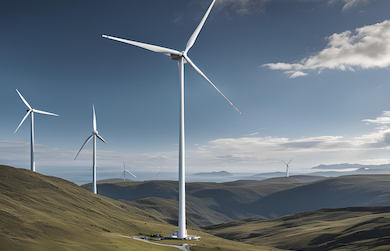
Onshore wind turbines are on the rise, including in the UK in the wake of Labour’s removal of the de facto ban on onshore wind in England [1]. Usually located in more remote areas, the practicality of building onshore wind turbines can create an extra barrier for developers, especially as turbine blades and tip heights continue to increase in size.
Radia [2], an energy company based in Boulder, Colorado, have developed an innovative new aeroplane, designed specifically to transport turbine blades across countries. Known as the ‘WindRunner’, this unique aircraft design has been engineered to deliver the largest turbine blades and components directly to wind development sites, including difficult to access locations [3]. At the moment, only ships and trucks are able to transport onshore wind equipment, which can greatly increase transportation times.
WindRunner dimensions
The WindRunner is 108m x 24m, with a wingspan of 80m (the same as an A380).
The WindRunner loads blades through a nose cargo door, situated underneath the cockpit. Designed to serve Radia’s largest turbines, GigaWind, the WindRunner can carry blades up to 105m long [4]. The interior of the aircraft is much different than that of a passenger aircraft. The entire length of the plane is one giant open space, designed to fit one fully formed blade. Currently, the WindRunner can fly up to 1,240 miles (at max payload) from the regional hub where the turbine is created, directly to the wind farm location. Most notably, the WindRunner can land on semi-prepared airstrips as short as 1,800m [5]. For reference, the average minimum runway length for an Airbus A380 is approximately 3,000m. The ability of the WindRunner to land on impromptu airstrips increases its capacity to deliver turbine parts to the most remote locations.
The future of onshore wind?
Radia plans to have the WindRunner operational before the end of the decade [6]. Although the development of this new style of wind related transportation is a step in the right direction for renewable energy growth, the timescales mean the WindRunner is unlikely to help towards 2030 decarbonisation targets.
Looking ahead, as onshore wind continues to develop and grow as an industry, the WindRunner provides an innovative solution to wind projects in remote areas, particularly useful in countries with a large land mass between production sites and wind developments.
About Pager Power
Pager Power undertakes technical assessments for developers of renewable energy projects and tall buildings worldwide. For more information about what we do, please get in touch.
References
[3] https://radia.com/windrunner
[5] https://radia.com/windrunner
[6] https://aviationweek.com/shownews/farnborough-airshow/first-suppliers-named-worlds-longest-aircraft
Thumbnail image is AI generated.
post contents
About the Author: Hannah Lucey

Latest News

US Continues to Build Out Solar Capacity
Earlier this month, the Solar Energy Industries Association (SEIA) released [...]
China’s Airborne Wind Turbines
In early 2026, China successfully developed an airborne wind turbine [...]
Shadow Flicker Assessments for Wind Turbines: A 2026 Update
Shadow flicker is the effect of rotating turbine blades, causing [...]