Guidance for digital TV interference caused by wind turbines
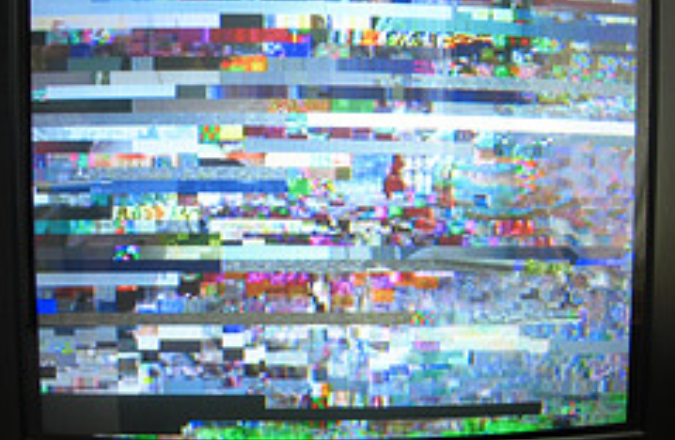
 Wind developments can interfere with digital television signals in their vicinity. This issue often gives rise to planning conditions that require prompt remediation of such issues. It can also lead to local opposition to or complaints regarding a wind farm.
Various sources provide guidance on the issue, but the conclusions can be varied. One common misconception is that digital television is immune to wind farm interference. The Radiocommunications sector of the International Telecommunication Union (ITU) has published extensive material regarding the issue and how it can be modelled.
ITU-R BT.2142-1 – The effect of the scattering of digital television signals from a wind turbine
An important document produced by the ITU in 2010 is known as “ITU-R BT.2142-1 – The effect of the scattering of digital television signals from a wind turbine.”
The document is highly technical and considers, in detail, the approaches to modelling as well as the results of actual field surveys around an existing wind farm.
Key Points
Some key points that should be borne in mind by wind farm developers are:
- Digital TV signals can experience interference due to the presence of wind turbines.
- Impacts can be caused by scattering of the signal – which means the TV transmissions are reflected by the turbine blades and towers.
The resulting effects are dependent on many factors including:
- The strength and quality of the direct signal from the transmitter to the receiving TV aerial
- The strength of the interfering signal, which is caused by reflections of the transmissions by the wind turbines.
- The location and distance of the receiving TV aerial relative to the wind development.
- Effects can occur at distances up to 13.5 km.
- If the interfering signals caused by reflections from the wind development are large enough compared to the direct signal from the transmitter, digital TV reception can be severely affected.
The worst case scenario is when:
- Direct transmissions from the transmitter to the TV aerial are obstructed by terrain.
- The path between the transmitter and the wind development is clear.
- The path between the TV aerial and the wind development is clear.
Video showing the effect of a rotating wind turbine on the strength of digital TV signals.
- In many cases where all of the above criteria are not met, a standard TV aerial will be able to ‘ignore’ the interfering signals. This means digital TV reception will not be noticeably affected.
- In cases where interference does occur, technical mitigation can be as straightforward as using a more directional aerial – i.e. one that is better at ‘ignoring’ signals that are not coming from the direction of the transmitter.
Overall, it can be seen that interference to digital television is a concern. Detailed modelling is advisable. Where necessary, this should be supported by measurements in the specific area where effects could occur. This combined approach can determine with the best possible accuracy whether there is likely to be a mitigation requirement.
Other Factors
There are other sources of interference with regard to digital TV interference. These include:
- Elevated terrain between a transmitter and a receiver.
- Large building developments.
- 4G mobile signal.
In cases where interference is reported, it is important to undertake the necessary modelling and consider other factors that could play a role in reported issues.
Practical Experience
Pager Power has assisted many wind farm developers by modelling and surveying TV signals near wind developments.
In a recent case, interference was reported by residents in a village within two kilometres of a wind farm shortly after it was constructed. Pager Power had already undertaken detailed modelling of the potential interference zones – which did not corroborate the reported interference.
Survey measurements were taken on two separate occasions to investigate the reports in more detail – the survey results agreed with the modelling and did not record interference at the majority of the complaint locations.
Further investigation of other potential interference sources revealed the presence of a 4G base station. The TV aerials at affected locations were directed towards this base station. The body charged with resolving 4G interference issues had issued warnings of potential interference to the majority of homes that subsequently reported interference.
By implementing sophisticated modelling and undertaking comprehensive baseline surveys, the wind farm developer was able to issue reliable advice regarding the interference complaints that had been received. Importantly, the analysis demonstrated that the interference was not due to the turbines.
Editors Note: This post was first published on 3rd October 2014, but has been updated for accuracy and comprehensiveness.
Image accreditation: “TV Error” by Sibe Kokke / CC BY 2.0 / via Flickr / Image resized from original.
post contents
About the Author: Mike

Latest News

Shadow Flicker Assessments for Wind Turbines: A 2026 Update
Shadow flicker is the effect of rotating turbine blades, causing [...]

Are London Homes Getting Too Hot?
London, like most large cities, experiences an average temperature that [...]

What is Wind Farm Repowering?
There are a lot of potential constraints when it comes [...]