The Role of the Contracts for Difference (CfD) Scheme in the ‘Cost of Living Crisis’
Renewable energy project developers will be all too aware that the substantial upfront costs and volatile electricity prices present significant risk and potential barriers to developing large renewable energy projects.
To incentivise investment and reduce potential project risks, the government introduced the Contracts for Difference (CfD) scheme in 2014 to provide ‘direct protection from volatile wholesale prices and protect consumers from paying increased support costs when electricity prices are high’ [1].
According to the government, the CfD scheme is now their main mechanism for supporting low-carbon electricity generation.
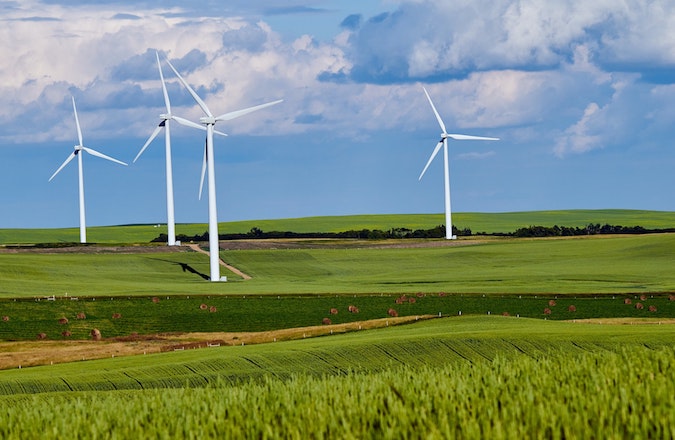
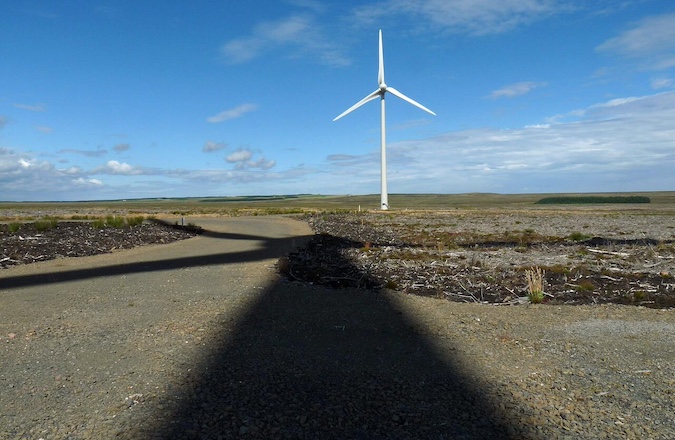
Figure 1: Wind farm. [4]
How Does the Scheme Work
A CfD is a contract between an operator and the Low Carbon Contracts Company (LCCC), which is owned by the government) whereby the energy income per unit of electricity is fixed over a 15-year period. This is achieved by the operator committing to pay or be paid a difference payment relative to the ‘strike price’, which is the agreed income per unit of electricity and is typically set by an auction and varies project to project.
Should the price of electricity be below the ‘strike price’ at a particular moment during operation of the renewable generator, LCCC pays the operator the difference, with the money coming from a levy placed on electricity suppliers. When the strike price is above the reference price, the operator pays LCCC the difference and the money is channelled back to suppliers [2].
Help with the ‘Cost of Living Crisis’?
With the cost of electricity rapidly increasing in the UK, the CfD mechanism clearly provides the opportunity for money to be channelled back to the electricity suppliers and passed onto the consumer. According to the LCCC [2]:
“In September 2021, market prices rose to the point where, over the whole CfD portfolio, generators [operators] were paying back to LCCC…
…Over the last quarter of 2021 and the first quarter of 2022, nearly £275m was received from generators and returned to suppliers. In the second quarter of 2022, however, day-ahead prices were lower and LCCC had to take £43.6m from suppliers. So far in Q3, LCCC has accumulated £120m in payments from generators and this should continue to rise so that there is another substantial payment at the end of this quarter…
…Once LCCC has paid the surplus to suppliers, it is up to them as to how that cash is used, but it should have mitigated the bill rises we have seen since last year to a small extent.”
Although significant payments are currently being made to the electricity suppliers, the LCCC admits that it is down to the supplier to determine what this money is used for.
This suggests that there is not a system to ensure the money is passed onto the consumer, which allows the electricity suppliers to keep the extra money if they so wish.
Effect on the Energy Price Cap
The energy price cap set by Ofgem for a typical dual-fuel household that pays by direct debit, was predicted to increase to £3,549 due to the increased cost of electricity. In response to this, the UK government recently committed to capping this to £2,500 a year [3].
If the CfD provided benefits to consumers, it is likely that it had a tangible and meaningful effect on reducing the energy price cap. According to the LCCC [2]:
LCCC works closely with Ofgem to ensure the benefit of the CfD is reflected in the ‘cost stack’ used by the regulator to calculate where the cap should be set…
… When calculating the price cap for the last quarter of 2022, Ofgem used the forecast for CfD income that LCCC made in June, when setting the parameters for the CfD in that quarter. At that time, we forecast an income of £730m for the quarter. That has translated into a reduction in the price cap of £23 for the typical bill payer…
…LCCC will continue to work closely with Ofgem to ensure the effect of the CfD on mitigating electricity price rises is included as accurately as possible in the cap calculation.”
The LCCC’s analysis was undertaken before the government reduced the energy price cap; however, it shows money paid from renewable generators through the CfD provides a tangible reduction of the energy price cap.
£23 is unfortunately not a meaningful reduction for consumers when the cost has increased so significantly in a few months. It would be far more beneficial to the consumer if this reduction could be increased with help from CfDs.
Conclusion
The CfD scheme is a positive mechanism that has no doubt supported the development of large renewable generators within the UK. This is expected to have contributed to our increased renewable energy capacity and is likely to have strong long-term benefits for the UK’s energy mix.
However, the author believes the scheme could be tweaked and improved to ensure the consumer reaps the benefits during the current ‘cost of living crisis’ by guaranteeing some or most of the money paid to suppliers is passed on.
About Pager Power
Pager Power undertakes technical assessments for developers of renewable energy projects and tall buildings across the world. For more information about what we do, please get in touch.
References
[1] – Department for Business, Energy & Industrial Strategy, 2022. Contracts for Difference. [online] GOV.UK. Available at: <https://www.gov.uk/government/publications/contracts-for-difference/contract-for-difference> [Accessed 12 October 2022].
[2] – Low Carbon Contracts Company, 2022. Briefing – An introduction to the CfD and its role in the energy bill crisis. [online] Available at: <https://www.lowcarboncontracts.uk/sites/default/files/2022-09/LCCC-briefing-on-%20the-CfD-scheme-5-September-2022.pdf> [Accessed 12 October 2022].
[3] – BBC News, 2022. What is the energy price cap and how high could bills go?. [online] Available at: <https://www.bbc.co.uk/news/business-58090533> [Accessed 12 October 2022].
[4] Abby Anaday (2019) on Unsplash.com. Last accessed on 17th October 2022. Available at: https://unsplash.com/photos/Nnn2Dc6niVUpost contents
About the Author: Michael Sutton

Latest News
US Continues to Build Out Solar Capacity
Earlier this month, the Solar Energy Industries Association (SEIA) released [...]

China’s Airborne Wind Turbines
In early 2026, China successfully developed an airborne wind turbine [...]
Shadow Flicker Assessments for Wind Turbines: A 2026 Update
Shadow flicker is the effect of rotating turbine blades, causing [...]