Do I Need a Glint and Glare Assessment For My Development?
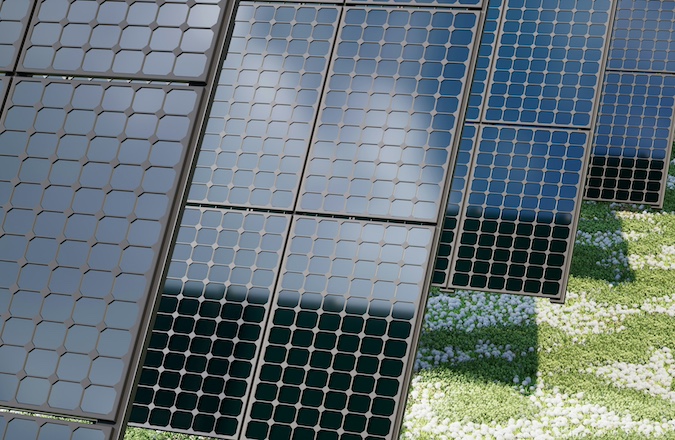
Glint and glare is an important planning consideration when reflections from developments could potentially impact the surrounding environment.
However, it can be challenging to determine whether glint and glare should be considered. This is because both local planning authorities and other stakeholders often have varying perspectives on what they deem may cause issues with respect to their impacts.
Therefore, we’ve explored which types of development may require glint and glare considerations, and who or what they may typically impact.
Types of Development
First, it’s important to determine whether your development type is likely to require a glint and glare assessment. Below, we explore three primary development types that often require these assessments.
Ground-Mounted Solar Panel Developments:
Solar power currently accounts for 5% of the UK energy mix, and with ambitious goals to reach net zero by 2050, this is likely to increase [1][2]. However, large areas of panels can cause wide areas of reflections, and as such, glint and glare can be a common issue for ground-mounted solar panels.
Rooftop Solar Panel Developments:
Rooftop solar developments, like ground-based developments, also need to consider potential reflections. There are currently over 1.9 million solar installations across the UK and counting [3]. Depending on considerations made by your local planning authority or other stakeholders, even small-scale solar installations may need to take glint and glare into account.
Building Developments (Façades):
The exterior façade of a building may also cause glint and glare, especially those made primarily of glass. This can cause reflections towards a wide number of receptors. In a unique and extreme case, London’s Walkie Talkie building was even found to melt cars parked on the street below due to the glare it caused [4]. However, this was due to the unusual concave, south-facing façade.
Assessment Considerations
Second, it’s important to consider the impacts that the development may have on the surrounding environment. As such, several distinct receptors may need to be considered, each with its unique concerns. These include:
- Road Receptors – Glint and glare may reduce a driver’s vision of the road if reflections occur. This could negatively impact the safety of nearby roads and is typically assessed within 1km of a solar development.
- Dwelling Receptors – Extended periods of glare towards living spaces within a home may cause a nuisance for residents and could negatively impact residential amenity. Terrain heights are important to consider, as dwellings are typically assessed within 1km of a solar development.
- Aviation Receptors – Glint and glare may reduce a pilot’s vision of a runway when they’re coming into land or possibly reduce an Air Traffic Controller’s vision when instructing pilots. This may negatively impact aviation safety and is typically considered for assessment when developments are within 10km of an aerodrome.
- Railway Receptors – Glint and glare may reduce a train driver’s vision of train signals if reflections occur, especially if any infrastructure utilises incandescent bulbs to provide information. Train drivers are typically assessed up to 500m away from a building or solar development.
It is worth noting that the distances provided are only typical cases and may change in response to requests from concerned stakeholders.
Get in Contact
If you’re still unsure whether you need a glint and glare assessment for your development, please use this link to submit an enquiry. Alternatively, feel free to call us on +44 (0)1787 319001 if you’d like to speak to us directly.
For more information regarding our glint and glare consultancy services, please click here.
Our Experience
Pager Power is a specialist technical consultancy based in the United Kingdom and has been providing independent expertise on planning issues for solar, wind, and building developments for over 20 years.
Established in 1997, the company initially specialised in assessing the impact of wind turbines on radar systems. Pager Power has since expanded into a multidisciplinary technical planning consultancy that offers a comprehensive range of services and has supported renewable and building projects in more than 60 countries. This includes completing over 1,800 glint and glare assessments.
References
[1] United Kingdom. 2026. IEA. Available at: https://www.iea.org/countries/united-kingdom (Last accessed: 13/02/2026)
[2] Net Zero Strategy: Build Back Greener, 2021. HM Government. Available at: https://assets.publishing.service.gov.uk/media/6194dfa4d3bf7f0555071b1b/net-zero-strategy-beis.pdf (Last accessed: 13/02/2026)
[3] Solar photovoltaics deployment, 2026. Department for Energy Security and Net Zero. Available at: https://www.gov.uk/government/statistics/solar-p
[4] Sunshade for Walkie-Talkie skyscraper glare problem, 2014. BBC News. Available at: https://www.bbc.co.uk/news/uk-Image accreditation: Kamran Abdullayev (March 2023) for Unplash.com+. Last accessed on 18th February 2026. Available at: https://unsplash.com/photos/a-row-of-solar-panels-sitting-on-top-of-a-grass-covered-field-T-WlAGX7yGI
post contents
About the Author: Adam Hardie

Latest News
US Continues to Build Out Solar Capacity
Earlier this month, the Solar Energy Industries Association (SEIA) released [...]
China’s Airborne Wind Turbines
In early 2026, China successfully developed an airborne wind turbine [...]
Shadow Flicker Assessments for Wind Turbines: A 2026 Update
Shadow flicker is the effect of rotating turbine blades, causing [...]