Cottoning On to the Textile Exchange’s Regenerative Agriculture Outcome Framework
We often associate fertilisers and pesticides with food crops, but we don’t often consider that the textile industry has a part to play in this too.
As the cotton industry is one of the largest in the world, concerns are being raised over the use of these harmful chemicals to treat the growing crops, as these are proving to be quite damaging to the Earth’s soil and water.
Fortunately, the Textile Exchange has a Regenerative Agriculture Outcome Framework, which was released in January 2022. This aims to help the fashion, textile, and the apparel industry align on outcomes for assessing the holistic benefits of regenerative agriculture.
The Framework is designed to respect the inherent place-based nature of these agricultural systems while shifting the industry’s focus from the avoidance of negative outcomes to the achievement of measurable, beneficial ones instead [1].
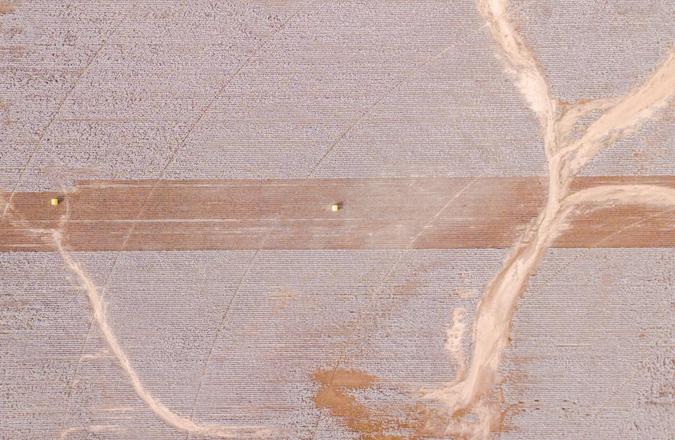
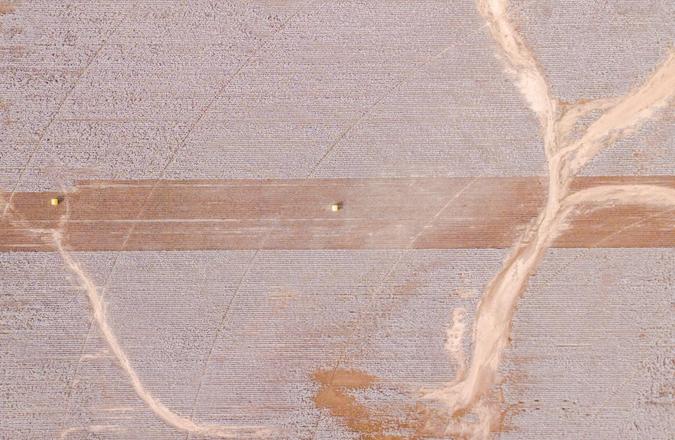
Figure 1: Bird’s-eye View of a Cotton Field [2]
Cotton Overview
Cotton is the most widespread profitable non-food crop in the world. Its production provides income for more than 250 million people worldwide and employs almost 7% of all labour in developing countries. Approximately half of all textiles are made of cotton [3].
Diversion of water and its pollution by cotton growing has had severe impacts on major ecosystems such as:
- The Aral Sea in Central Asia
- The Indus Delta in Pakistan
- Murray Darling River in Australia.
Production and processing of cotton uses a large amount of water. Data from the International Cotton Advisory Committee (ICAC) shows that, to produce 1kg of lint, roughly equivalent to one T-shirt and a pair of jeans, cotton globally uses 1,931 litres of irrigation water and 6,003 litres of rainwater on average [5].
Surface and ground waters are often diverted to irrigate cotton fields, leading to freshwater loss through evaporation, and inefficient water management.
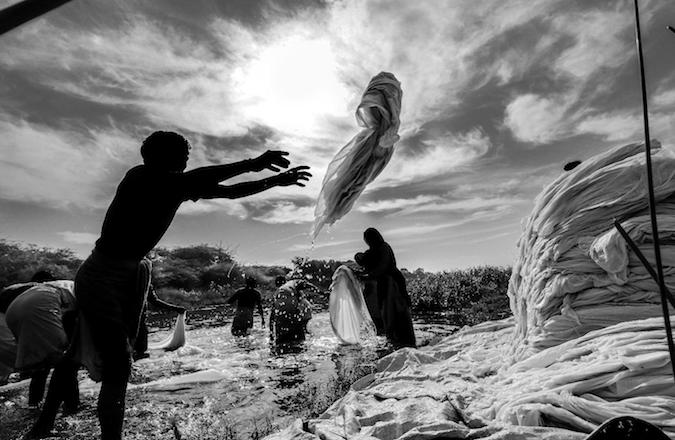
Figure 2: Labourer Throwing Garment, India [4]
Putting the Framework into Action
The Framework is set out so that producers of cotton are not expected to bear responsibility for monitoring for regenerative outcomes on their own. To emphasise the sharing of this work, they have organised indicators into farm-level and brand-level categories. They also include a section for fundamental brand-level expectations that should be in place before projects or programs are considered, or claimed, to be regenerative.
At the farm level, the framework includes three major categories of outcomes and indicators, aligning with those identified in the Regenerative Agriculture Landscape Analysis:
- Socioeconomic outcomes: holistic regenerative agriculture, indicators on fair financing, multi-stakeholder engagement, livelihoods, farm community well-being.
- Ecological health outcomes: soil health, water use efficiency and water quality, synthetic input reductions, Greenhouse Gas emissions. This area continues to be supported by ongoing research and frameworks, including the Science Based Targets for Nature industry guidance.
- Animal welfare outcomes: animal welfare as a component of regenerative systems that is inextricably linked with both human welfare and ecosystem and soil health [1].
Concerns and Conclusions
Economic growth and urbanisation will continue to be the main factors affecting the per capita demand for textiles in developing and emerging economies. Demand trends for textiles will significantly impact demand for cotton fibres.
Since the consumption of textiles and apparel is more income responsive than the consumption of food commodities, deviations from the economic conditions in the Outlook along with the actions being put into place within the Framework could lead to important changes in the global cotton consumption, production, and trade projections [6].
About Pager Power
Pager Power undertakes technical assessments for developers of renewable energy projects and tall buildings worldwide. For more information about what we do, please get in touch.
References
[1] The Textile Exchange Regenerative Agriculture Outcome Framework – https://textileexchange.org/app/uploads/,/07/Regen-Ag-[-Overview.pdf
[2] Photo by Jordan Whitfield – Untitled (December 2019). Accessed on: 11th Dec 2023. Available at: https://unsplash.com/photos/an-aerial-view-of-a-street-with-a-traffic-light-m945Y6sN9VA
[4] Photo by vishnudeep dixit – Man Throwing Garment (July 2018). Accessed on: 12th Dec 2023. Available at: https://www.pexels.com/photo/man-throwing-garment-1260799/
[5] Better Cotton – https://bettercotton.org/world-water-day-2023-how-much-water-does-cotton-use/#:~:text=Data%20from%20the%20International%20Cotton,litres%20of%20rainwater%20on%20average.
[6] Cotton Agricultural Outlook – https://www.fao.org/3/CC6361EN/Cotton.pdf
post contents
About the Author: Gabby Rush

Latest News
Shadow Flicker Assessments for Wind Turbines: A 2026 Update
Shadow flicker is the effect of rotating turbine blades, causing [...]

Are London Homes Getting Too Hot?
London, like most large cities, experiences an average temperature that [...]
What is Wind Farm Repowering?
There are a lot of potential constraints when it comes [...]