AI Tackles Avian and Marine Impacts of Offshore Wind
As 2030 looms nearer, international targets for the end of the decade are ramping up. The UK’s Clean Power 2030 Action Plan includes 43-50 GW of offshore wind [1]. Development of new offshore wind farms could increase the risks to marine life. However, machine-learning and other AI (artificial intelligence) capabilities are being trained to reduce biodiversity risks.
There has, and continues to be, a critical knowledge gap in our understanding of the true impact of offshore wind turbines on marine species. Bird strikes and ecological disruptions can occur without detection due to the remoteness of offshore turbines. Advancements in AI can increase the monitoring capabilities of radars and cameras, even at night [2].
In the Sky
Assessing migration patterns can reduce the impact of offshore wind farms on bird fatalities. One important parameter that can be ascertained is the Mean Traffic Rate, which measures the number of individuals per kilometre per hour passing through an area. This data is essential for predicting key periods for curtailment [3]. Curtailed wind is when the energy production of a windfarm is reduced when there is still energy that could be harvested [4]. By analysing the Mean Traffic Rate, bird deaths can be reduced using the most cost effective curtailment strategy [5].
Robin Radar’s 3D avian radar ‘MAX’ detects and logs thousands of birds and bat simultaneously. It has 360 degrees coverage, with market-leading rotation speed to deliver fast track updates for precise tracking and animal classification with a range of 6 to 8km [6]. Currently having its debut at the Dutch offshore wind farm, Ecowende, the MAX is being used in conjunction with DHI’s MUSE artificial intelligence species recognition solution, which automatically discriminates between birds and bats at night [7]. The advantages of using trained AI and the Max to monitor bird behaviour and the Mean Traffic Rate include the ability to trigger turbine shutdown.
Dutch authorities have recently implemented a predictive ‘stop-start measure’ for offshore wind farms. This system integrates weather forecasts with bird migration data to predict migration events, providing early curtailment warnings [8]. DHI’s MUSE solution can automatically send signals to advise on slowing down individual turbines if a priority species is in danger of collision. The advancements of AI in species tracking and recognition could reduce bird strikes whilst minimising energy production losses.
Below the Surface
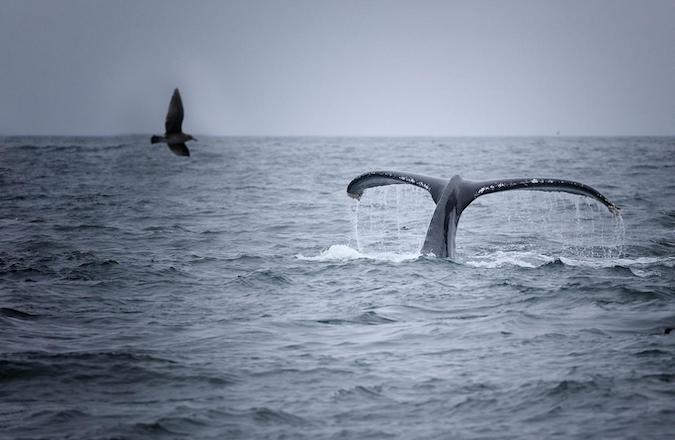
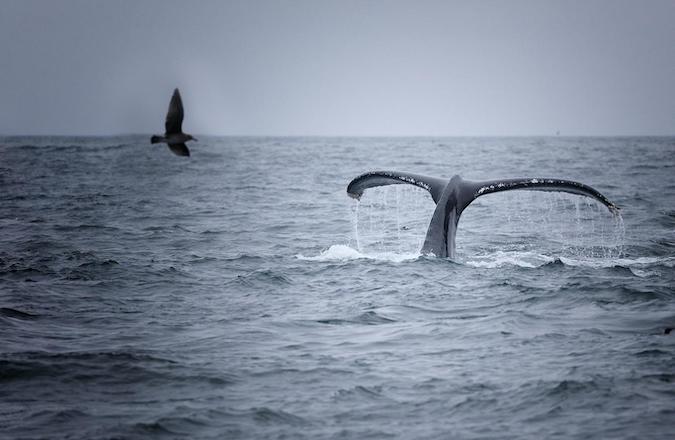
Similarly, the impact of offshore wind on marine species has not been wholly understood. Larger aquatic animals travel vast distances, meaning offshore turbines could interfere with migration patterns. The North Atlantic Right Whale is an endangered species, with approximately only 370 whales remaining [9]. These whales forage and calve along the East coast of America, likely migrating in waters where offshore wind farms could be built. To combat the rapid decline of the North Atlantic Right Whale, the Bureau of Ocean and Energy Management and the National Oceanic and Atmospheric Administration (NOAA) have released a joint strategy to promote the recovery of the endangered whales whilst developing offshore wind energy [10]. NOAA is currently in the process of creating an operational system using AI and cloud computing to identify whales from VHR satellite imagery [11]. Working collaboratively with Microsoft and other research institutions, the operation system aims to minimise impacts on the North Atlantic Right Whale from offshore wind developments. Although this project is still continuing, it highlights how AI can be used to improve conservation efforts without minimising renewable energy production.
As AI technologies develop, scientists are able to tackle environmental challenges in new ways. Improved monitoring and tracking of endangered species could reduce the impact of offshore winds farms on population numbers and migration patterns. Reducing ecological threats is an important step as 2030 renewable energy targets demand more from offshore wind.
About Pager Power
Pager Power undertakes technical assessments for developers of renewable energy projects and tall buildings worldwide. For more information about what we do, please get in touch.
References
[1] https://assets.publishing.service.gov.uk/media/677bc80399c93b7286a396d6/clean-power-2030-action-plan-main-report.pdf. [2] https://www.birdlife.org/wp-content/uploads/2024/08/Curtailment_Report_Digital_Spreads.pdf. [3] https://www.birdlife.org/wp-content/uploads/2024/08/Curtailment_Report_Digital_Spreads.pdf. [4] https://www.esru.strath.ac.uk/EandE/Web_sites/17-18/windies/curtailed-wind.html.[5] https://www.sciencedirect.com/science/article/abs/pii/S0960148114009021.
[6] https://www.robinradar.com/markets/wind-farm-bird-radar.
[7] https://ecowende.nl/en/news/dhi-biologists-film-bats-and-birds-at-night-to-train-muse/. [8] https://www.spoor.ai/collision-detection. [9] https://www.fisheries.noaa.gov/species/north-atlantic-right-whale. [10] https://www.boem.gov/sites/default/files/documents/environment/BOEM_NMFS_NARW_OSW_2_1.pdf. [11] https://www.fisheries.noaa.gov/new-england-mid-atlantic/science-data/geospatial-artificial-intelligence-animals.Image accreditation: Vivek Kumar (June 2018) from Unsplash.com. Last accessed on 14th January 2025. Available at: https://unsplash.com/photos/grayscale-photography-of-dolphin-tail-above-body-of-water-RJ8r4UL3mmo
post contents
About the Author: Hannah Lucey

Latest News
US Continues to Build Out Solar Capacity
Earlier this month, the Solar Energy Industries Association (SEIA) released [...]
China’s Airborne Wind Turbines
In early 2026, China successfully developed an airborne wind turbine [...]
Shadow Flicker Assessments for Wind Turbines: A 2026 Update
Shadow flicker is the effect of rotating turbine blades, causing [...]