Fixing Fast Fashion: France’s Clothing and Shoe Repairs Bonus
The French government is reducing waste by compensating people who fix damaged garments.
The new move, starting in October this year, aims to cut down on the 700,000 tonnes of clothes that are thrown away by the French population each year, two-thirds of which end up in landfills [1].
Globally 100 billion garments are produced each year and 92 million tonnes end up in landfills. To put things in perspective, this means that the equivalent of a rubbish truck full of clothes ends up in landfill sites every second [2].
The apparel industry’s global emissions will increase by 50% by 2030 if a business-as-usual scenario prevails in the coming years – meaning that no action is taken to reduce fast fashion waste – the industry’s global emissions will likely double by the end of the decade.
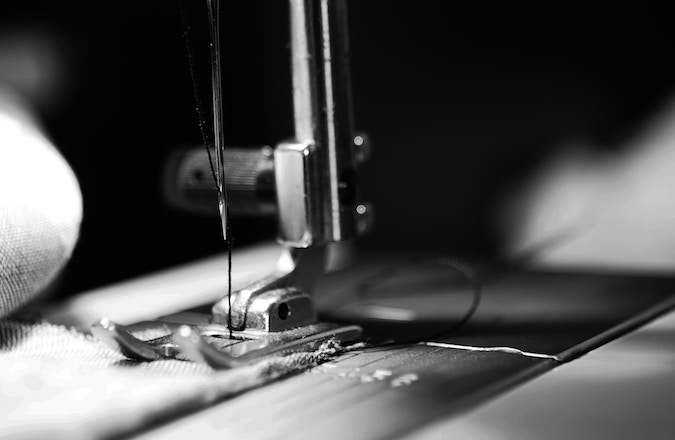
Figure 1: Black and White Image of a Sewing Machine.
Sustainability and recycling were in vogue at Paris Fashion Week, the epicentre of the fashion world, this year. It is apt, then, that the French government is leading the way in Europe with schemes intended to encourage an emissions-reducing circular economy for clothing [3].
Under its €154m repair fund, people will receive a direct subsidy of €6 to €25 towards the repair of an unlimited amount of damaged clothes and shoes.
“It could encourage exactly the people who have bought, for example, shoes from a brand that makes good-quality shoes or likewise good-quality ready-to-wear to want to have them fixed instead of getting rid of them,” explained France’s junior ecology minister Bérangère Couillard, who announced the scheme in Paris. “That is exactly the objective, to create a circular economy for shoes and textiles so that products last longer because in government we believe in the second life of a product.” [4]
The Environmental Impacts of Fast Fashion
Not only does fast fashion produce tonnes of landfill each year. There are also several environmental impacts that the industry affects such as –
- Makes up to 10% of humanity’s carbon emissions.
- Dries up water sources.
- Pollutes rivers and streams.
- Washing some types of clothes sends significant amounts of microplastics into the ocean.
Fast fashion also has a human cost: textile workers, primarily women in developing countries, are often paid derisory wages and forced to work long hours in appalling conditions. In many places, these conditions create infringements on human rights [5].
The use of chemicals in clothes production also raises serious health concerns, both for the workers in the industry and consumers.
Conclusion
The immediate benefit of subsidising the cost of repairing clothes is that people can wear their favourite clothes for longer and it makes the decision to repair more attractive than buying a brand-new replacement.
Cheap fashion is probably why so few clothes are repaired in the first place. For many, it isn’t worth bothering to attempt a repair when you can buy something impossibly cheap from Shein or Temu at the click of a button.
Lots of people may feel like they lack the time or skills to repair a garment. So, giving them the chance to get it repaired by a professional will hopefully result in fewer garments being sent to landfill.
The scheme is funded by a special pot of money that the French government has set aside for five years, if successful, the circular economy will hopefully cotton on with other countries across the world too.
About Pager Power
Pager Power undertakes technical assessments for developers of renewable energy projects and tall buildings worldwide. For more information about what we do, please get in touch.
References
[2] https://earth.org/statistics-about-fast-fashion-waste/
[5] https://www.hrw.org/topic/womens-rights/labor-rights-garment-industry
Image accreditation: J Williams (June, 2019) from Unsplash.com. Last accessed on 30th Aug 2023. Available at: https://unsplash.com/photos/tabzu_kbVs0
post contents
About the Author: Gabby Rush

Latest News
US Continues to Build Out Solar Capacity
Earlier this month, the Solar Energy Industries Association (SEIA) released [...]
China’s Airborne Wind Turbines
In early 2026, China successfully developed an airborne wind turbine [...]

Shadow Flicker Assessments for Wind Turbines: A 2026 Update
Shadow flicker is the effect of rotating turbine blades, causing [...]