Types of Telecommunications Infrastructure Affected by Tall Buildings or Wind Turbines
Last Updated: August 6, 2026
Share:
Introduction
Developers of tall buildings and wind turbines have a seemingly endless list of hurdles to overcome before their projects can be built. Some of these are perhaps intuitive, such as:
- Funding;
- Site availability;
- Impact on surrounding views;
- Disruption to road networks;
- And many more!
Others, however, are less likely to spring to mind unless you are experienced in the world of developing tall structures. Among these are potential impacts on telecommunication infrastructure and services in the area. This article presents an overview of the types of infrastructure that most commonly require consideration.
Wireless Fixed Links
What they are
Two antennae located at fixed locations, often on telecommunications masts or rooftops, that transmit signals wirelessly between them.
Who uses them
Wireless fixed links are very versatile in their application. However, the most common links that are potentially affected by tall buildings and wind turbines are used by:
- Mobile phone networks, who use fixed links (usually in the microwave band) as the backbone of their networks;
- Utility companies, who use fixed links (often in the UHF band), often consisting of a single transmission site with several associated outstations;
- Railways, which can use fixed links to connect lineside equipment for voice communications with drivers.
How buildings and turbines cause impacts
If the link path is obstructed by an object, including part of a building or a wind turbine, the signal can be degraded, reducing or preventing performance of the link. More information about this kind of signal blocking can be found here.
For lower frequency links, including the UHF band, reflection of the signal can also cause interference.
How to know what you’re up against
Depending on your location, there may be centralised resources that show link paths. However, a comprehensive picture usually requires a level of consultation with stakeholders, to ensure the baseline environment is effectively captured with the most accurate and up-to-date information.
Mitigating impacts
Often, careful site design can minimise or prevent adverse impacts. Where this is not possible, solutions can include repositioning antenna, redirection of link paths, or provision of an alternative technology.
Broadcast Services
What they are
Transmitters that emit signals, usually in all directions, that are received by multiple and/or mobile receivers.
Who uses them
Broadcast services also have multiple applications, but the most recognisable are:
- Mobile phone networks, whereby the connection between mobile handsets and the wider network is via broadcast transmitters;
- Television and radio transmissions;
- Local broadband systems, particularly in small remote areas.
How buildings and turbines cause impacts
Much like fixed links, impacts can be caused by obstruction of the signal, or due to reflection issues. The latter is, generally, more prevalent for broadcast services than for fixed links.
How to know what you’re up against
Television and radio transmitters are usually identifiable via open resources or other readily available databases. Private infrastructure belonging to other stakeholders may require consultation to uncover.
Mitigating impacts
Here again, site design can ameliorate issues in some cases. In others, solutions can include provision of additional or replacement receiving equipment, relocation of transmitters, or provision of alternative technologies.
Satellite-based Services
What they are
Terrestrial antennae can send and receive signals via transmitters in geostationary orbit.
Who uses them
The most prevalent infrastructure of this kind is satellite television. There are other services, including telephony, that use satellites in some cases.
How buildings and turbines cause impacts
If structures are located in close proximity to a satellite dish, the link can be disrupted. It is worth keeping in mind that signals are not received vertically, but at an angle to the horizontal.
Mitigating impacts
In general terms, exclusion zones to avoid signal obstruction for satellite equipment are relatively small, so the simplest solution is often to ensure suitable distance is maintained. If this is not possible, repositioning the receiver can also be considered in some cases. Alternative technologies can be considered, however satellite solutions, particularly for broadband, are sometimes used when other technologies are not available. This can very rural locations where cable-based internet services are not feasible.
Of Lesser Concern
In general terms, wired communication systems are much less likely to be affected by new structures. This also makes wired connections a candidate for mitigation, although cost and logistical constraints can make this difficult.
Emissions from buildings or wind turbines themselves are generally not of concern for telecommunications equipment. This is because the standards for emissions from modern equipment are such that interference to surrounding equipment is avoided. Bespoke equipment, such as radio telescopes, can be unusually sensitive to emissions, so the issue does come up from time to time, but usually not in a telecommunications context.
About Pager Power
Pager Power has been assisting developers by identifying and characterising potential interference impacts from proposed developments for over 20 years. If this is something your project is up against, don’t hesitate to contact us.
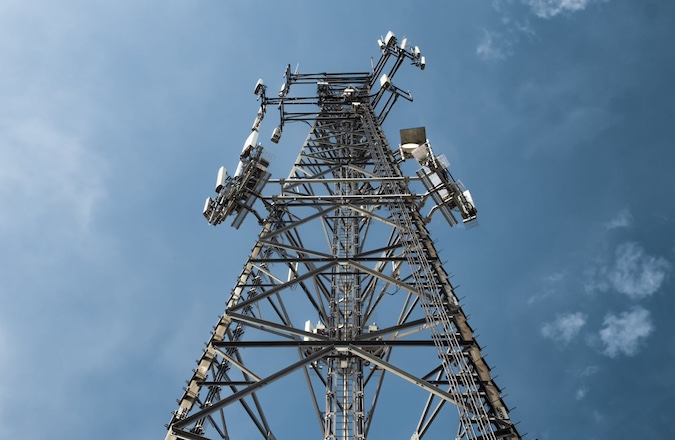
Image accreditation: David Arrowsmith (January 20222) from Unsplash.com. Last accessed on 6 August 2026. Available at:
https://unsplash.com/photos/a-tower-with-several-cell-phones-on-top-of-it-SsAFdirwkXc
post contents
About the Author: Kai Frolic