Can a Tall Building Block Telecoms/Microwave Links, and How do I Check Before Construction?
Last Updated: May 13, 2026
Share:
Electromagnetic waves perform an increasingly important function in our everyday lives. We have always relied upon the visible light part of the electromagnetic spectrum to look at what is in front of us and to navigate our way around. Over the past century, the uses of them have multiplied rather rapidly: radio, television, the internet and mobile telephones being examples which most people will use very frequently.
What is a Telecommunications Link?
A communications channel from a transmitter to a receiver is referred to as a link. In a telecommunications link, the link is used for communication purposes, and the communications channel is an electromagnetic wave. Examples include:
- Microwave links, which carry mobile phone signal using electromagnetic waves on the Microwave band at frequencies in excess of 1 GHz;
- UHF (Ultra-High Frequency) links, which carry TV signal using electromagnetic waves on the UHF band at frequencies of 400 – 700 MHz.
Can Telecommunications Links Circumvent Obstructions?
What will have become strikingly apparent if you have ever tried to look through a wall is that light waves originating on the other side won’t pass through it. A similar thing can be said for other electromagnetic waves, including those which make up telecommunications links: obstacles, including buildings and wind turbines, can reduce the signal strength of or block entirely the information being transmitted along them.
Different electromagnetic waves experience different challenges, depending on their wavelength and power. Waves with longer wavelengths and consequentially lower frequencies are typically better placed to bend round obstacles, a process known as diffraction. Power is lost from the link when this happens – links with a more powerful transmitter can withstand more obstacles whilst still maintaining an adequate signal strength at the receiving end.
Will My Development Block Telecommunications Links?
The impact that an individual development will have on telecommunications links can vary quite significantly depending on the size, location and shape of the building.
If the building blocks the boresight (line of sight from the transmitter to the receiver), then perhaps the most important question to ask is:
How tall or wide is the building?
Making a building that blocks the boresight taller or wider can further reduce the signal strength. This is because the signal has to bend more in order to circumvent the building.
If the building does not block the boresight, then the likely first port of call will be to look at whether the Fresnel zones are infringed.
How far is the building from the link boresight?
The further a building is from the link boresight, the more likely it is to be outside a given Fresnel zone, and the less likely it is to present a significant impact.
What is the frequency of the link?
Links with higher frequencies have shorter wavelengths, which means that they have narrower Fresnel zones. The higher the frequency of the wave, the closer the building can be to the link before being likely to have an impact on it.
The distance of the building along the link is another important consideration, and the effect of this differs depending on whether the building blocks the boresight of the link. If the building blocks the boresight, then a building nearer to the transmitter or the receiver is more disruptive than one nearer the middle of the link. If the building does not block the boresight, the converse is true: the Fresnel zones are narrower towards the link ends, so the building can be closer to the link boresight while being less likely to present an operational impact.
How Do I Check For And Resolve Any Telecommunications Issues My Project Faces?
The first part of this is to check which telecommunications links pass through the area in which the proposed development is situated. This involves identifying relevant transmitters and receivers, as well as engaging with link operators to confirm which links are present and how sensitive they are. The second part is to undertake detailed technical analysis, like that described above, to ascertain the impact of the development on each of the links.
Depending on the impact presented, mitigation may be required. Mitigation options include:
- If working on a site consisting of multiple buildings, rearranging the site to minimise the potential impact;
- Re-networking of the link via existing telecommunications sites;
- Use of a leased line or fibre optic connection;
- Changing the link elevation.
If none of the above options are viable, it then might be time to consider the construction of a new telecommunications site for the purpose of re-networking the link.
How Can Pager Power help?
Pager Power is experienced at assessing telecommunications issues for buildings and wind turbines, having undertaken more than 500 assessments in this area over the past 20 years. Our dedicated and friendly team of experts will ensure that your project is in safe hands throughout all stages, securing the best possible outcome.
If you require support with telecommunications issues surrounding the development of a tall building in an urban area, you can submit an enquiry here or call 01787 319001.
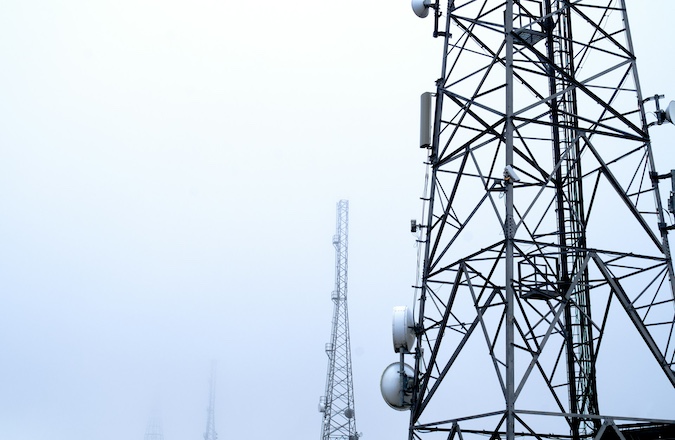
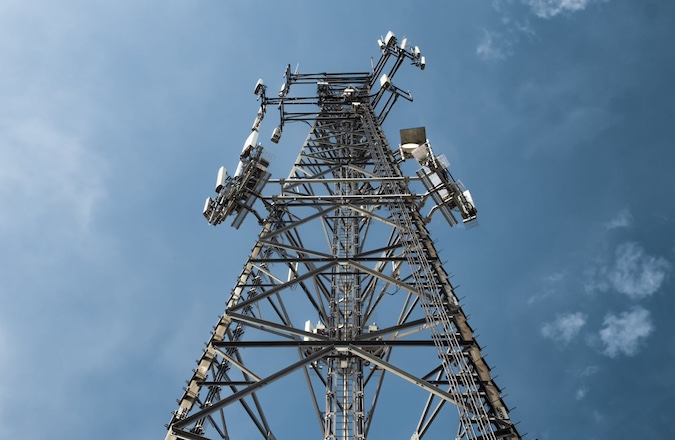
Image accreditation: Edouard Matte (May 2021) from Pexels.com. Last accessed on 13 May 2026. Available at: https://www.pexels.com/photo/photo-of-a-wi-fi-tower-under-a-blue-sky-7862565/
About the Author: Harry Watson