Bubble Curtains to Protect Marine Wildlife
Offshore wind farms are ever growing in popularity. Many countries are now erecting lots of turbines around the coastlines as European countries aim to make the North Sea into the world’s ‘largest green energy power plant’. Erecting just one offshore wind turbine takes time, money, logistics and planning. Some things that need to be considered when thinking about developing offshore wind farms include:
- Development and consenting services
- Resource and metocean assessments
- Geological and hydrographical surveys
- Engineering and consultancy
- Environmental surveys
All these factors need to be taken into consideration and discussed at length to ensure that the proposed offshore wind farm won’t have a negative impact on the area they are to be built, such as disrupting TV signals, blocking boating waterways, airport flight paths or disturbing wildlife.
Noise pollution
When any construction is taking place, offshore or onshore, there is a lot of loud noise that is produced as a result of drilling, welding, cutting, fixing, or mending. When we are doing these things, we humans wear personal protective equipment (PPE), such as noise cancelling ear protection, safety glasses to protect our eyes and gloves to protect our hands. Unfortunately, there is no PPE for wildlife, especially marine wildlife, when construction is taking place.
Animals such as Porpoises and seals live in these areas and often rely on their hearing to communicate with each other, to help see where they are going and to find food. Porpoises are small Dolphin-like cetaceans classified under the family Phocoenidae. Although similar in appearance to Dolphins, they are more closely related to Narwhals and Belugas than to the true Dolphins. [1] Porpoises rely on echolocation (emitting ultrasonic clicks that bounce off fish or objects) to communicate and navigate and when loud noises from the wind turbine construction start, it can interfere with their echolocation and has even been found to cause disorientation, temporary hearing loss and in some cases permanent deafness in harbour Porpoises. This leads to the mammals dying as they are unable to find food, communicate with their pods or find where they are going.
Bubble Curtains
One way that developers are safeguarding marine wildlife from the disruptions of offshore wind farm construction is to use a ‘bubble curtain’. Since sound travels faster through water than air, it makes sense to slow the noise down and break up the sound waves to reduce the impact on wildlife. It muffles the noise to a threshold deemed safe for the aquatic mammals, according to scientific researchers. The big bubble curtain came from the technology of compressed air barriers, where rising air holds back oil or debris, which was re-developed for offshore wind farm construction sites. They are created by a large, perforated hose that is laid on the seabed. Air is then pumped down the hose that comes out of the holes to create the bubbly veil. [2] This means that marine life is protected whilst any construction is taking place.
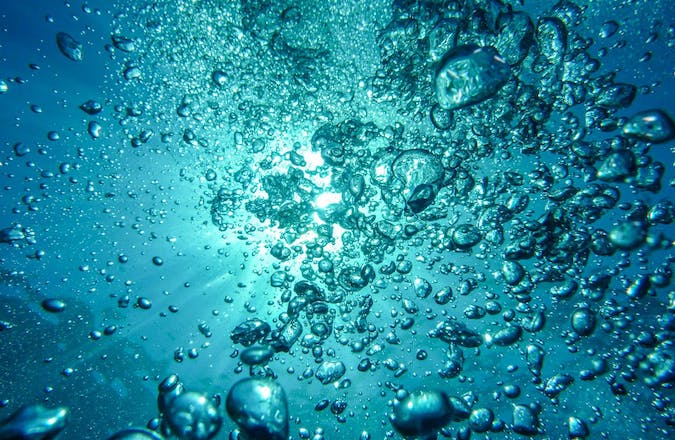
Figure 1: Image of bubbles under water. [3]
About Pager Power
Pager Power undertakes technical assessments for developers of renewable energy projects and tall buildings worldwide. For more information about what we do, please get in touch.
References
[1] https://en.wikipedia.org/wiki/Porpoise
[3] Pixabay (2013).Image of bubbles underwater. Last accessed: 27/02/2024. Available at: https://www.pexels.com/photo/water-bubbles-under-the-sea-62307/
post contents
About the Author: Georgia Low

Latest News
Are London Homes Getting Too Hot?
London, like most large cities, experiences an average temperature that [...]
What is Wind Farm Repowering?
There are a lot of potential constraints when it comes [...]

Do Construction Cranes Require Aviation Consent or Lighting, and Who Sets the Rules?
Cranes used for construction will likely reach elevations above the [...]