


Could Mini-Grids be the Future?
A mini-grid is made up of several small-scale electricity generators and sometimes energy storage systems combined with a distribution network that provides electricity to a limited number of localised clients and runs independently from the main transmission grid. They could have a few kilowatts’ worth of power or ten megawatts’. Smaller mini-grids are sometimes referred to as “micro-grids” or “nano-grids”.
A wide range of users can be served by mini-grids. They include individual residences, public structures like shops, industrial structures like grind mills and woodwork or metalworking shops, semi-public structures like telecom towers, processing facilities, or flower farms, and agricultural structures like irrigation pumps and cold storage.
Mini-grids can be built or operated by state utilities, private companies, local governments, non-governmental organisations, or a combination of these parties, such as public-private partnerships. The assets for generating and distribution may be built and managed by various consumers, both public and private. Renewable energy sources (such as solar PV, hydropower, wind, biomass, etc.) as well as diesel and hybrids of both can be used to power the mini-grids. Green mini-grids are those with a significant portion of their electricity coming from renewable resources. [1]
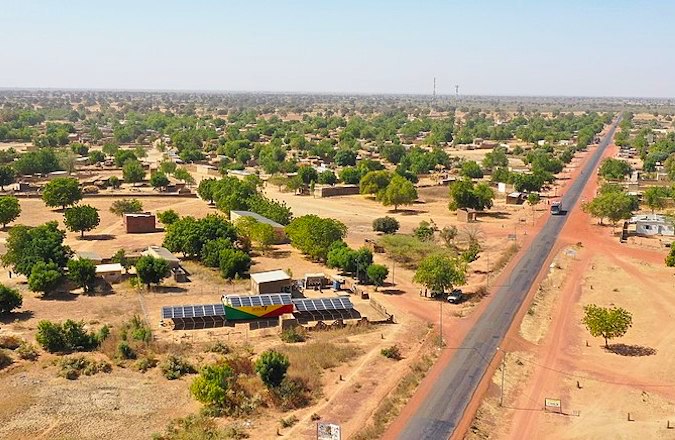
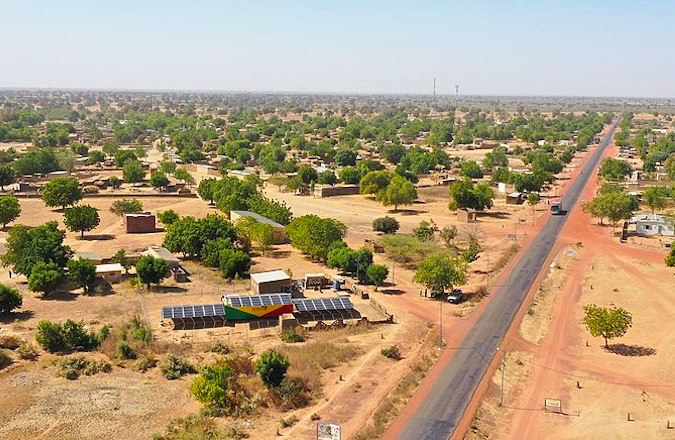
Figure 1: Rural Village in Mali with Mini-grid. [2]
Nigerian Electrification Project – NEP
The Nigerian Electrification Project, also known as NEP, aims to provide clean, safe and affordable electricity to unserved and underserved rural communities in Nigeria. The project is being facilitated by loans from the World Bank and African Development Bank with a total funding allocation of 189 million dollars. The NEP aims to help 400,000 households, 50,000 small businesses and 500 health facilities, through 65 solar-hybrid mini-grids in various rural communities across Nigeria.
Anita Otubu – Head of the Project Management Unit of the NEP stated that:
“Solar Hybrid Mini-Grids play a key role in achieving universal access to clean electricity and rural economic development”. [3]
The Rural Electrification Agency (REA), a federal ministry of power-affiliated organisation, is carrying out the project. With a focus on the last-mile communities, the REA was created to aid in closing the energy access gap in Nigeria. Since it costs a lot of money to provide everyone with access to electricity, the REA is collaborating with private sector players who can provide the necessary funds. [4]
Over 80 mini-grids have been finished and put into service as of August 2023, serving over 32,000 homes, small businesses, and public facilities with clean and dependable electricity. Each link represents a step towards closing the energy divide and promoting economic growth.
The leader of the NEP’s REA project management division, Abba Aliyu, expressed pleasure with the result:
“We are thrilled to announce that we have successfully completed and commissioned 103 mini-grids as part of the NEP initiative. This achievement underscores our commitment to providing reliable and sustainable energy solutions to communities that have long been underserved. Our goal has always been to empower communities with the power of electricity. These 103 mini-grids represent brighter futures, improved livelihoods, and growth opportunities.” [5]
He claims that over 230,000 people in Nigeria have already benefited from the project, changing their daily routines, economic activities, and general quality of life.
Could Mini-Grids be the Future?
Mini-grids have the ability to provide electricity to as many as 500 million households by 2030, with appropriate policies and about $220 billion in funding to build around 210,000 mini-grids. Mini-grid costs have significantly decreased over the past ten years while service quality has improved. By 2030, it is anticipated that the cost of small grid electricity per kWh will have decreased by two-thirds making it more achievable to remote communities. [6]
About Pager Power
Pager Power undertakes technical assessments for developers of renewable energy projects and tall buildings worldwide. For more information about what we do, please get in touch.
References
[1] Introduction to mini-grids. Green Mini-Grid. Available at: https://greenminigrid.afdb.org/how-it-works/help-desk-developers-and-operators/introduction-mini-grids[2] Torsten Schreiber (March 2020) “Rural Village in Mali with Mini-grid” from WikiCommons. Available at: https://commons.wikimedia.org/wiki/File:Solartainer_in_Cinzana-Gare_(Segou-region)_Mali.jpg[3] Okonkwo, O. (2022) Nigeria electrification project touches over 3.5 million across country – Anita Otubu, Nairametrics. Available at: https://nairametrics.com/2022/09/18/nigeria-electrification-project-touches-over-3-5-million-across-country-anita-otubu/[4] Okonkwo, O. (2022) Nigeria electrification project touches over 3.5 million across country – Anita Otubu, Nairametrics. Available at: https://nairametrics.com/2022/09/18/nigeria-electrification-project-touches-over-3-5-million-across-country-anita-otubu/[5] Izuaka, M. (2023) 103 mini-grids built across Nigeria, says Rural Electrification Agency, Premium Times Nigeria. Available at: https://www.premiumtimesng.com/news/more-news/617427-103-mini-grids-built-across-nigeria-says-rural-electrification-agency.html[6] World Bank Group (2019) Mini grids for half a billion people: Market outlook and handbook for decision makers, World Bank. Available at: https://www.worldbank.org/en/topic/energy/publication/mini-grids-for-half-a-billion-peoplepost contents
About the Author: Rosie Stammers

Latest News
US Continues to Build Out Solar Capacity
Earlier this month, the Solar Energy Industries Association (SEIA) released [...]
China’s Airborne Wind Turbines
In early 2026, China successfully developed an airborne wind turbine [...]
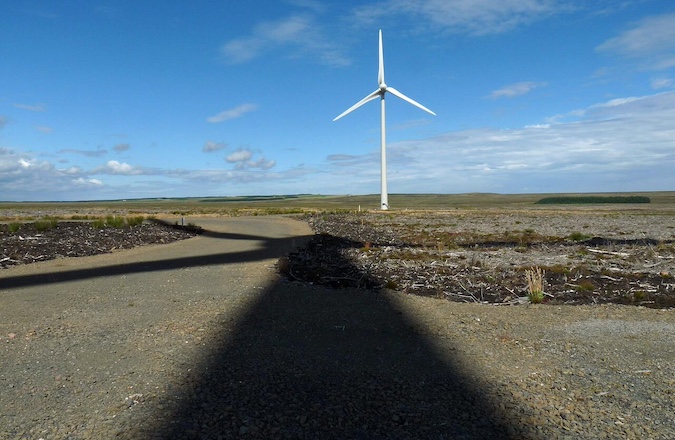
Shadow Flicker Assessments for Wind Turbines: A 2026 Update
Shadow flicker is the effect of rotating turbine blades, causing [...]




_Mali.jpg)