Public-Private Partnerships and Energy Communities: Investing in People and Renewables
Rising energy costs and the need to switch to clean energy are increasingly becoming a concern for the general public. Energy communities are legal entities that empower local people and businesses to produce, manage and consume their own energy [4], helping their countries to achieve their 2030 to 2050 energy targets.
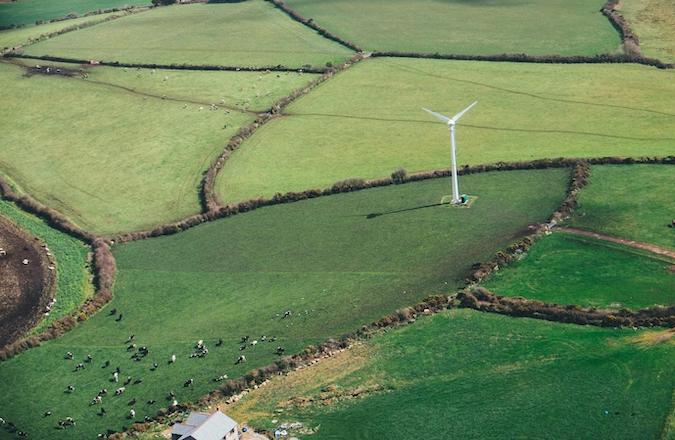
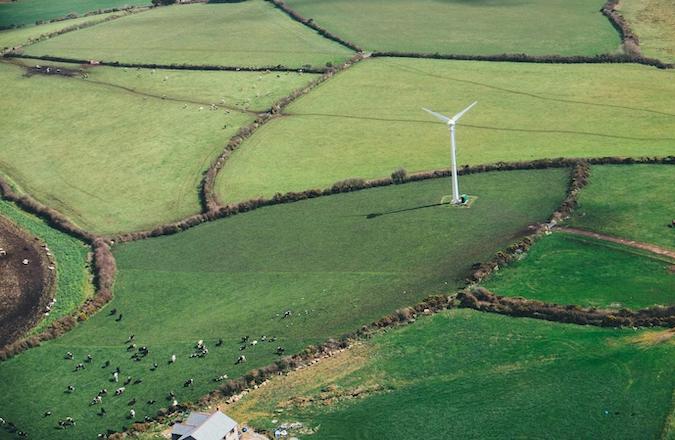
Figure 1: Wind turbine in a field. [11]
Energy communities can empower citizens to drive the energy transition locally and they can directly benefit from better energy efficiency and lower bills [1]. Energy communities can elevate the general public from being consumers to become ‘energy prosumers’ who both consume and produce energy2. Instalment of solar photovoltaics (PV), heat pumps and district heating are all examples of current energy community projects [3].
The benefits of energy communities include:
- Reduced energy consumption
- Increased energy savings
- Lower energy bills
- Increased social acceptance
- Increased investments in local energy projects
Public-Private Partnerships
Public-private partnerships invite private companies to invest in services traditionally provided by the public sector, in which the private party has managerial responsibility and renumeration from the project is performance based [5]. Public-private partnerships can provide the following benefits:
- Private investment has the potential to improve the financial situation of the community
- Private partnerships can increase the quality, efficiency and competitiveness of public services
- Private partnerships can supplement limited public sector capacities and raise additional finances in an environment of budgetary restrictions
Privatisation of public services is not always the most appropriate course of action, especially at the national level. However, private sector investment at a local level can be beneficial, providing much needed financial and business experience. Investment from local businesses can also strengthen relationships within the community.
West Sussex Energy Community: Manor Royal Business District
West Sussex County Council’s Energy Strategy supports the development of local energy communities. Through this scheme, the community invests and reaps the benefits of the investment in terms of reduced energy costs and environmental impact, and potentially improves the stability of the grid [6]. Funded by EU initiatives BISEPS (Business clusters Integrated Sustainable Energy Packages [7]) and LECSEA (Local Energy Communities for the 2 Seas Region [8]), West Sussex County Council created a public-private partnership energy community, utilising energy expertise and peer support from similar projects in Europe.
Re-Energise Manor Royal has been set up as a Community Benefit Society and operates on a non-for-profit basis, with any financial surplus made from selling energy back to the grid being reinvested into new projects to benefit the community [9].
West Sussex County Council’s local energy community project exemplifies how public-private partnerships can increase local energy resilience and investment in clean energy, whilst improving public services. Although beneficial, private investment should only be considered from established businesses and on smaller scale projects where politics and power struggles cannot effect the running of public services.
Public-Private Partnership Energy Communities: the future in Africa?
The G7 met in Apulia, Italy last month and released a joint statement on the growth of energy in Africa. In this statement they acknowledged that Africa’s untapped clean energy potential needs massive investment [10]. Pledging to launch the ‘Energy for Growth in Africa’ initiative, the G7 expects the initiative will engage with the private sector and financial institutions. Although this initiative is still in the early stages, it will be coordinated in line with existing programmes. Public-private partnership energy communities could be highly beneficial within this initiative, strengthening local business and community relationships, energy resilience in Africa, and working towards the 2030 Sustainable Development Agenda and Africa’s 2063 Union Agenda.
References
[1] https://energy.ec.europa.eu/topics/markets-and-consumers/energy-communities_en[2] https://energy.ec.europa.eu/news/focus-energy-communities-transform-eus-energy-system-2022-12-13_en
[4] https://energy.ec.europa.eu/news/focus-energy-communities-transform-eus-energy-system-2022-12-13_en
[5] https://ppp.worldbank.org/public-private-partnership/what-ppp-defining-public-private-partnership
[6] https://www.westsussex.gov.uk/planning/local-environmental-projects/local-energy-communities/
[8] https://www.interreg2seas.eu/en/LECSEA
[9] https://www.westsussex.gov.uk/planning/local-environmental-projects/local-energy-communities/
[10] https://www.g7italy.it/wp-content/uploads/Joint-statement-on-Energy-for-Growth-in-Africa.pdf
[11] Annie Spratt (2016) from unsplash.com. Last accessed on 5th July 2024. Available at: https://unsplash.com/photos/birds-eye-view-of-wine-mill-on-grass-field-Iqwnr00mfQM
post contents
About the Author: Hannah Lucey

Latest News
US Continues to Build Out Solar Capacity
Earlier this month, the Solar Energy Industries Association (SEIA) released [...]
China’s Airborne Wind Turbines
In early 2026, China successfully developed an airborne wind turbine [...]
Shadow Flicker Assessments for Wind Turbines: A 2026 Update
Shadow flicker is the effect of rotating turbine blades, causing [...]