Evaluating Daylight and Sunlight to Unlock Planning Approval for a New Build in Watford
Client: JF Partners Ltd
Location: Watford, England
Sector: Buildings
Service: Daylight Sunlight Assessment
Outcome: Daylight, sunlight, and overshadowing concerns assessed for a proposed new build and planning approval granted promptly



The Scenario
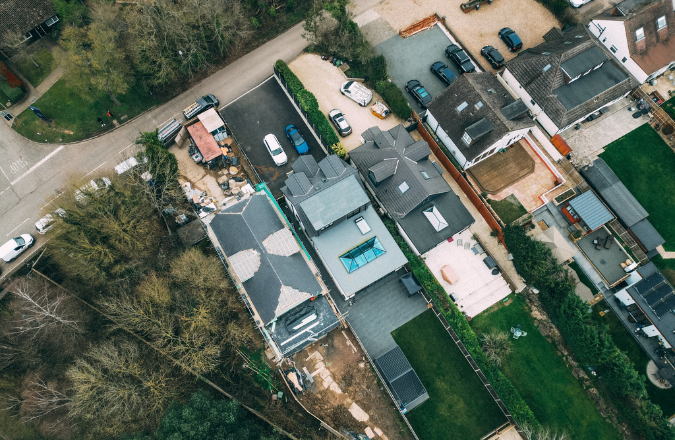
A proposed new build property in Watford faced potential rejection by the local planning authority due to concerns about daylight within the new development and potential overshadowing of the neighbouring property. Without a detailed assessment of the proposed development, the client risked delays due to the potential rejection of the planning application.
The Technical Challenge
A Daylight Sunlight Assessment was undertaken to determine whether a proposed development would receive adequate daylighting as per BRE 209 and BS EN 17037:2018 guidance. The assessment also evaluated the proposed development’s potential impact on the neighbouring buildings.
In this case, the primary concern was the impact of the proposed development on the surrounding buildings due to its proximity and size. Detailed geometric assessment of the potential change in skylight and sunlight was required.
This assessment was required by the planning authority in order for the development to gain planning permission.
Our Role
Pager Power conducted a Daylight Sunlight Assessment in accordance with BRE 209 and BS EN 17037:2018 guidance, utilising our bespoke in-house software to analyse key metrics including:
- Vertical sky component (VSC)
- Annual probable sunlight hours (APSH)
- No Sky Line (NSL)
The analysis considered the terrain and existing vegetation, as well as existing and proposed buildings to establish a baseline level of daylight for both the development and its neighbours. Calculations of the key metrics were carried out, including a comparison of baseline and post-construction values for the neighbours. The results were assessed against the thresholds in BRE 209. Although not all windows passed the threshold, a review of site-specific mitigating factors was presented, concluding an acceptable level of impact. Pager Power produced a comprehensive report clearly setting out the technical impact, supported by 3D visualisations.
Outcome and Impact
The report provided the planning authority with clear and comprehensive technical analysis resulting in the client being able to submit their planning application without objections related to daylight, sunlight, and overshadowing. The application was subsequently approved and construction has now commenced.

“Pager Power and Cameron were great in helping us throughout our application and producing the file for us as fast as possible, this helped us stick to our tight deadline. The process was very simple and straightforward.”
Dion Ferra-Swallow
Managing Director, JF Partners Ltd
Need support with your project?
Get in touch to speak with one of our technical planning experts.