Tall buildings and NATS radar interference

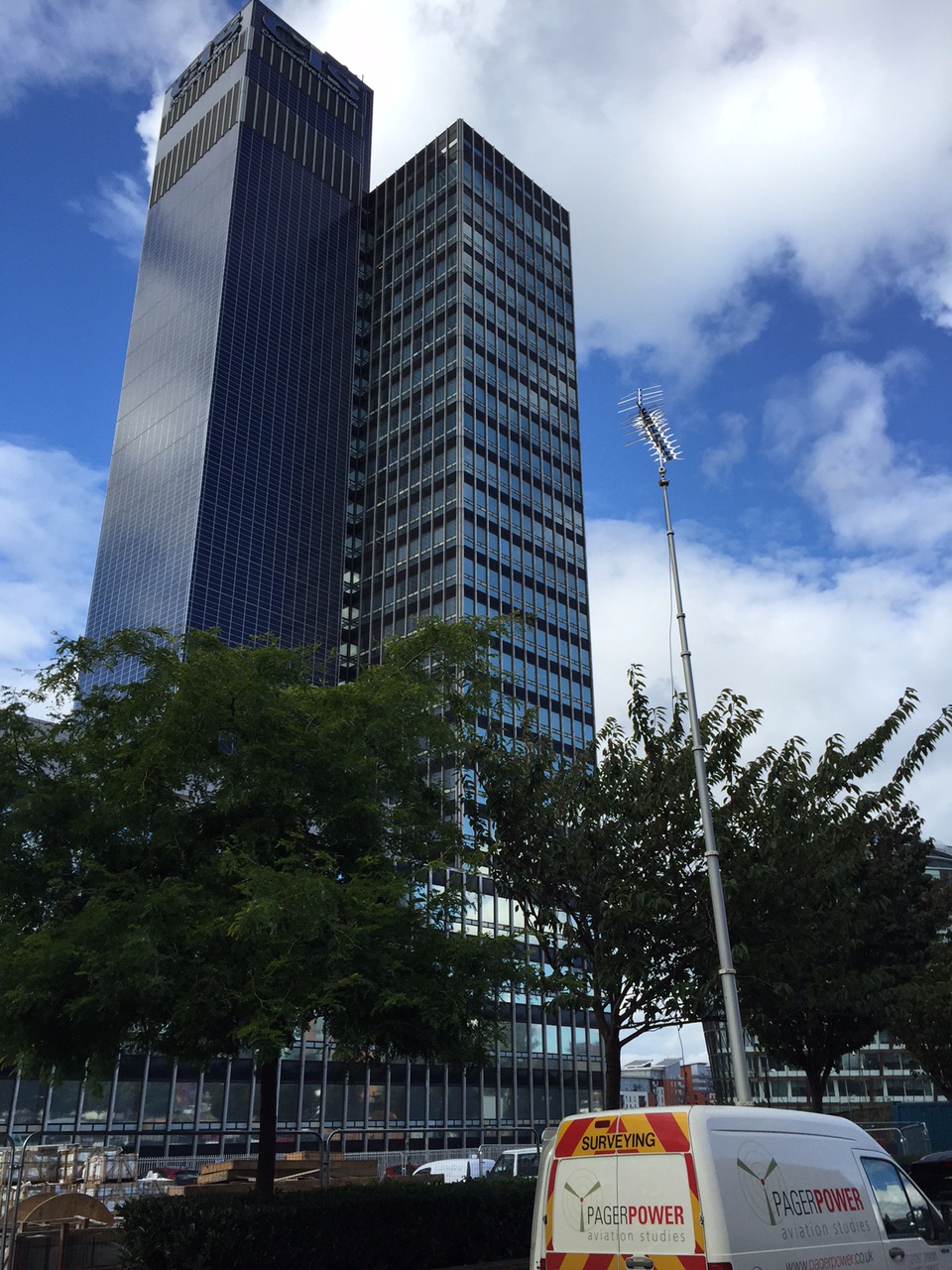
Tall buildings may block and reflect radar signals which means that national air traffic control service, NATS, raises planning objections to tall buildings in London, Manchester and elsewhere in the UK. Pager Power assesses this potential interference using its custom software and helps developers find solutions to this issue.
Air Traffic Control
Air traffic controllers monitor aircraft movements and advise pilots so as to separate aircraft and avoid collisions. The controllers have displays which show the aircraft flying through the airspace under their control. Radar is used to automatically detect and determine the position of these aircraft.
The Effect of Tall Buildings
Tall buildings can cause radar interference and can prevent aircraft being detected or can cause false aircraft positions to be displayed to a controllers. Modern radar have built-in processing systems to counter these interference effects.
Planning Objections
The UK civil national air traffic service provider is NATS. NATS operates a UK wide network of interconnected radar. The company raises planning objections to developments that could interfere with its radar which are safeguarded technical sites.
Radar Impact Assessment
Developments can be assessed to see what impact they will have on radar. Assessments typically identify which radar will be affected and the likely technical effects on that radar. Further analysis will then show the likely impact on air traffic control displays. This leads to an operational impact assessment which considers aviation safety. Finally, mitigation options are considered, and overall conclusions and recommendations are provided.
The likelihood of impact is determined by size and range which means that larger developments close to the radar will usually have greatest impact whilst conversely smaller developments which are further from the radar are likely to have a lesser impact.
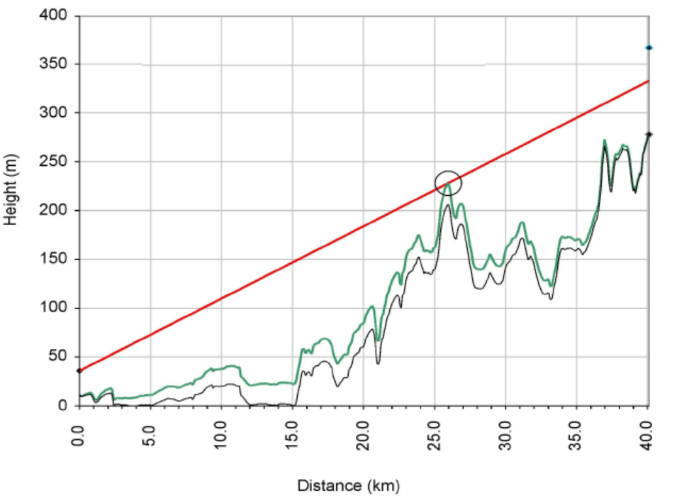 Figure 1: Pager Power Radar Line of Sight Chart used to determine whether a building will affect radar
Radar Principles
Radar works by repeatedly transmitting radio pulses and then listening for returned pulses. Aircraft position is determined from the direction the radar is pointing and the time taken for the radio pulse to return.
 Figure 2: NATS Great Dun Fell radar – Cumbria
Building Interference
Buildings can interfere with outbound pulses, returning pulses or both – they can weaken radio signals and reflect them. Signal weakening can prevent radar detecting aircraft, and reflections can cause genuine aircraft to be detected in the wrong place. Usually, when this occurs, the radar detects the aircraft in the correct place at the same time.
Radar are imperfect and sometimes fail to detect aircraft and sometimes detect them in the wrong place for both environmental and technical reasons. This means that a low rate of false returns and failure to detect aircraft is tolerable in practice. It also means that modern radar have in-built processing for rejecting interference from the natural and built environment.
Mitigation
There are many techniques that may be considered for mitigating the effects of buildings on radar including:
- Relocating the building or radar
- Upgrading the radar or the antenna
- Changing building orientation or shape
- Adjusting building or radar height
- Increasing radar antenna tilt
- Combining data from multiple radar
- Radar configuration
Radar configuration is the most usual form of mitigation, with the radar being configured with the coordinates of known radar reflectors which reduces the likelihood of an aircraft being displayed in the incorrect location as a result of reflections from the building.
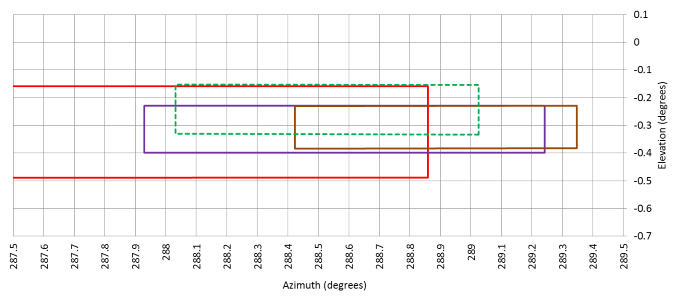 Figure 4: Example Pager Power shielding diagram shows how one building can be shielded by others (horizontal view)
Planning Objections
The civil national air traffic control service provider, NATS, raises planning objections to buildings it determines likely to affect its radar. These objections are sometimes withdrawn subject to a Grampian planning condition which prevents development until radar mitigation is in place. The condition can subsequently be discharged following a radar mitigation agreement. Pager Power is able to assess radar impacts and recommend strategies for managing radar planning objections.
Conclusions
Tall buildings may block and reflect radar signals which means that the national air traffic control service, NATS, raises planning objections to tall buildings in London, Manchester and elsewhere in the UK. Pager Power assesses this potential interference using its custom software and helps developers find solutions to this issue.
For Further Information…
Please call Mike Watson on 01787 319001 to request a proposal for a Radar Impact Assessment or to discuss your NATS planning objection.
References
Safeguarding aerodromes technical sites and military explosive storage areas, Department for Transport, 2005
Eurocontrol Specification for ATM Surveillance System Performance, Eurocontrol, Eurocontrol-Spec-0147, 2012
Air Traffic Services Safety Requirements, Civil Aviation Authority, CAP 670, Third Edition, UK Civil Aviation Authority (CAA), May 2014
Eurocontrol Standard Document for Radar Surveillance in En-Route Airspace and Major Terminal Areas, Eurocontrol, SUR.ET1.ST01.1000-STD-01-01, 1997
post contents
About the Author: Mike

Latest News

US Continues to Build Out Solar Capacity
Earlier this month, the Solar Energy Industries Association (SEIA) released [...]

China’s Airborne Wind Turbines
In early 2026, China successfully developed an airborne wind turbine [...]

Shadow Flicker Assessments for Wind Turbines: A 2026 Update
Shadow flicker is the effect of rotating turbine blades, causing [...]