Pager Power Attends the ‘New ICAO OLS’ Workshop
Last Updated: August 12, 2026
Share:
The Workshop
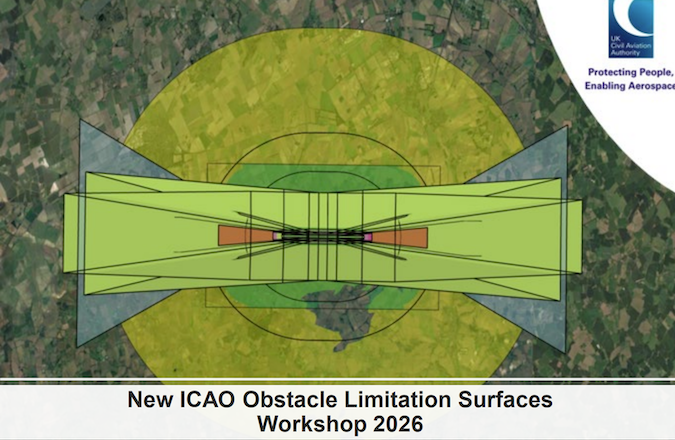
In July, the UK Civil Aviation Authority (CAA) hosted a workshop at their office near Gatwick Airport on the future International Civil Aviation Organization (ICAO) Obstacle Limitation Surfaces (OLS). The workshop gave further explanation of the different surface types and transition planning, as well as implementation timelines, practical safeguarding case studies, a new form of aircraft classification, and the impacts on planning, development, and aeronautical studies.
Michael Sutton (Technical Operations Director) and Harry Watson (Senior Systems Analyst) attended from Pager Power. Michael attended with a focus on how the new surfaces and procedures would fit around our current service offering, and Harry focused more on the technical details of how the surfaces would be designed, modelled, and assessed, and how they fit into the wider safeguarding context.
The slides from the workshop are public and can be found here along with other information on the new OLS. Our acknowledgements go to those at the CAA for presenting and fielding questions on the day.
New OLS Framework Recap
The new OLS become applicable globally from 21 November 2030. The new framework replaces the long‑standing traditional OLS with a performance‑based, operations‑driven model, reflecting advances in aircraft performance, navigation, and procedure design. In short, the new surfaces will be more aligned with the aircraft operating and the actual procedures being flown at the airport.
The new framework also gives aerodromes more flexibility in safeguarding airspace where they operate, rather than the ‘one size fits all’ approach currently used. This is achieved by splitting surfaces into two main categories: Obstacle Free Surfaces (OFS) and Obstacle Evaluation Surfaces (OES). OFS must be clear of all obstacles, with these surfaces being those closest to the runway due to them being the most sensitive. OES can be more bespoke, and some infringement may be tolerated based on the results of an aeronautical study (more on this below).
This represents a significant change in how OLS are treated, as it moves away from the general assumption that all penetrations of the OLS are unsafe unless proven otherwise. It also provides a structured method for determining if penetration of an OES by an obstacle can be accommodated through mitigation.
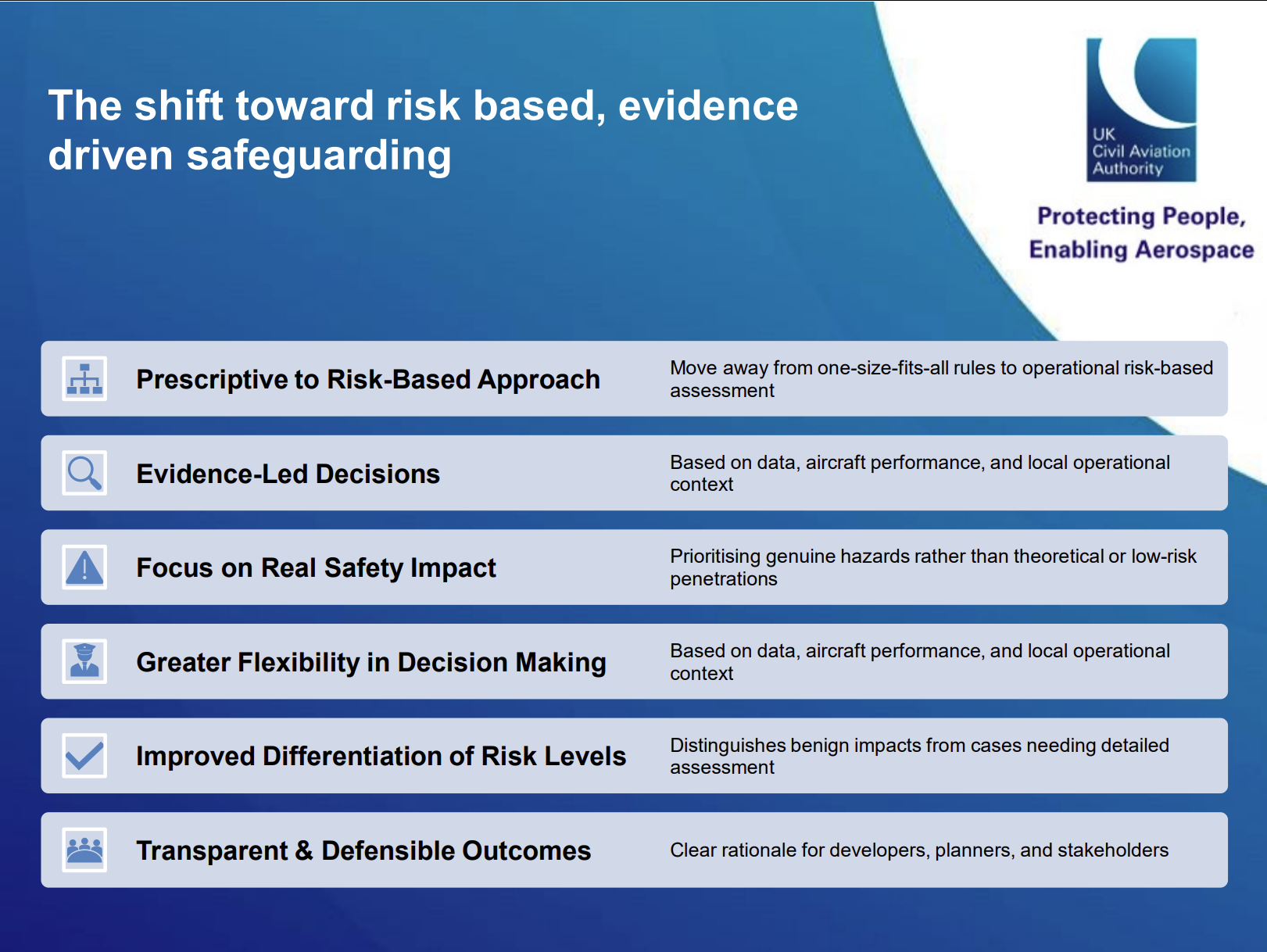
Figure 1: Slide on the rationale for the new OLS
The Aeronautical Study
The most significant and widely discussed update on the day was the concept of the aeronautical study. An aeronautical study will be triggered by a breach of an OES, with the aim of the study being to determine whether the breach will be a significant obstacle and, if so, whether any mitigation can be implemented to reduce the impact.
The CAA stressed that the aeronautical study will involve multi-stakeholder involvement from the outset to reach an overall conclusion. This is because several individual assessments, undertaken in their own ‘silo’, may all reach slightly different conclusions, and therefore, collaboration and communication between these stakeholders will be held to reach a single overall conclusion. Which stakeholders are involved in each aeronautical study will depend on the situation, though it is expected at this stage that the affected airport, their Approved Procedure Design Organisation (APDO), the developer, and the CAA will be involved in all aeronautical studies. Additional stakeholders, such as crane operators, will be involved in aeronautical studies as necessary.
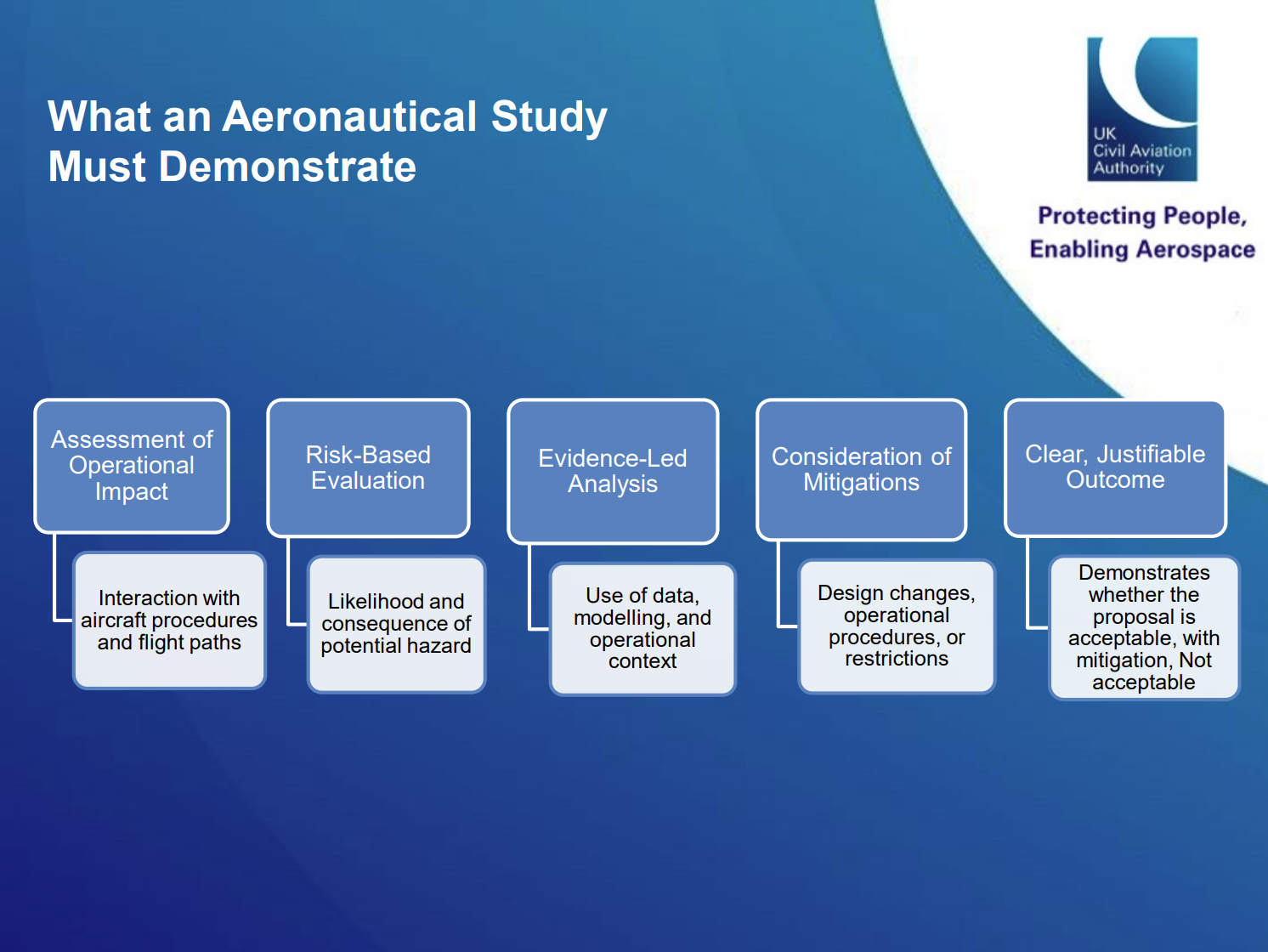
Figure 2: Slide on what the aeronautical studies must demonstrate
On the day, there was a lengthy discussion about how this would work in practice. There was a feeling that this process would in fact increase airport safeguarding teams’ workloads rather than reduce it, based on the more involved aeronautical study process. The counterpoint to this is that airports will only need to provide more detailed safeguarding input around infringements of OES, and not OFS (where no infringement would be tolerated in any instance), therefore the amount of airspace they need to actively evaluate is less. This means the airports will need to provide detailed input into fewer planning applications than they currently are, where currently airports are more likely to be challenged on the acceptability of all infringements, rather than the certain few that will be redefined as OES. The length and detail of an aeronautical study will also be dependent on the situation, meaning that some may only be one page in length in easily concluded situations.
One of the biggest areas currently affecting the industry as a whole, from developers of wind turbines, buildings, and airports, is the lead time on Instrument Flight Procedure (IFP) assessments, with some being quoted for delivery in excess of 18 months. Based on the surfaces being closely aligned with IFPs, the hope is that many IFP assessments currently being undertaken because the airport has no strong indication of whether one is needed, will no longer be needed as they will only be undertaken when an OES is infringed.
The CAA acknowledged that many of the finer details in relation to aeronautical studies need to be sorted prior to the new OLS becoming applicable in 2030. There are many ICAO member states that will be in a similar position to the UK, and there will be lots to learn from each other.
What’s Next?
It seems like the biggest hurdle to overcome right now is ensuring that the new aeronautical study process results in a net reduction in workload for airport safeguarding teams so that developments can be assessed in a timely fashion. Pager Power will continue to engage with the CAA over the next four years and advocate for ensuring it is both safe and efficient.
Finally, the CAA’s workshops have given great opportunities for airports and stakeholders to provide feedback and express their concerns. The final workshop is in Glasgow in October, and the CAA will then release responses to all questions submitted throughout.
Pager Power’s Expertise
Pager Power has over 20 years of experience in the aviation sector and is eager to help with the transition over to the new surfaces to aerodromes that are facing challenges with designing the new ICAO OLS surfaces. Pager Power has plotted the new ICAO OLS for six aerodromes internationally, including two aerodromes in the UK, to help them understand what their surfaces will look like in the future.
Pager Power has also published a series of articles on the new ICAO OLS. If you would like to learn more about each new surface, please find the articles here.
post contents
About the Author: Michael Sutton