How Space Shuttles Can Teach Us About Hydrogen Fuelled Aircraft

Innovations in transportation have been at the forefront of the drive to reduce emissions. With 20% of global CO2 emissions stemming from transport [1] there is room for substantial gains to be made if we can move from A to B in a green and clean fashion. Cars have been a focal point in this push, with over 1 million electric cars on Britian’s roads in 2022 [2]. Trains and buses are making the switch as well, but a lesser discussed means of transport that could make the switch to being zero-emissions is the aeroplane.
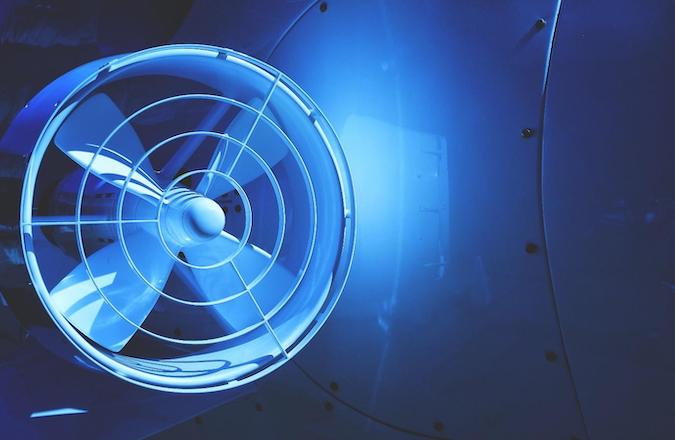
Figure 1: Jet engine in blue [3]
Challenges for Hydrogen Fuelled Aircraft
Traditionally, aircraft have not been considered good candidates for electrification due to their power requirements and long-distance journeys. To learn why this presents an issue we can look at space shuttles. Spacecraft must take off from earth and reach orbit, a journey requiring an enormous amount of power and thus fuel. The greater the shuttle’s weight, the more power is required to lift off. Adding more fuel however adds more weight, so a balance must be struck between adding additional fuel and keeping weight down for efficiency. Electric vehicles suffer from the same problem; extra batteries (which increase range) add weight, which in turns reduces the efficiency of travel. If aircraft were to use the same technology as cars, ensuring the necessary range might require too many batteries, and thus too much weight, to remain efficient. As such, current electric planes tend to be small and travel shorter distances, such as Air New Zealand’s new electric cargo planes it will use to deliver letters and parcels throughout the nation in a drive to reduce emissions [4]. But how to scale this technology up while retaining efficiency is unsolved, as of yet.
Feasibility of Hydrogen Powered Aircraft
An opportunity to address this conundrum is posed by hydrogen fuel-based propulsion, instead of traditional electric battery power. Hydrogen propulsion can take two forms: the hydrogen combustion engine, and the hydrogen fuel cell. A hydrogen combustion engine functions just like a fossil fuel engine but utilises hydrogen which contains no carbon and thus produces no CO2 emissions, however nitrous oxide emissions are produced, leading to this technology not being considered zero-emissions. Hydrogen fuel cells use liquid hydrogen to generate electricity which power motors to drive the aircraft, with the only emission being water, and hence are truly zero-emissions. Airbus has been studying the feasibility of hydrogen powered aircraft in a project titled ZEROe whose goal is to run hydrogen powered commercial aircraft by 2035 [5]. So if the technology exists for green air travel, why aren’t we using it?

Figure 2: Hydrogen Molecules [6]
A significant obstacle this technology must overcome is the requirement for refuelling infrastructure at airports. To be used in propulsion, hydrogen must be in a liquid form which requires storing it at minus 253 degrees Celsius, chilling and transporting the hydrogen will require investment. Liquid hydrogen is already being used as propellant in space shuttles by the European Space Agency [7], and their refuelling infrastructure may inform its use in air travel as well. Various options exist for getting liquid hydrogen to airports. Hydrogen can be liquefied at a plant and then transported within insulated trucks to airports. However if the hydrogen warms up, it can boil off and present a hazard [8]. Alternatively, gaseous hydrogen can be supplied to airports, such as via pipelines, which could be used in tandem with onsite liquification facilities to directly supply aircraft. The pipeline method is thought to have higher upfront costs but lower per unit costs in the long term, according to a costing report commissioned by the EU [9]. Two further issues, highlighted by the same report, that require attention are infrastructure funding and hydrogen production. The report predicts costs will be too high for airports and airliners to bear alone, suggesting a role for government with financial assistance to support a transition to green flights. Additionally, if hydrogen powered aircraft begin to take-off (no pun intended…) production of hydrogen must increase to meet demand. If demand out paces supply, the fuel price will rise, thus reducing the affordability of hydrogen powered air travel.
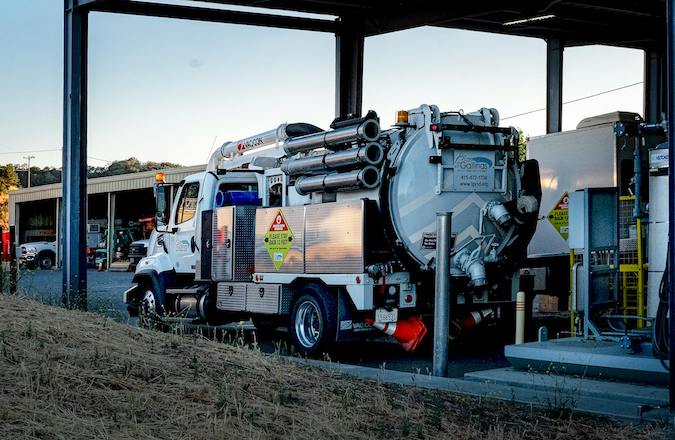
Figure 3: Tanker truck [10]
Conclusion
In conclusion, hydrogen fuel presents opportunities to turn air travel green and do so more efficiently than traditional electric batteries used in cars. Big players in the aviation market have high hopes for hydrogen such as Airbus who aim to have hydrogen powered commercial aircraft flying by 2035. However, challenges are presented by the required infrastructure for refuelling, increased demand for hydrogen, and the associated costs. Techniques used to fuel space shuttles could offer guidance to airports seeking to upgrade refuelling infrastructure to accommodate the next generation of aeroplanes that might take the environmental damage out of our holidays and business trips.
About Pager Power
Pager Power undertakes technical assessments for developers of renewable energy projects and tall buildings worldwide. For more information about what we do, please get in touch.
References
[1] Ritchie, H. (2020) Cars, planes, trains: where do CO2 emissions from transport come from? Published online at OurWorldInData.org. Available at: https://ourworldindata.org/co2-emissions-from-transport (Accessed: 12 January 2024)
[2] Carlier, M. (2023) Electric vehicles in the United Kingdom – Statistics & Facts. Statista. Available at: https://www.statista.com/topics/2298/the-uk-electric-vehicle-industry/#topicOverview (Accessed: 12 January 2024)
[3] Jet engine in blue light (December 2021) from Pexels, Accessed: 12 January 2024. Available at: https://www.pexels.com/photo/jet-engine-in-blue-light-10432225/
[4] Visontay, E. (2023). ‘Electric plane set to deliver mail across New Zealand in decarbonisation push’ The Guardian, 5 December. Available at: https://www.theguardian.com/business/2023/dec/06/electric-plane-set-to-deliver-mail-across-new-zealand-in-decarbonisation-push (Accessed: 12 January 2024)
[5] Airbus (2024) ZEROe, towards the world’s first hydrogen-powered commerical aircraft. Available at: https://www.airbus.com/en/innovation/low-carbon-aviation/hydrogen/zeroe (Accessed: 12 January 2024)
[6] Hydrogen molecules against blue background (December 2021) from Pexels, Accessed: 12 January 2024. Available at: https://www.pexels.com/photo/hydrogen-molecules-against-blue-background-10670941/
[7] Morris, B. (2023). ‘Could airports made hydrogen work as a fuel?’ BBC News, 24 November. Available at https://www.bbc.co.uk/news/business-67371275 (Accessed: 12 January 2024)
[8] US Department of energy (2024) Liquid Hydrogen Delivery. Office of energy efficiency & renewable energy. Available at: https://www.energy.gov/eere/fuelcells/liquid-hydrogen-delivery#:~:text=Currently%2C%20for%20longer%20distances%2C%20hydrogen,pressure%20gaseous%20product%20for%20dispensing (Accessed: 12 January 2024)
[9] Transport & Environment (2023) Analysing the costs of hydrogen aircraft. Steer Group. Available at: https://www.transportenvironment.org/wp-content/uploads/2023/05/Study-Analysing-the-costs-of-hydrogen-aircraft.pdf (Accessed: 12 January 2024)
[10] Cistern vehicle in a garage (July 2022) from Pexels, Accessed: 12 January 2024. Available at: https://www.pexels.com/photo/cistern-vehicle-in-a-garage-12784848/
post contents
About the Author: Phillip Charhill

Latest News

US Continues to Build Out Solar Capacity
Earlier this month, the Solar Energy Industries Association (SEIA) released [...]

China’s Airborne Wind Turbines
In early 2026, China successfully developed an airborne wind turbine [...]

Shadow Flicker Assessments for Wind Turbines: A 2026 Update
Shadow flicker is the effect of rotating turbine blades, causing [...]